AMD Reports Fourfold Rack AI Efficiency Gain
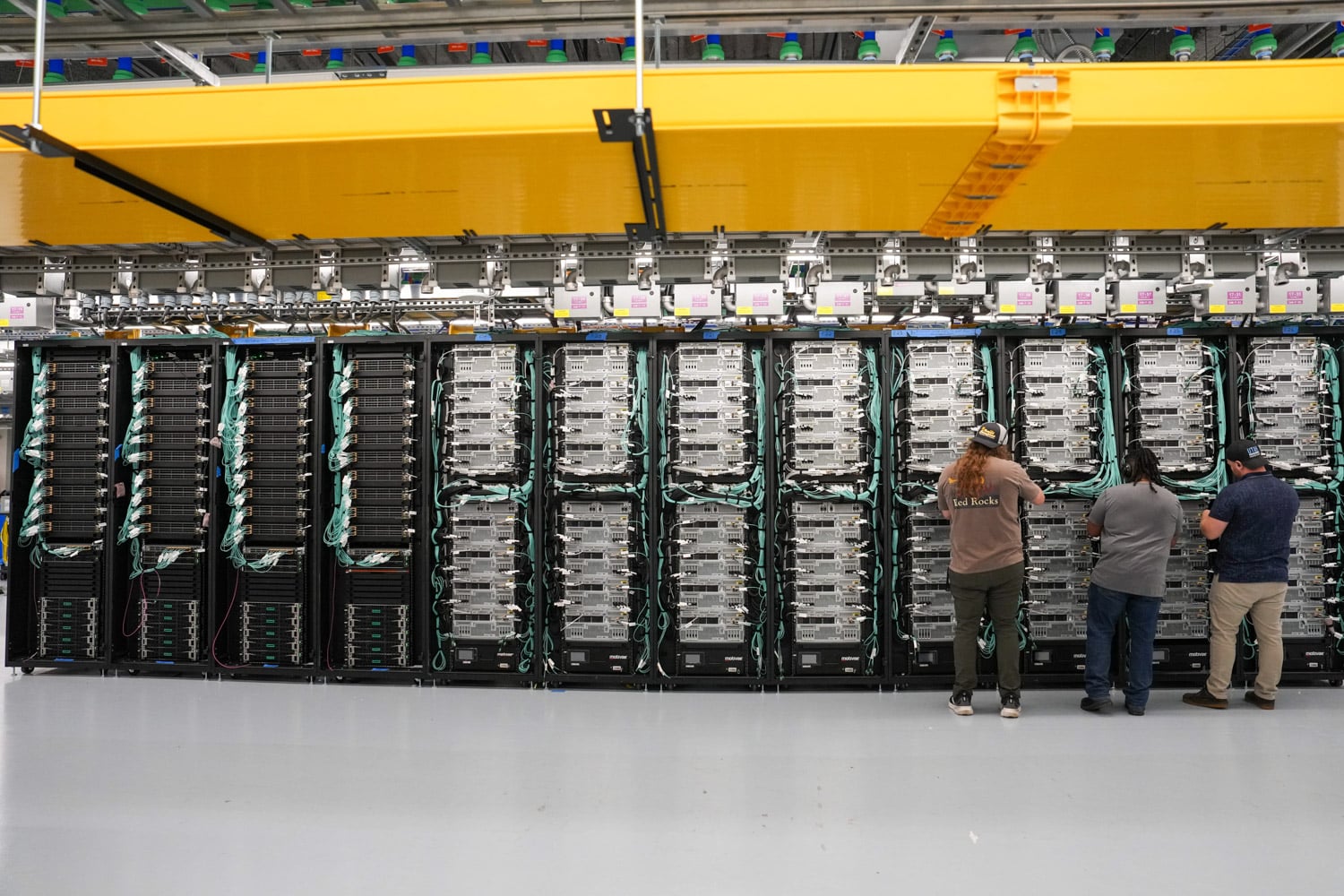
AMD reported on August 18 that its rack-scale AI systems delivered a 4x energy-efficiency improvement from its 2024 baseline through mid-2026. The company had previously projected a 3x improvement for this point on its path to a 20x rack-scale efficiency target by 2030, according to Tom's Hardware. AMD's calculation combines measured product data with modeled estimates where final performance data were unavailable, StorageReview reports.
AMD reported on August 18 that the energy efficiency of its rack-scale AI systems improved 4x from its 2024 baseline through mid-2026. The company had forecast a 3x gain at this stage when it introduced its 20x2030 initiative in June 2025, according to Tom's Hardware.
The reported progress is toward AMD's goal of a 20x increase in rack-scale AI energy efficiency by 2030. StorageReview reports that AMD measures the result with performance-per-watt metrics across representative rack configurations, rather than by comparing CPUs or accelerators in isolation.
What AMD's metric includes
Tom's Hardware reports that AMD's rack-level methodology incorporates compute performance, process technology, memory bandwidth, data movement, interconnects, software, and system-level co-design. AMD identifies compute capability, memory bandwidth, and interconnect bandwidth as key determinants of AI system performance.
That scope matters when assessing the headline figure. StorageReview reports that AMD's 2026 calculation combines measured product data with modeled estimates when final performance data were unavailable. The 4x result is therefore a company-reported estimate, not an actual benchmark result. Tom's Hardware likewise noted that the figures are estimates rather than actual benchmark results.
AMD Senior Vice President and Corporate Fellow Sam Naffziger said in the announcement, "The next wave of AI efficiency will depend on tighter co-optimization across compute silicon, memory, interconnects, software and rack-scale system design."
2030 scenarios remain projections
According to StorageReview, AMD outlined two possible outcomes from reaching its 2030 target. In one projected deployment scenario, roughly two future racks could supply the compute capability of 570 racks from 2024, with 20x lower use-phase electricity consumption and 28x lower carbon intensity. In another, the same energy use could provide 20x more compute, measured in floating-point operations per second per watt.
Those scenarios depend on future hardware, software, and system configurations, so they should not be read as current customer results. More broadly, comparable AI infrastructure programs increasingly assess efficiency at the rack or cluster level because memory, networking, power delivery, cooling, and software utilization can materially affect energy per useful workload. For ML infrastructure teams, the reported methodology reinforces the need to evaluate accelerator performance alongside end-to-end throughput, memory behavior, interconnect utilization, and facility power.
Key Points
- 1AMD reported a 4x rack-scale AI efficiency gain since 2024, surpassing its previously stated 3x interim projection.
- 2The estimate spans hardware, memory, interconnects, software, and system design, rather than a component-level accelerator comparison.
- 3Industry-wide rack metrics can better capture end-to-end AI energy use, but modeled inputs require careful validation against workload benchmarks.
Scoring Rationale
The update is relevant to teams managing AI infrastructure costs, power constraints, and rack-level performance. Its significance is moderated because the 4x figure is AMD-reported and includes modeled estimates rather than independently published workload benchmarks.
Sources
Primary source and supporting public references used for this report.
Practice interview problems based on real data
1,625 SQL & Python problems across 15 industry datasets — the exact type of data you work with.
Try 250 free problems