The recent through-line for Grok is that its two most consequential storylines, military deployment and content-safety litigation, are both now documented in court filings rather than press releases. On August 4, coverage of a June 15 Justice Department filing established that xAI's Grok Gov Model was deployed through Maven Smart Systems during Operation Epic Fury; the attached Pentagon declaration says the system enabled U.S. forces to deploy more than 2,000 munitions against 2,000 targets within 96 hours. Crucially, the filing does not specify Grok's exact tasks or whether it selected targets or authorized weapons releases, and the earlier June reporting placed the same sworn statement from the Pentagon's chief digital and artificial intelligence officer, Cameron Stanley, inside a government brief defending xAI against an NAACP lawsuit over gas turbines at its Colossus 2 data center. For anyone assessing supplier governance, that is the practical shape of the disclosure: operational use is confirmed, the task boundary is not.
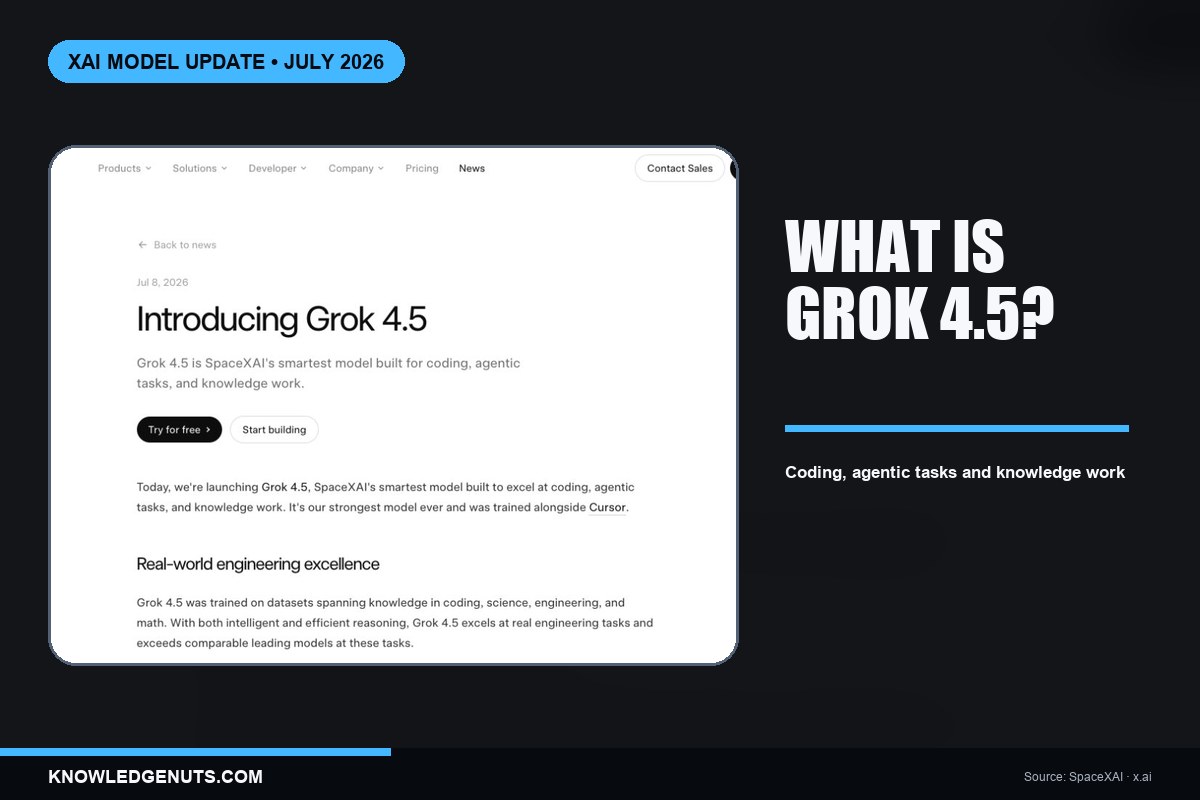
The legal picture moved just as fast, and it runs in both directions. X.AI's July 27 complaint challenges Minnesota's House File 1606, enacted as Chapter 72 in May, which prohibits operators of websites, applications and software from allowing users to nudify images of recognizable people and authorizes the attorney general to seek civil penalties of up to $500,000 for each unlawful access, download or use. On July 31, U.S. District Judge Donovan W. Frank denied the emergency request in a two-page order that pointed to the company filing on July 29, nearly three months after the law was signed and three days before it took effect; the statute took effect August 1, Minnesota's response is due August 12, X.AI's reply August 17, and a preliminary-injunction hearing is set for August 19 with the First Amendment challenge unresolved. Two weeks earlier xAI took the plaintiff's seat, filing a July 14 breach-of-contract complaint against Terry Wayne Harwood over allegations he used multiple Grok accounts to generate or alter sexualized images of adults and minors; the complaint claims 52,222 account suspensions and 73,604 reports to the National Center for Missing & Exploited Children in 2026, self-reported figures that have not been independently verified. The separate deepfake-CSAM class action was amended on July 7 to add two more anonymous plaintiffs. Against that backdrop the product cadence continued: SpaceXAI launched Grok 4.5 on July 8 with public availability advertised for July 9 and official docs listing $2 per million input tokens and $6 per million output tokens, landing in the same decision window as OpenAI's July 9 GPT-5.6 rollout. Musk had said on June 28 that the model was already in private beta at SpaceX and Tesla, built on a 1.5-trillion-parameter V9 foundation that finished training on May 26 and supplemented with data from the Cursor coding environment; no benchmarks or system card have been published, which leaves the Opus-class framing a vendor claim and makes cost per completed task, latency and structured-output reliability the only things a team can actually measure.