Starbucks Retires NomadGo AI Inventory Tool
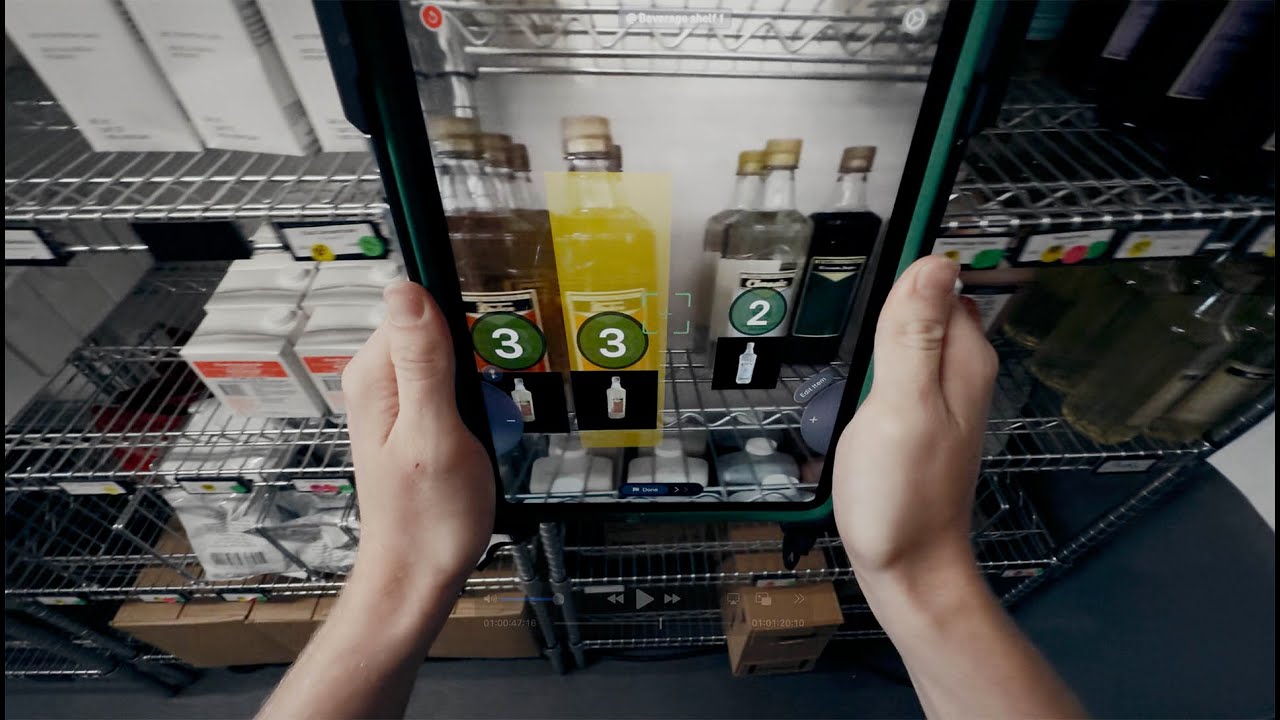
Starbucks retired its Automated Counting inventory tool across North American company-operated stores in May, nine months after a national rollout, according to Reuters reporting cited by Quartz and The Next Web. The system, developed with Redmond, Washington-based NomadGo, used iPad cameras, LiDAR, computer vision, and spatial computing to count beverage inventory. Fast Company reports that store conditions, including reflective surfaces and unreliable Wi-Fi, produced repeated errors.
Starbucks retired its Automated Counting inventory tool across North American company-operated stores in May, ending a deployment that had reached 11,300 locations within nine months, according to Fast Company, Reuters reporting cited by Quartz, and The Next Web. The tool, developed with Redmond, Washington-based startup NomadGo, used iPad-based computer vision, spatial computing, augmented reality, and LiDAR-assisted scanning to tally beverage supplies such as milk, syrups, and coffee.
The program was intended to reduce a manual inventory task that could take about an hour to as little as 10 to 12 minutes, Fast Company reports. Starbucks had introduced Automated Counting in September and required stores to use it for the relevant counts, according to the publication.
Errors in store environments
Fast Company's reporting, based on interviews with dozens of Starbucks employees and NomadGo, describes failures tied to the variability of retail backrooms. A Seattle-area shift supervisor told the publication that reflections in a steel refrigerator could cause the iPad camera to double-count oat-milk cartons. Other baristas reported that the system mislabeled milks, confused syrups, and in one image reviewed by Fast Company, counted a trash can as food.
Connectivity created a separate failure mode. Fast Company reports that at a Texas store with unreliable Wi-Fi, a dropped connection erased an in-progress count. Quartz, citing Reuters reporting and a company promotional video, also reported product-recognition problems, including a peppermint syrup bottle that was not registered during a scan.
Those cases illustrate a persistent computer-vision deployment constraint: controlled demonstrations can differ sharply from operational settings containing reflective materials, dense shelving, changing product packaging, occlusions, inconsistent lighting, and unreliable networks. For teams building vision systems in retail, aggregate accuracy alone is often insufficient; recovery behavior, auditability, and performance across difficult physical environments can determine whether a workflow is usable.
Return to manual counts
A company-wide memo reviewed by Reuters stated: "Starting today, Automated Counting will be retired. Beverage components and milk will now be counted the same way you count other inventory categories in your coffeehouse," according to Quartz and The Next Web.
In a statement to Reuters, Starbucks attributed the change to "a decision to standardize how inventory is counted across coffeehouses as we continue to focus on consistency and execution at scale." The company also told Reuters that it was pursuing daily replenishment cycles and supply-chain improvements, Quartz reported.
GeekWire, summarizing Fast Company's account, reported that NomadGo was left "blindsided" by the decision. Fast Company describes the discontinuation as following a rapid national deployment.
The reported outcome is a reminder that automation of physical inventory is an end-to-end systems problem rather than solely a model-quality problem. Comparable enterprise deployments commonly require fallbacks for failed scans, clear reconciliation against manual counts, connectivity resilience, and monitoring that isolates error patterns by store layout, product class, hardware condition, and network state.
Key Points
- 1Starbucks retired Automated Counting after nine months, returning beverage and milk inventory counts to the same process used for other categories.
- 2Reported reflection, recognition, and connectivity failures show how retail computer vision can break under inconsistent physical and network conditions.
- 3Comparable enterprise vision deployments often depend on manual fallbacks, reconciliation workflows, and granular monitoring beyond headline model accuracy.
Scoring Rationale
The retirement of a chain-wide computer-vision inventory deployment offers a concrete case study in operational reliability, edge conditions, and human fallback design. It is relevant to practitioners deploying AI in physical retail, although it is not a new model, platform release, or broad infrastructure change.
Sources
Public references used for this report.
Practice with real Ad Tech data
90 SQL & Python problems · 15 industry datasets
250 free problems · No credit card
See all Ad Tech problems