SK Hynix Aims to Double Wafer Capacity
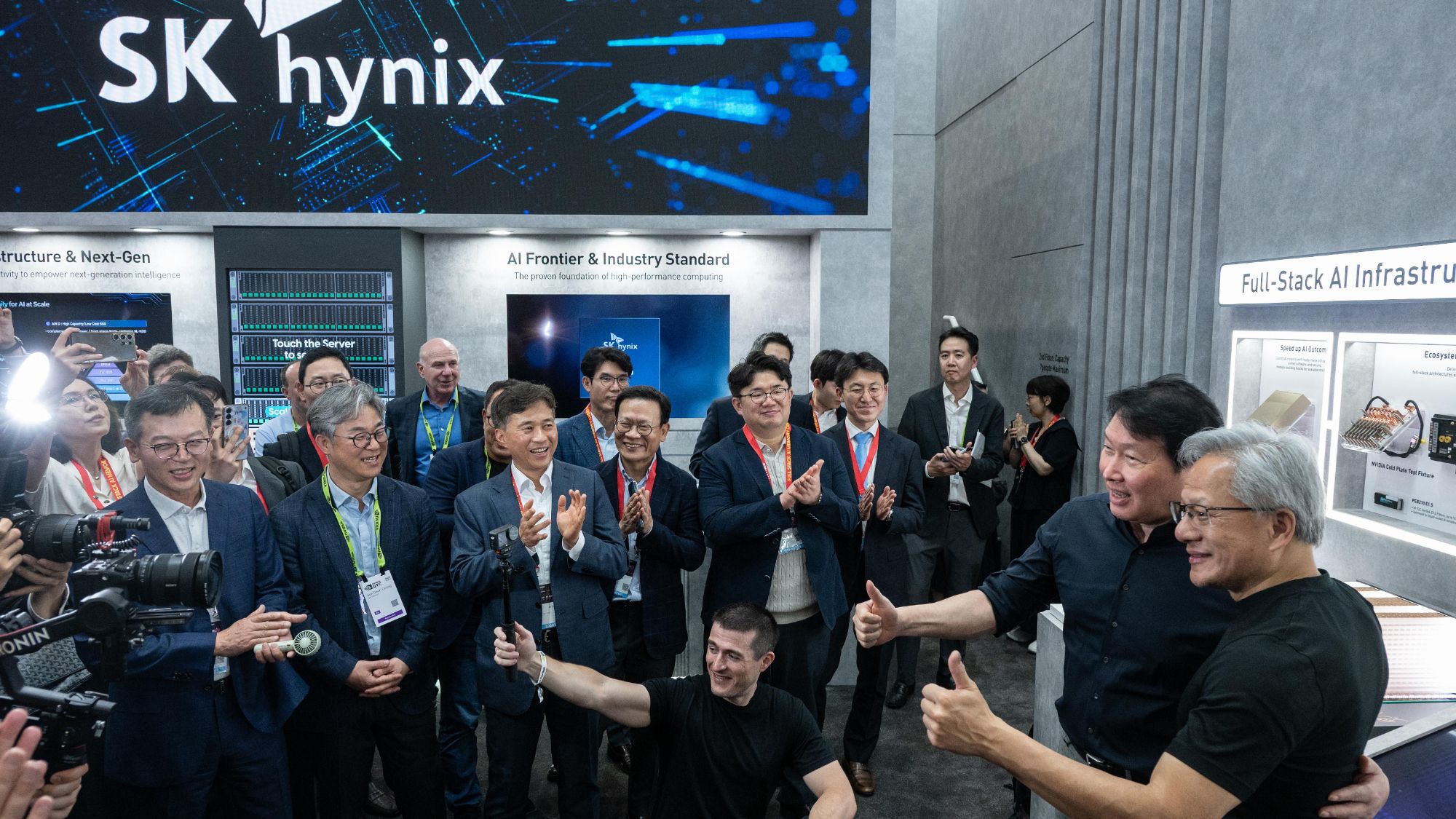
SK hynix's pledge to double wafer capacity is the supply-side answer to the question every AI infrastructure planner is asking: when does the memory crunch end? The chairman's own forecast - not before 2030 - is the more actionable half of the announcement. Reuters reports SK Group chairman Chey Tae-won told reporters at Computex in Taipei, "We are going to double the whole capacity over the next five years," while repeating his forecast that the AI-driven memory shortage could persist until 2030. Tom's Hardware, which first surfaced the story, adds that Chey declined to give a buildout cost but said 2026 capex would climb well above the 30.2 trillion won spent in 2025 - and that Nvidia CEO Jensen Huang wrote "Please Make More" on an HBM4E wafer at SK hynix's booth the same afternoon. SK hynix holds about 58% of the HBM market, per Counterpoint Research figures cited by Reuters.
Why this matters
Memory, not logic, is the binding constraint on AI infrastructure right now, and HBM capacity decisions made in 2026 determine accelerator availability in 2029-2030. A commitment from the world's leading HBM supplier to double wafer capacity is the strongest supply-side signal of this cycle - but the same executive's forecast that the shortage persists until 2030 tells practitioners the relief arrives at the end of the planning horizon, not the beginning.
What happened
SK Group chairman Chey Tae-won told reporters at Computex in Taipei that SK hynix will double its memory wafer capacity over the next five years; Reuters carried the direct quote: "We are going to double the whole capacity over the next five years." Chey repeated his earlier forecast that the AI-driven memory shortage could run until 2030. He declined to put a cost on the buildout but said 2026 capital spending would climb well above the 30.2 trillion won spent in 2025, per Tom's Hardware, which also reports SK hynix has filed to list American depositary receipts in New York this year. The announcement marks a reversal from March, when Chey said at Nvidia's GTC that adding capacity was not planned. In a piece of trade-show theater that doubled as a demand signal, Nvidia CEO Jensen Huang stopped at SK hynix's booth and wrote "Please Make More" on a displayed HBM4E wafer the same afternoon, per Tom's Hardware.
Technical context
HBM is the immediate driver of wafer demand: stacked high-bandwidth memory consumes several times more wafer area per bit than commodity DRAM, so wafer-equivalent demand rises even when bit growth is moderate. HBM's high margins have pulled capacity allocation toward advanced packaging and HBM lines across the industry. Counterpoint Research figures cited by Reuters put SK hynix at about 58% of the global HBM market in the first quarter - a concentration that makes single-supplier decisions like this one systemically important.
Editorial analysis
Two timing realities cut against near-term relief. Building out from an existing site takes at least three years and a greenfield fab more than five, placing even an immediate construction start near the tail of the shortage window Chey himself describes. And doubling wafer starts does not double HBM output if advanced-packaging capacity lags behind. For teams budgeting large training clusters, this argues for locking in memory-heavy capacity commitments early rather than waiting on announced supply.
What to watch
- •Quarterly HBM shipment and wafer-start data from industry trackers such as Counterpoint Research and TrendForce
- •SK hynix capex disclosures, fab construction milestones, and the ADR listing timeline
- •Samsung and Micron capacity responses, which determine whether HBM concentration eases or hardens
Key Points
- 1SK Hynix announces a target to double wafer capacity in five years, a response to surging AI memory demand reported at Computex.
- 2HBM production, where SK Hynix holds roughly 58% per Counterpoint Research, drives wafer-equivalent shortages because HBM consumes more wafers per bit.
- 3Because greenfield fab lead times exceed five years, industry observers expect supply relief to lag demand growth and influence procurement planning.
Scoring Rationale
The announcement matters for ML infrastructure because memory wafer supply, especially for HBM, directly constrains large-scale model training. The multi-year timeline and concentrated supplier share mean capacity shifts will influence procurement, pricing, and deployment plans for practitioners.
Sources
Public references used for this report.
View 4 more sources
- Chipmaker SK Hynix to double wafer capacity in 5 years to meet AI demandasia.nikkei.com
- SK Hynix to double wafer capacity to ease memory chip crunchstraitstimes.com
- SK Hynix plans to double wafer capacity in next five years, group ...finance.yahoo.com
- SK Hynix to Double Memory Wafer Capacity Within 5 Yrsaastocks.com
Practice interview problems based on real data
1,625 SQL & Python problems across 15 industry datasets — the exact type of data you work with.
Try 250 free problems