Singapore Unveils Biological Data Center Prototype
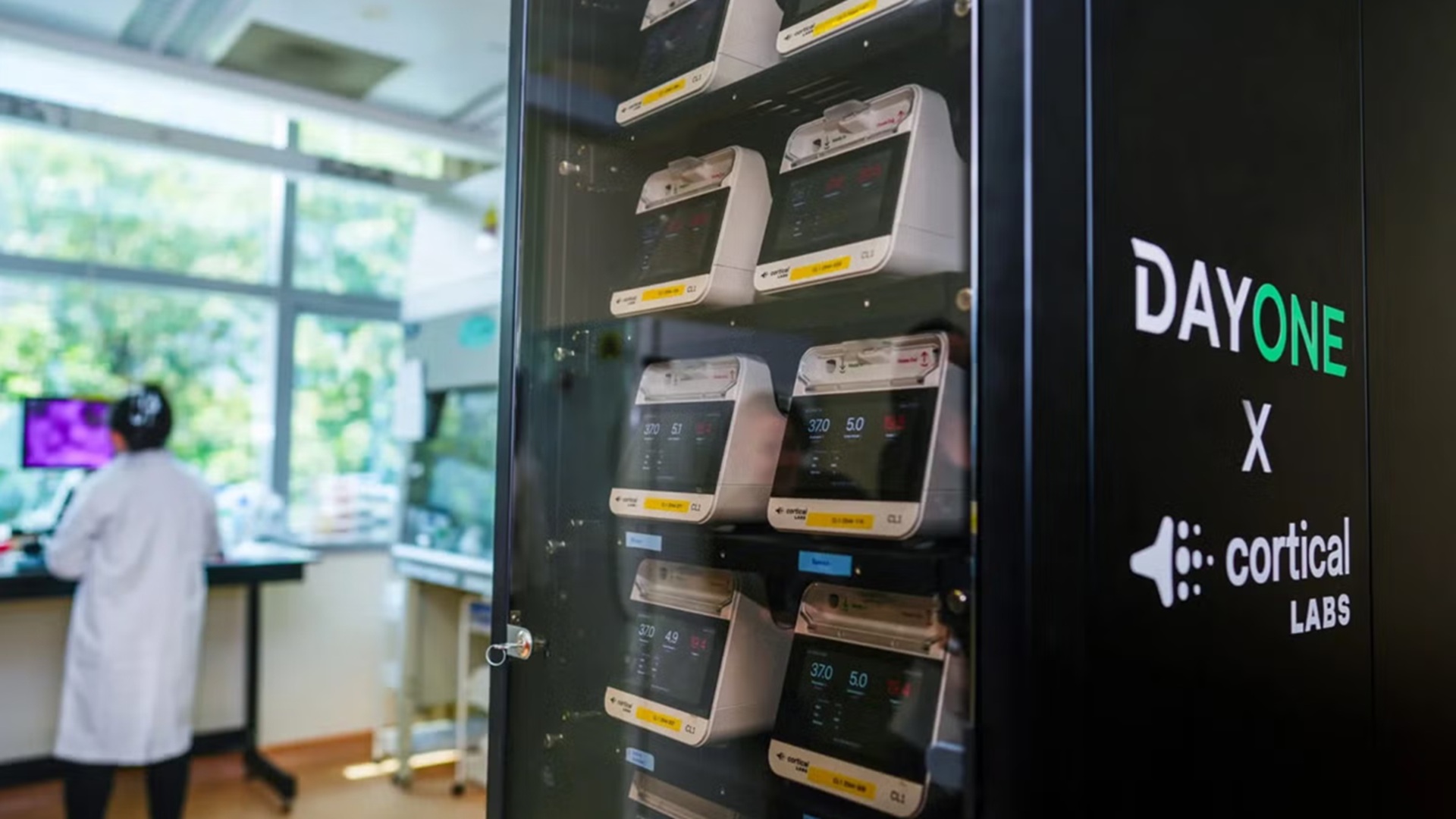
NUS Medicine, DayOne and Cortical Labs announced a 20-unit CL1 biological-computing prototype at NUS in Singapore, following a 6 August 2026 showcase. The system pairs living human neurons with electrode-fitted silicon chips for joint research, but the sources reviewed do not provide workload benchmarks that would make it comparable with conventional AI infrastructure.
NUS Medicine, DayOne and Cortical Labs have established a 20-unit CL1 biological-computing prototype at the NUS Life Sciences Institute in Singapore. In its 17 August announcement, NUS Medicine said the installation places Cortical Labs' system in a live research environment, with DayOne providing supporting infrastructure. The project is an experimental path for computation built around living neurons rather than conventional silicon alone.
At a 6 August showcase, the partners demonstrated the CL1 and Cortical Cloud units, microelectrode-array integration and real-time neural-network activity. The Straits Times, which visited the facility, reported that it began operating on 16 July and that each CL1 contains at least 200,000 lab-grown neurons on an electrode-fitted silicon chip. It also described the continuous nutrients and gas control needed to maintain the cell cultures.
A research installation, not a benchmarked AI rack
The partners describe potential uses in fields including biomedical research, robotics and cybersecurity, where adaptation with limited data could be valuable. Those are stated ambitions rather than demonstrated performance results. The public materials establish that a physical, 20-unit biological-computing installation is operating at NUS; they do not provide a workload-by-workload comparison of throughput, accuracy, latency or performance per watt against silicon AI hardware.
That distinction matters because lower power alone does not make two computing systems interchangeable. The Straits Times reported that Cortical Labs' chief executive described traditional silicon as better suited to fast, precise and repeatable calculations used by large language models. For practitioners, the immediate significance is a live research testbed. A practical infrastructure comparison would require repeatable tasks, defined measurement methods, lifecycle reliability and total operating-resource data.
Key Points
- 1NUS Medicine, DayOne and Cortical Labs established a 20-unit CL1 biological-computing prototype at the NUS Life Sciences Institute and showcased it on 6 August 2026.
- 2The Straits Times reported that the facility began operating on 16 July and that each CL1 contains at least 200,000 lab-grown neurons on an electrode-fitted silicon chip.
- 3The retrieved evidence supports a live research installation, but not a workload-comparable performance claim against conventional AI hardware.
Scoring Rationale
The 20-unit installation is a concrete biological-computing research deployment with potential infrastructure relevance. Its operational significance remains bounded because the retrieved materials do not establish comparable AI workload performance.
Sources
Primary source and supporting public references used for this report.
Practice interview problems based on real data
1,625 SQL & Python problems across 15 industry datasets — the exact type of data you work with.
Try 250 free problems