The AI-era data center story: hyperscaler build-outs and capacity announcements, power purchase agreements, cooling and efficiency, and the physical supply chain for modern AI.
Stories
162,675
Latest source update
July 13, 2026
Coverage
Live
Topic brief
What to know about Data Centers
Brief updated Jul 11, 2026
Data centers are the physical foundation of the AI era: the campuses, power, cooling, networking, and silicon that make training and serving large models possible. As frontier models and autonomous agents scale, demand has shifted from incremental cloud expansion to purpose-built, gigawatt-class AI facilities financed with long-term leases, sovereign programs, and tens of billions in debt and equity. For practitioners, the data center is where abstract model capability turns into concrete constraints on cost, latency, and availability.
For engineering and infrastructure teams, the topic determines what compute is actually procurable and when, since rack roadmaps, memory supply, power contracts, and interconnection queues all gate deployment. For executives and investors, it is the largest capital-allocation story in technology, with hyperscalers, neoclouds, chipmakers, and utilities all competing to build. For policymakers and communities, the buildout raises hard questions about electricity, water, emissions, local impact, and financial-system exposure.
The defining tension is between explosive ambition and physical limits. The industry is committing to unprecedented capacity even as grid interconnection, water, supply chains, and public acceptance push back, and as novel power sources such as nuclear and fusion move from concept toward pilot. That collision, plus rising anxiety about whether the spending will pay off, makes data centers a bellwether for the whole AI economy.
What changed recently
The buildout keeps accelerating and diversifying geographically and up the stack into custom silicon. Gujarat launched a Rs. 6 lakh crore data centre policy targeting 7.5 GW of capacity, HUMAIN and Cohere secured at least 50 MW of dedicated Saudi-backed compute for Q4 2027, and Cerebras said it will bring first European capacity online by end-2026 and scale to 200 MW by end-2027 across France and the Nordics, partly for OpenAI, while Flex and Cerebras separately said new Milpitas manufacturing lines should support roughly a 7x increase in CS-3 production. Meta reported plans to put its in-house MTIA chip into production in September 2026 as part of a push to roughly double its data-center computing capacity to 14 gigawatts by 2027, and 5C and AMD announced a partnership to build gigascale AI campuses, though that deal remains announcement-level without named sites yet.
Oversight and friction sharpened at the same time. Senator Ed Markey unveiled a federal AI accountability agenda that would require FCC certification before new AI data centers can be built, adding a national-policy thread alongside Virginia's existing data-center power tax. Microsoft's own sustainability report showed total emissions up 25% year over year as AI infrastructure raises demand for energy, water, land, and materials, and SpaceX moved to blunt community backlash in Memphis with a 50% discount on Starlink service near contested xAI data-center sites. Construction itself is industrializing too: DEWALT commercially launched a fleet-capable drilling robot that its pilot data put at roughly 10 times faster than conventional methods, a sign that build speed, not just chip and power supply, is becoming a competitive lever.
What to watch
Watch the near-term milestones behind the biggest commitments: SK Telecom's Yeongnam program starts with a 100 MW Ulsan facility targeting the fourth quarter of 2027, HUMAIN and Cohere's 50 MW deal targets the same quarter, Meta expects to begin MTIA chip production in September 2026 on the way to a 14 GW capacity target by 2027, and Cerebras aims for first European capacity by end-2026. Power remains the gating factor, since grid interconnection rather than raw generation is slowing projects like Stargate in Abilene, and Nvidia's Kyber NVL144 rack delay to 2028 could push some rack availability out further. On oversight, watch whether Senator Markey's federal AI accountability agenda, including its proposed FCC certification requirement for new data centers, gains traction alongside state-level moves like Virginia's power tax, and whether the unvetted Treasury bubble-risk draft and recent chip and memory stock swings harden into a broader capital pullback.
Comparison
label
status
SK Telecom Yeongnam program
140 trillion won (about $91.5 billion); starts with a 100 MW Ulsan facility targeting Q4 2027, scaling toward 5 GW by 2029
Korean conglomerates (Hanwha, Hyundai Motor, Samsung, SK Group)
312 trillion won (about $201.7 billion) combined for Yeongnam, paired with small modular reactors
Anthropic Kentucky campus (with TeraWulf)
20-year lease for about 401 MW, worth about $19 billion in contracted revenue; initial capacity expected in H2 2027
Meta Alberta, Canada campus
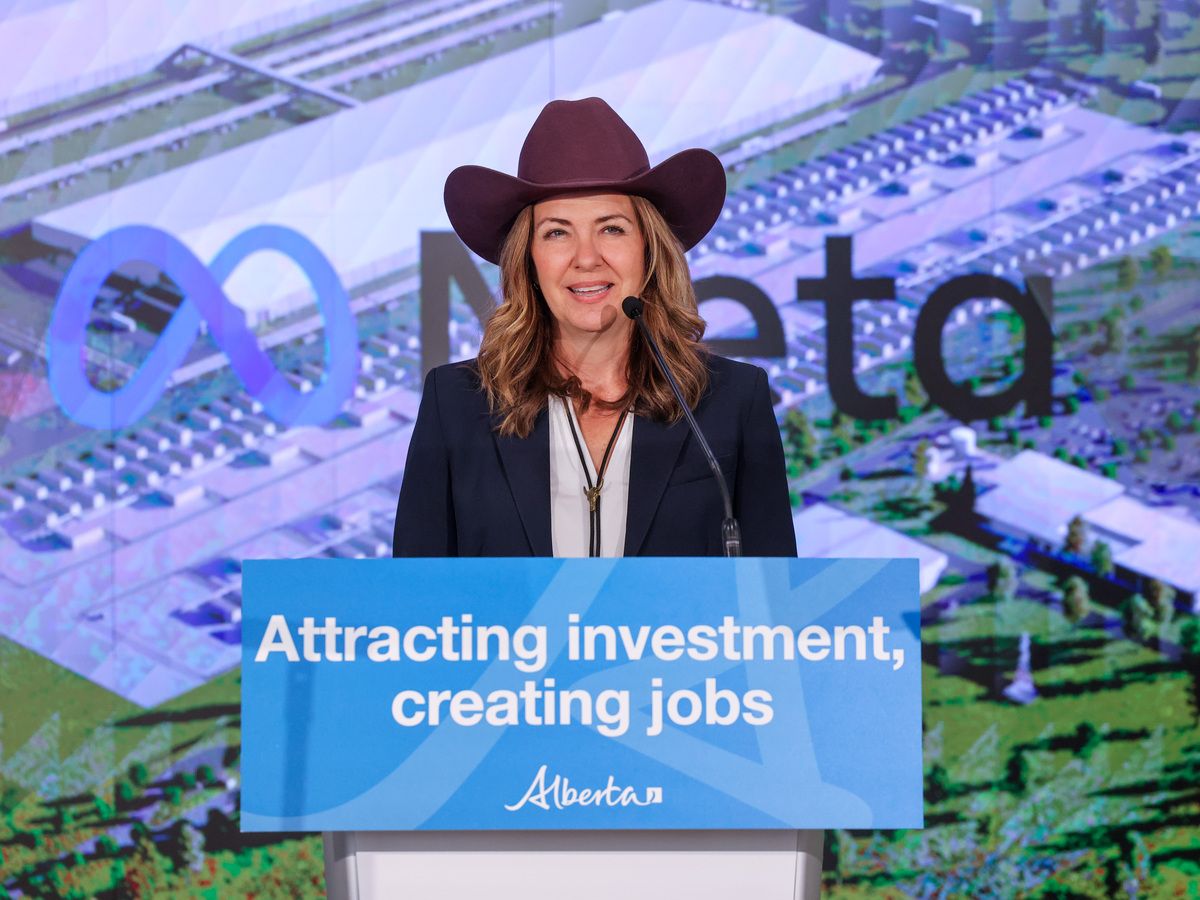
Groundbreak on a 1 GW site, more than CAD $13 billion of investment, about 3,000 peak construction jobs
Meta data-center capacity target
In-house MTIA chip production planned for September 2026; aims to roughly double capacity to 14 GW by 2027
Cerebras European expansion
First capacity by end-2026, scaling to 200 MW by end-2027 across France and the Nordics, partly for OpenAI
Gujarat, India data centre policy
Targets Rs. 6 lakh crore in investment and 7.5 GW of capacity under the 2026-29 policy
HUMAIN and Cohere
At least 50 MW of dedicated AI compute capacity, targeted for Q4 2027
Frequently asked questions
Why is AI driving a data-center boom?+
Training and running frontier models and agents requires enormous, dense compute and power, so hyperscalers and labs are committing to gigawatt-class campuses and long-term leases. For example, Anthropic signed a 20-year lease for about 401 MW at a Kentucky campus representing roughly $19 billion of contracted revenue.
What is the biggest constraint on the buildout?+
Power, and specifically grid interconnection rather than a simple shortage of electricity. High-load projects like Stargate in Abilene, expected to draw about 1.2 GW at peak, show how connection timelines, water, and local capacity gate growth.
How are companies solving the power problem?+
By pursuing new generation. Helion agreed to sell fusion-generated electricity to Microsoft by 2028, nuclear startups like Valar Atomics have demonstrated reactor-powered compute, and South Korea's Yeongnam plans pair data centers with small modular reactors.
Where is the largest investment happening?+
South Korea and increasingly India stand out. SK Telecom pledged 140 trillion won (about $91.5 billion) for Yeongnam hyperscale data centers, four conglomerates announced a combined 312 trillion won (about $201.7 billion) for the same region, and Gujarat separately launched a Rs. 6 lakh crore policy targeting 7.5 GW of capacity. North America is also seeing large sites, such as Meta's 1 GW Alberta campus.
Is there a data-center or AI bubble risk?+
Concerns are rising. A draft US Treasury report warned AI could pose financial-system risk if valuations or data-center financing disappoint, chip and memory stocks fell sharply on capex fears, and the Federal Reserve flagged AI-driven demand and inflation risks. These are warnings, not consensus.
How are communities and regulators responding?+
With pushback and new rules at both the state and federal level. Virginia enacted a first-of-its-kind data-center electricity tax, Senator Ed Markey unveiled a federal AI accountability agenda that would require FCC certification before new AI data centers are built, residents in Memphis and rural areas have protested local impacts, and Microsoft's own sustainability report showed emissions rising about 25% year over year, driven largely by data-center expansion.