RBI's 2027 ECL Rule Tightens Indian Lending
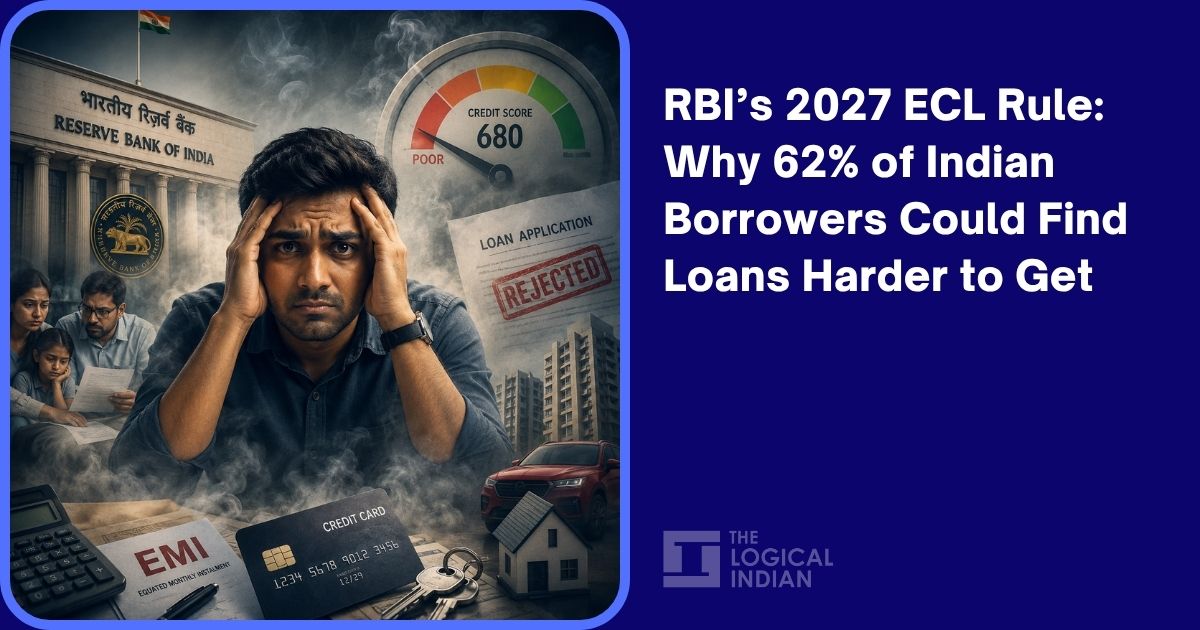
RBI issues a 2027 ECL rule requiring banks to assess future default risks earlier, tightening credit access for many borrowers. As a result, 62% of Indian borrowers could find loans harder to get.
What happened
The Reserve Bank of India (RBI) has finalized an Expected Credit Loss (ECL) provisioning framework, with rollout set for April 2027, according to Business Standard. Under the new rules, Indian banks will be required to assess and provision for future default risks earlier in the credit lifecycle, replacing the current incurred-loss model.
Technical details
ECL computation is based on three parameters: probability of default (PD), loss given default (LGD), and exposure at default (EAD), per Business Standard. Banks must adopt probability-weighted estimates across multiple macroeconomic scenarios and classify financial assets into three stages based on credit-risk changes since initial recognition. Stage 1 assets provision for 12-month expected losses; Stage 2 and Stage 3 assets require lifetime expected loss provisioning. Banks typically implement ECL frameworks using statistical or machine-learning models calibrated on historical loan performance data.
Industry context
TheLogicalIndian.com reported that approximately 62% of Indian borrowers could face tighter loan approval conditions under the new framework, though this figure could not be independently verified from primary sources. Business Standard reports the increased provisioning requirements could reduce banking-sector profits by as much as Rs 42,000 crore. Borrowers with CIBIL scores of 730 and above are positioned as preferred customers under the risk-based regime.
What to watch
Practitioners building credit-risk models for Indian banks should track the final rule text and scenario definitions RBI publishes ahead of the April 2027 implementation date. The shift incentivizes investment in PD/LGD modeling infrastructure and data pipelines, which is where AI and ML tooling is most directly relevant.
Key Points
- 1RBI's 2027 ECL rule shifts banks to assess future default risk earlier in lending.
- 2Banks will assess future default risks earlier, prompting tighter underwriting and reduced credit availability.
- 3Approximately 62% of Indian borrowers could encounter harder loan approvals, shrinking consumer and SME credit access.
Scoring Rationale
The RBI ECL framework is a real banking regulation event with a genuine ML/modeling angle (PD/LGD model infrastructure). However, the primary source is a secondary outlet, the AI connection is indirect, and the story is primarily a banking compliance item. Score reflects niche relevance to credit-risk ML practitioners in India without broader AI/DS significance.
Sources
Public references used for this report.
Practice with real Banking data
90 SQL & Python problems · 15 industry datasets
250 free problems · No credit card
See all Banking problems