Ouster and FieldAI partner for robot navigation
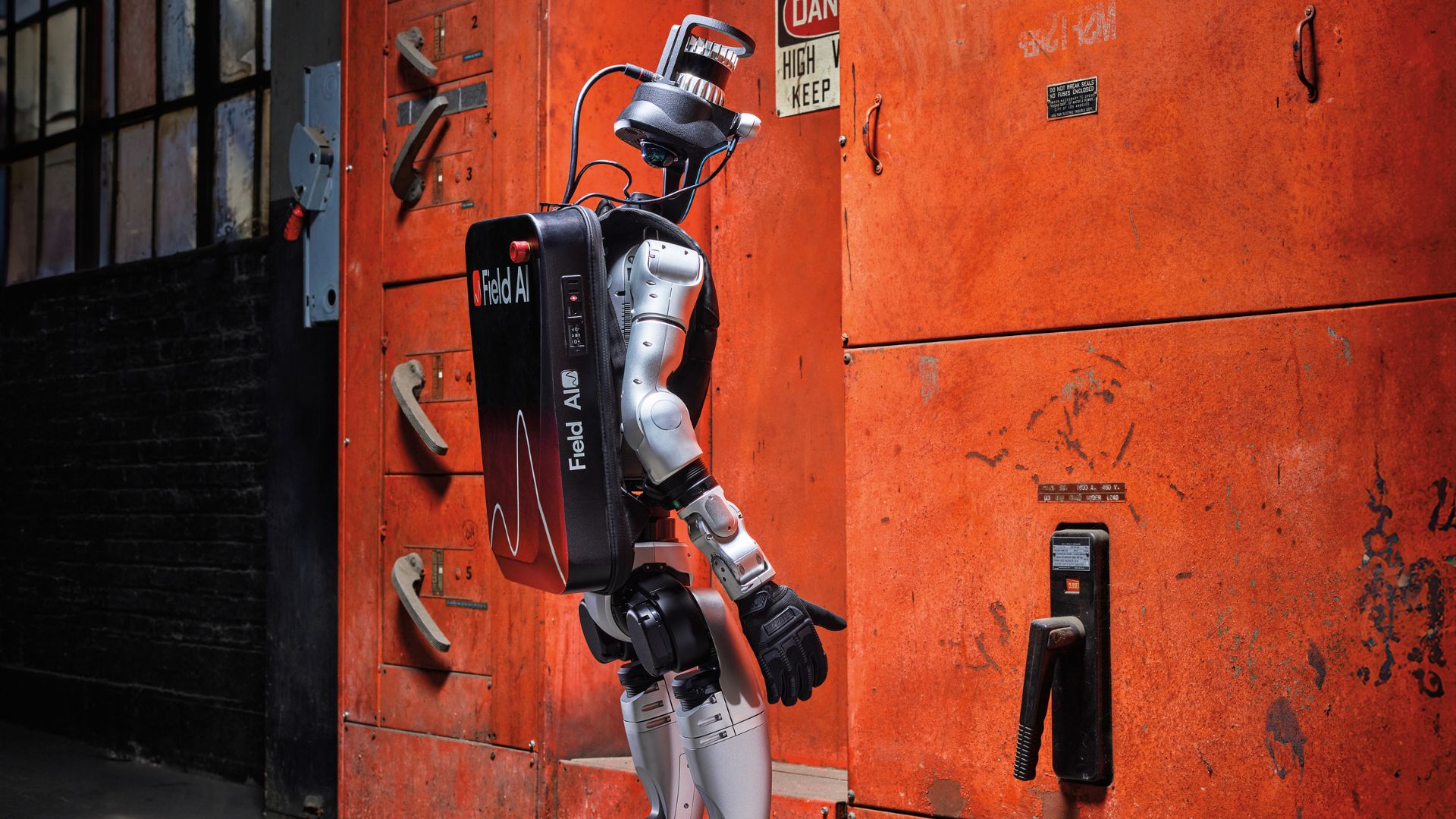
Ouster and FieldAI announced on June 2, 2026 a partnership to integrate Ouster's Rev8 native-color digital lidar into FieldAI's general-purpose mobile robots, according to the companies' joint announcement and trade coverage from Interesting Engineering and The AI Insider. The integration is meant to let robots perceive and navigate complex, unmapped, GPS-denied industrial environments without pre-planned routes or added infrastructure. FieldAI's head of hardware, Andrew Mullen, said "Ouster Rev8's ruggedness, performance, and native color are helping FieldAI deliver next-generation physical AI solutions for industrial customers where it matters most, in the field." FieldAI's Field Foundation Models are pitched as a universal robot "brain" combining data-driven AI with physics-based reasoning; the companies name construction, mining, energy, manufacturing, security, and government as target sectors.
What happened
Ouster and FieldAI announced on June 2, 2026 a collaboration to integrate Ouster's Rev8 native-color digital lidar into FieldAI's general-purpose mobile robots, according to the companies' joint announcement and trade coverage from Interesting Engineering and The AI Insider. The companies say the pairing is aimed at helping robots perceive and navigate complex, unmapped, GPS-denied industrial environments. FieldAI's head of hardware, Andrew Mullen, said in the announcement that "Ouster Rev8's ruggedness, performance, and native color are helping FieldAI deliver next-generation physical AI solutions for industrial customers where it matters most, in the field."
The technology
Ouster's Rev8 is described as a rugged, high-resolution digital lidar that adds native color to 3D sensing. FieldAI's Field Foundation Models are pitched as a universal robot "brain" that the company says works across different robot types, tasks, and environments, combining data-driven AI with physics-based reasoning and uncertainty awareness. Per the announcement, FieldAI robots can be introduced to a new site with no prior information, pre-planned routes, supporting infrastructure, or environmental modification required. The companies say they are targeting deployments across construction, mining, energy, manufacturing, security, and government.
Editorial analysis - why it matters
As a generic industry pattern in physical AI and autonomous mobile robots, fusing high-resolution lidar with foundation-model-style robot controllers tends to improve scene understanding, dynamic-obstacle handling, and terrain reasoning relative to range-only sensing, and reduces reliance on pre-mapped sites. For robotics integrators and ML engineers, the practical effect is to shift effort from map creation and infrastructure setup toward perception-model tuning and sensor calibration. These claims come from the companies and trade coverage; no independent field benchmarks were published with the announcement.
What to watch
- •Independent field benchmarks of the integrated stack, especially perception-failure modes in low-visibility or GPS-denied conditions.
- •Availability of SDKs and sensor-driver integrations between Ouster and FieldAI.
- •Real deployments and customer references across the named industrial verticals.
Key Points
- 1Ouster and FieldAI are integrating Ouster's Rev8 native-color lidar into FieldAI's general-purpose robots for navigation in unmapped, GPS-denied industrial sites.
- 2Pairing high-resolution lidar with FieldAI's Field Foundation Models aims to cut reliance on pre-mapped sites and added supporting infrastructure.
- 3For robotics teams, effort shifts from map creation toward perception tuning and sensor calibration; no independent benchmarks accompanied the announcement.
Scoring Rationale
A real component-integration partnership (announced June 2, 2026) pairing Ouster's Rev8 lidar with FieldAI's Field Foundation Models for general-purpose robots in unmapped industrial environments, corroborated by the joint release and independent trade coverage. Relevant to robotics and physical-AI practitioners, but it is a single sensor-integration announcement without independent benchmarks or disclosed financials, placing it in solid-but-not-major territory.
Sources
Public references used for this report.
Practice interview problems based on real data
1,625 SQL & Python problems across 15 industry datasets — the exact type of data you work with.
Try 250 free problems