
NVIDIA Open-Sources cuFile APIs for GPU-Driven Storage
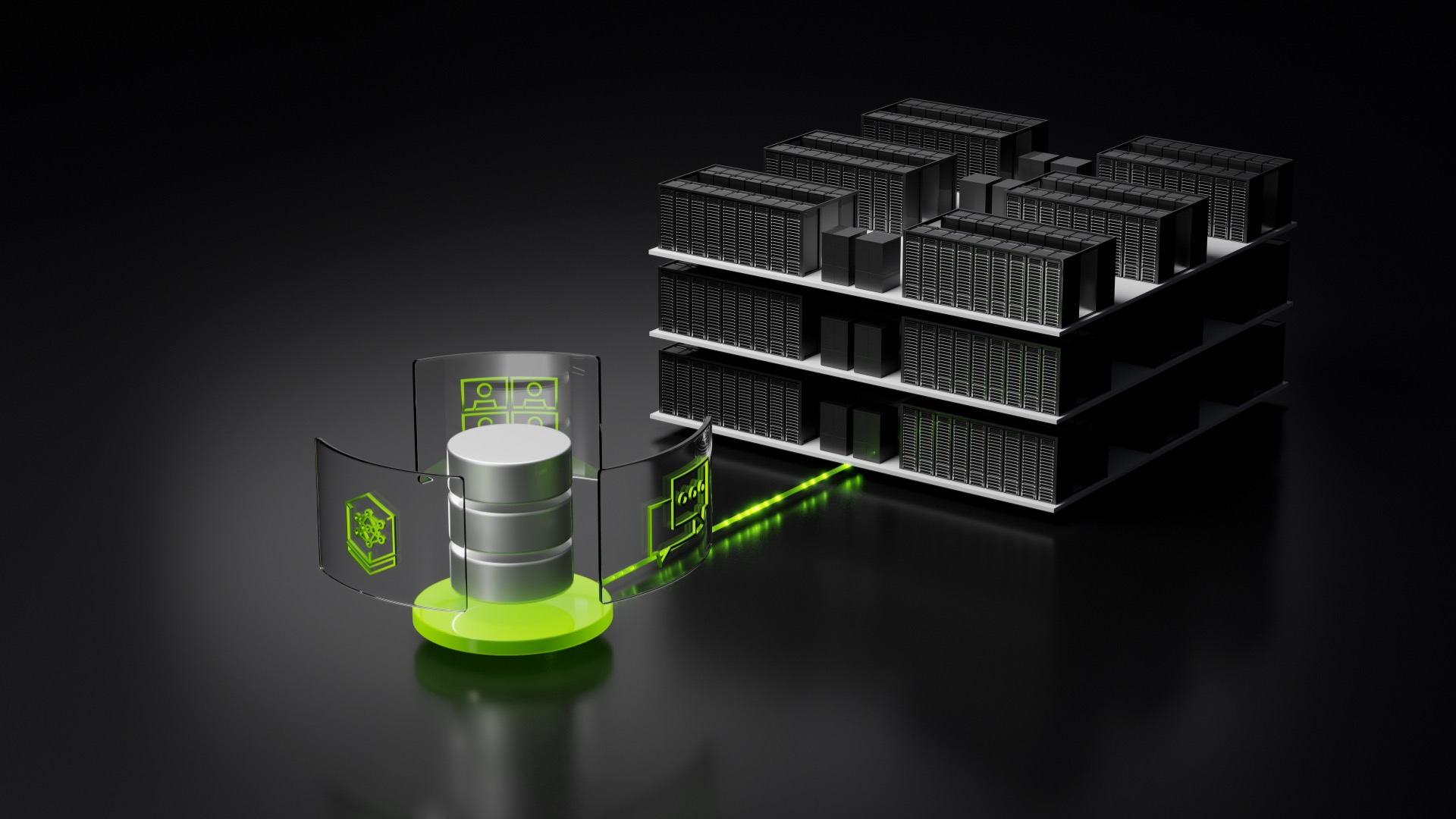
NVIDIA announced at the Future of Memory and Storage conference on August 4 that it is open-sourcing its cuFile APIs and the storage software stack beneath them. The move gives developers a contribution path for technology that lets GPUs initiate storage reads and writes directly, while NVIDIA continues its separate SCADA and Storage-Next work.
NVIDIA announced at the Future of Memory and Storage conference on August 4 that it is open-sourcing its cuFile application programming interfaces and the vertical storage software stack beneath them. The APIs are part of NVIDIA GPUDirect Storage and let GPUs initiate reads and writes without routing every request through a CPU-controlled path.
The company pointed developers to a new GitHub organization for a multi-vendor storage I/O stack. NVIDIA said Google, Intel, Meta and NVIDIA are inaugural maintainers. The initial scope describes a cuFile interface, a conformance test suite, a user-level implementation intended to support multiple platforms, and Linux changes needed by the stack. This is an interoperability effort, not a claim that every existing GPUDirect Storage component or vendor implementation has become portable overnight.
## cuFile is one part of a wider storage push
NVIDIA presented the open-source change alongside Storage-Next, an initiative involving more than 40 storage and flash vendors, and SCADA, its scaled accelerated data access framework. SCADA is designed for massively parallel GPU threads to request selected data directly from storage while a privileged component establishes protected access. NVIDIA's description emphasizes that the speedup must preserve Linux security boundaries rather than giving untrusted applications unrestricted device access.
StorageReview linked the announcement to the broader goal of making storage behave more like an extension of memory for AI workloads. That framing matters for retrieval, graph and agent workloads that perform many small, concurrent reads, but it does not make storage equivalent to high-bandwidth GPU memory in latency or bandwidth.
The performance number is prior context
The 230 million 512-byte random-read IOPS figure associated with SCADA came from a Micron-led single-server demonstration disclosed for SC25 in 2025. It used 44 Micron 9650 PCIe Gen6 SSDs, three NVIDIA H100 GPUs, Broadcom switches and an H3 Platform server. It is a configuration-specific benchmark, not a new August 4 cuFile result and not a general application-performance guarantee.
For infrastructure teams, the immediate development is the opening of the API and conformance layer to outside implementation and contribution. The longer-term test will be whether multiple hardware and software vendors deliver compatible implementations, publish reproducible results and preserve the security properties NVIDIA describes as the ecosystem moves beyond demonstrations.
Key Points
- 1NVIDIA announced on August 4 that it is open-sourcing the cuFile APIs and the storage software stack beneath them.
- 2The new multi-vendor effort includes an API, conformance testing, a user-level implementation and supporting Linux work.
- 3SCADA and Storage-Next are related initiatives, while the cited 230 million IOPS result is a configuration-specific 2025 benchmark rather than a new cuFile result.
Scoring Rationale
Opening the cuFile API and conformance layer could improve multi-vendor interoperability for GPU-driven storage, but deployment breadth and cross-platform performance remain to be demonstrated.
Sources
Primary source and supporting public references used for this report.
Practice interview problems based on real data
1,625 SQL & Python problems across 15 industry datasets — the exact type of data you work with.
Try 250 free problems
