Intel Details Crescent Island AI Inference Accelerator

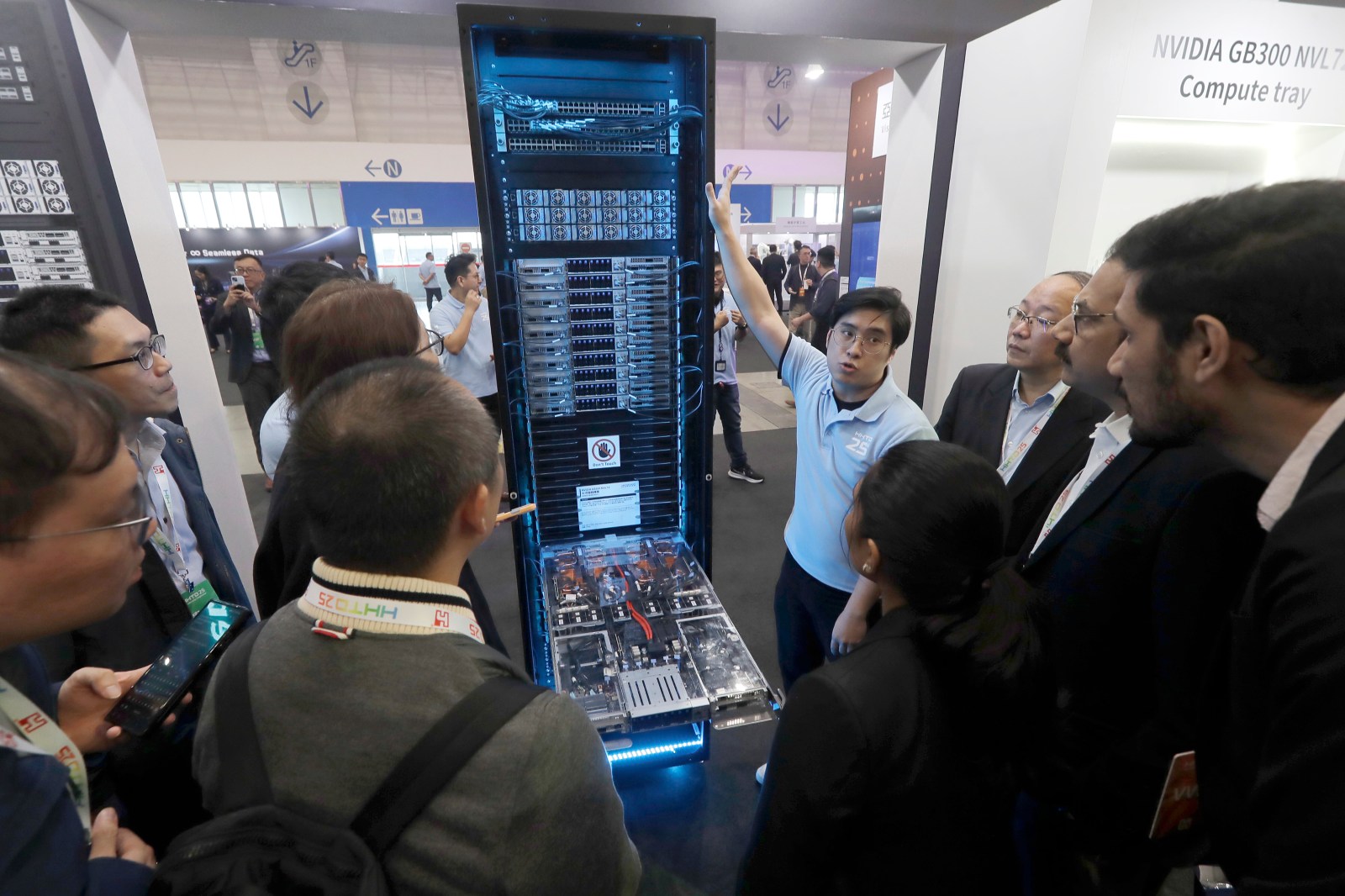
Intel detailed Crescent Island at Computex as a Xe3P-based AI inference accelerator with LPDDR5X memory configurations ranging from a 160GB reference design to 480GB partner cards. The original RSS item lists 32 Xe3P cores, while Tom's Hardware and Data Center Dynamics report a 350W PCIe add-in card designed for air cooling. DCD reports customer sampling is targeted for the second half of 2026.
Intel detailed its forthcoming Crescent Island AI accelerator at Computex, outlining a Xe3P-based PCIe card that can use up to 480GB of LPDDR5X memory. The original RSS item lists 32 Xe3P cores. Data Center Dynamics reports that the reference design contains 160GB of LPDDR5X, while partner implementations can scale to the 480GB maximum.
Tom's Hardware and Data Center Dynamics report that Crescent Island has a 350W power target and supports air cooling. Data Center Dynamics describes the product as an inference-focused data center GPU, while the original RSS item also places it in PC, workstation, and edge deployments where fast local inference is relevant.
An alternative to HBM-centric accelerators
Crescent Island departs from the GDDR and HBM memory used in many contemporary data center accelerators. Tom's Hardware reports that Intel selected LPDDR5X for the design, and Data Center Dynamics notes that LPDDR5X offers lower bandwidth than HBM. The tradeoff is central to the hardware's stated configuration: a comparatively large memory capacity in an air-cooled, 350W add-in card rather than a high-bandwidth HBM package.
Tom's Hardware reports that Xe3P supports data types from FP4, intended for high-performance AI inference, through FP64, which can be used for scientific computing workloads. The publication also reports that Intel has not disclosed raw compute-throughput figures, so direct comparison with competing inference hardware is not yet possible.
A HardForum post reproducing the underlying coverage gives a hypothetical example involving a trillion-parameter model such as Kimi K3. It states that approximately 2TB of aggregate system memory would be required locally, and that four 480GB cards could provide 1.92TB of accelerator memory. That example illustrates the capacity proposition, but it is not a benchmark or a demonstrated deployment result.
Why capacity matters for inference
For autoregressive language-model serving, the KV cache stores attention keys and values from prior tokens. Its memory footprint grows with context length and concurrent requests. Inference systems with more device-resident memory can, in general, accommodate larger models, longer contexts, or more cached requests before memory capacity becomes the binding constraint.
Bandwidth remains consequential. Prompt prefill, token generation, model architecture, quantization format, batching, and software kernels can each affect whether a workload is compute-bound or memory-bandwidth-bound. As a result, the published capacity figure alone does not establish throughput, latency, or cost per token relative to HBM-based systems.
Data Center Dynamics reports that customer sampling is targeted for the second half of 2026. Benchmarks from those systems, including results for long-context and multi-request inference, would provide the missing evidence needed to assess the LPDDR5X design tradeoff in production settings.
Key Points
- 1Reported specifications list 32 Xe3P cores and up to 480GB LPDDR5X, emphasizing unusually high accelerator memory capacity for inference.
- 2DCD reports a 350W air-cooled PCIe design and second-half 2026 sampling, placing deployment evidence after the architectural disclosure.
- 3Across inference systems, large device memory can support model placement and KV-cache capacity, while bandwidth still materially affects serving performance.
Scoring Rationale
Crescent Island is a notable forthcoming AI inference accelerator from Intel, with an unconventional high-capacity LPDDR5X memory design that is relevant to LLM serving infrastructure. Its practical importance remains constrained by the absence of disclosed throughput figures and the reported second-half 2026 customer-sampling timeline.
Sources
Public references used for this report.
Practice interview problems based on real data
1,625 SQL & Python problems across 15 industry datasets — the exact type of data you work with.
Try 250 free problems