NVIDIA and LangChain Launch NemoClaw Agent Blueprint
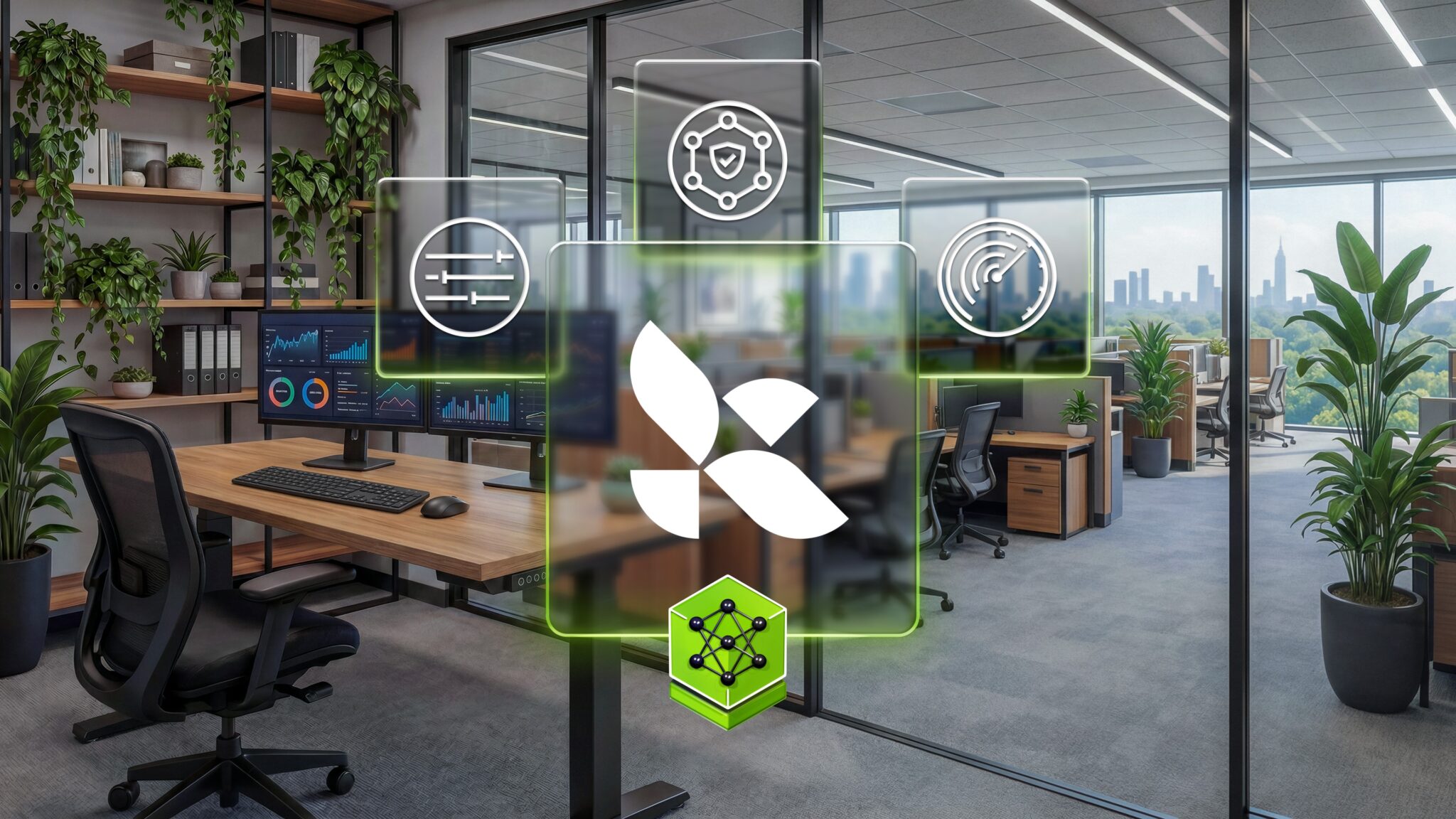
NVIDIA and LangChain launched the NemoClaw Deep Agents Blueprint, pairing Nemotron 3 Ultra, LangChain Deep Agents Code, and OpenShell for governed enterprise agent deployments. LangChain reports that Nemotron 3 Ultra reached a 0.86 aggregate score in its agent eval suite at a $4.48 run cost, compared with $43.48 for the next closest model in that test. The practitioner signal is that agent performance is being treated as stack engineering: model, harness, runtime, tool policy, and evaluation loop are tuned together. Teams should validate the cost and quality claims on their own workloads, but the release gives a concrete pattern for open, auditable agent systems.
The useful lesson is that agent quality is becoming stack engineering, not just model selection. NemoClaw is framed around the model, harness, runtime, evaluation loop, and deployment controls moving together, which is closer to how enterprise agents actually succeed or fail.
What happened
NVIDIA and LangChain announced the NemoClaw Deep Agents Blueprint for enterprise agents. The stack combines LangChain Deep Agents Code, NVIDIA Nemotron 3 Ultra, and NVIDIA OpenShell, with NVIDIA documentation describing NemoClaw ecosystem components for deployment. LangChain says the tuned Deep Agents harness let Nemotron 3 Ultra achieve a 0.86 aggregate score in its agent eval suite at a $4.48 run cost.
Technical context
LangChain says the next closest performing model in that evaluation cost $43.48, making the reported configuration roughly 10x lower cost in that benchmark. NVIDIA says the gains came from tuning the surrounding agent environment rather than retraining the model. That distinction matters because production agents often fail through tool use, context handling, memory, runtime isolation, or evaluation gaps rather than raw model capability alone.
For practitioners
The reusable pattern is to evaluate the agent as a system. Teams should measure task success, tool safety, latency, cost, sandbox behavior, and auditability under the same workload. OpenShell and the Deep Agents harness are relevant because they move governance closer to the runtime where agent actions happen.
What to watch
The next proof point is independent workload replication. If teams can reproduce similar cost-quality tradeoffs outside LangChain's benchmark suite, NemoClaw becomes a meaningful reference architecture for open agent deployments. If not, it is still useful as a blueprint for evaluating how harness, runtime, and model choices interact.
Key Points
- 1NVIDIA and LangChain released NemoClaw, a blueprint combining Nemotron 3 Ultra, Deep Agents Code, and OpenShell runtime.
- 2LangChain reported a 0.86 agent-eval score at $4.48 per run, roughly 10x below the next closest model cost.
- 3The release gives enterprise teams a tunable open stack for agent quality, cost, sandboxing, and governance experiments.
Scoring Rationale
This is a notable agent-infrastructure release because it ties model choice, harness tuning, runtime controls, and evaluation cost into one deployable blueprint. The score remains 6.8 because the claims are useful for practitioners but still primarily vendor-reported and need independent workload replication.
Sources
Public references used for this report.
Practice interview problems based on real data
1,625 SQL & Python problems across 15 industry datasets — the exact type of data you work with.
Try 250 free problems