Operation Epic Fury Tests AI-Enabled Targeting
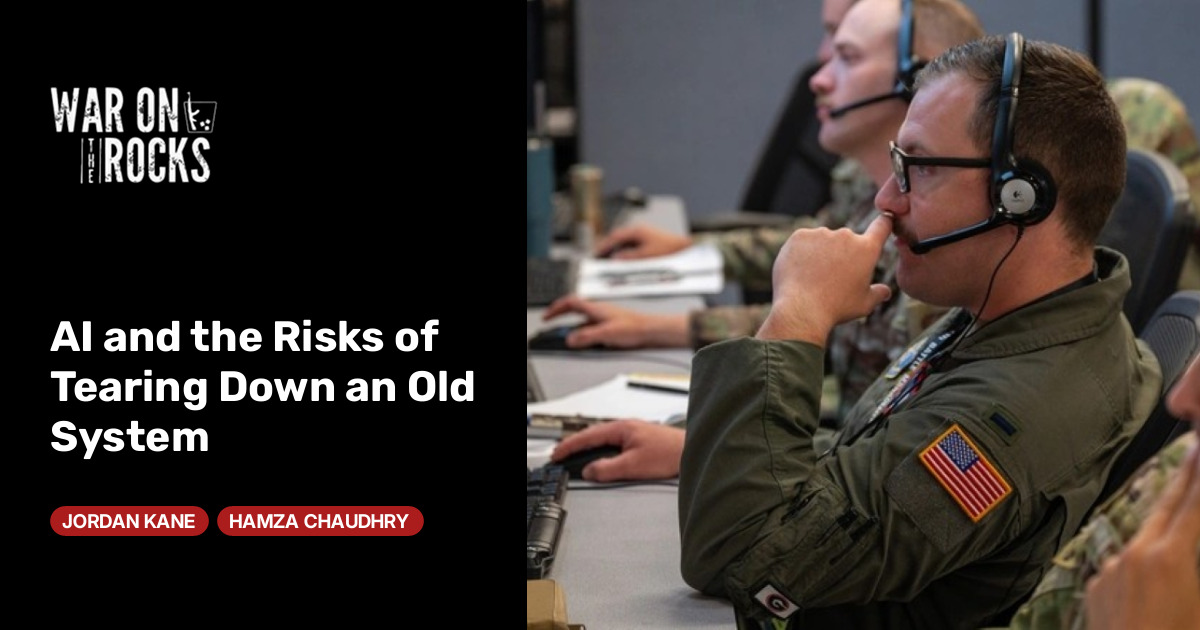
U.S. Central Command used AI-enabled systems during Operation Epic Fury, including Palantir's Maven Smart System, according to DefenseScoop. The outlet reports that the military also used Anthropic's Claude technology in the campaign. Arms Control Association reports that Maven fused intelligence inputs to prioritize targets, recommend strike options, and present commanders with a common operating picture.
U.S. Central Command used AI-enabled systems during Operation Epic Fury, the U.S. campaign against Iran that began February 28, according to DefenseScoop and Arms Control Association reporting. DefenseScoop reports that the military used Palantir's Maven Smart System and Anthropic's Claude technology during the operation.
In a March statement reported by DefenseScoop, CENTCOM commander Adm. Brad Cooper said AI tools helped personnel process large data volumes more quickly. "Humans will always make final decisions on what to shoot and what not to shoot and when to shoot," Cooper said. He added that advanced AI tools could turn processes that previously took hours or days into seconds.
Maven's reported role
Arms Control Association reports that the Pentagon used Maven as a data-fusion and decision-support system for target selection and weapon-choice support. At Palantir's AIPCon 9 conference, Pentagon Chief Digital and AI Officer Cameron Stanley described a system that combined radar signals, satellite and drone imagery, electronic communications, and other intelligence into a common operating picture.
According to Arms Control Association's account of Stanley's remarks, Maven also helped identify the friendly unit best positioned for a strike and generated courses of action covering attack vectors, munitions, and related operational information. Stanley described the transition from separate command systems to a single visualization tool as "revolutionary."
The reported deployment illustrates a practical military AI architecture: machine learning and data integration systems consolidate heterogeneous sensor and intelligence inputs, while human commanders retain formal authority over weapons release. DefenseScoop reported that Cooper did not identify the specific AI systems used in his public remarks.
Scrutiny of AI-Supported Targeting
Arms Control Association reports that a White House accounting on April 8 claimed more than 13,000 strikes in Iran during the campaign's first 38 days. The same report notes that The New York Times and other outlets documented damage to civilian facilities, and that critics linked potential targeting errors and civilian casualties to overreliance on AI.
That criticism does not establish a causal connection between any individual AI recommendation and a specific strike outcome. It does underscore a recurring issue in comparable high-consequence decision systems: data fusion can speed identification and prioritization, but validation, provenance, uncertainty communication, and auditable human review remain central to assessing outputs before action is taken.
Key Points
- 1DefenseScoop reports that CENTCOM used Maven and Claude during Epic Fury, bringing AI systems into an active military campaign.
- 2Arms Control Association reports Maven fused sensor and intelligence data, reducing fragmentation between target identification, strike planning, and commander decision support.
- 3Comparable high-consequence AI deployments require auditable human review because faster data fusion does not independently validate target accuracy or downstream effects.
Scoring Rationale
The reported use of Maven and Claude in an active military campaign is a notable real-world deployment of AI-enabled data fusion and decision support. It is particularly relevant to practitioners working on high-consequence systems, human oversight, data provenance, and model governance.
Sources
Public references used for this report.
Practice with real Retail & eCommerce data
90 SQL & Python problems · 15 industry datasets
250 free problems · No credit card
See all Retail & eCommerce problems