Naver Builds Gigawatt-Scale AI Factories With NVIDIA
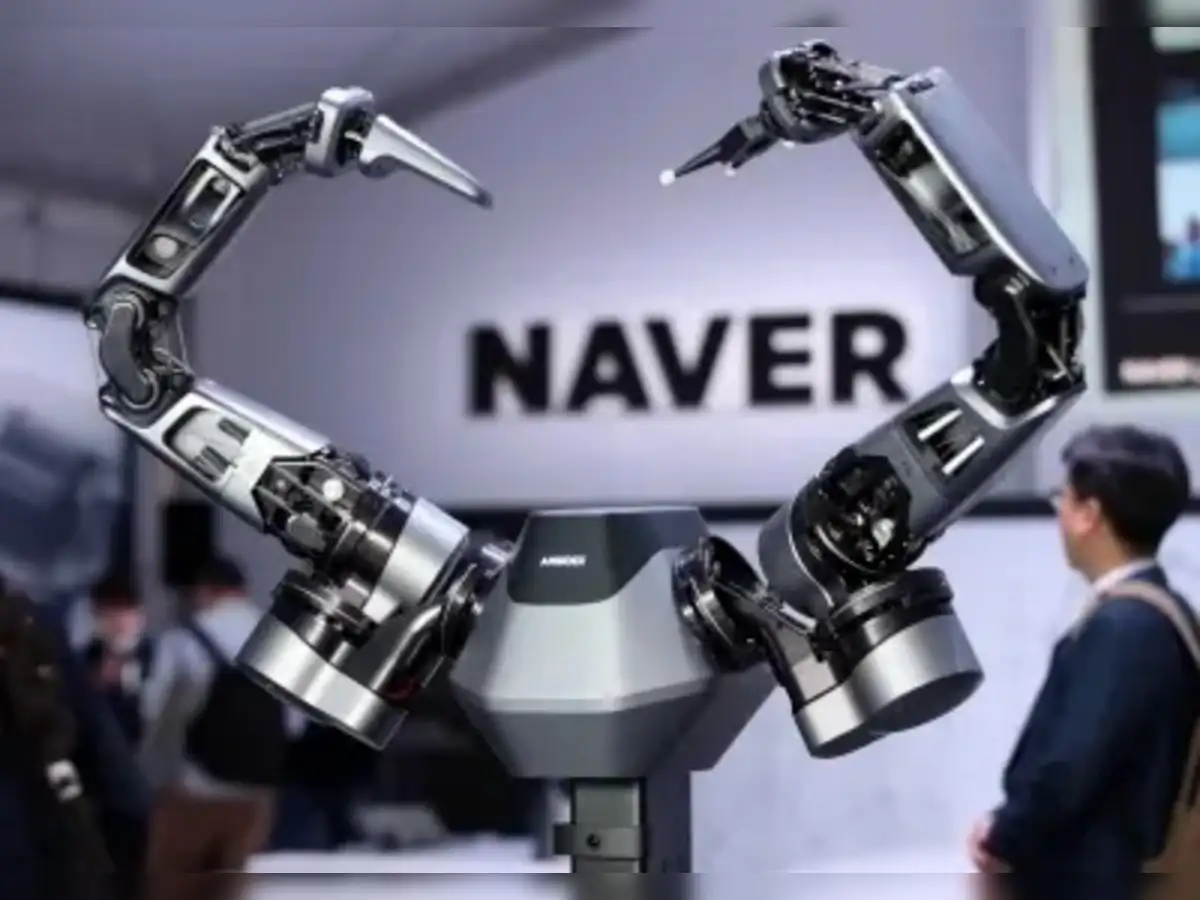
Nvidia said on June 7 that South Korea's Naver will use NVIDIA technology to build sovereign AI factories at gigawatt scale to meet rising global demand for AI services and physical AI, according to Reuters and NVIDIA's release. The effort begins by expanding Naver's GAK Sejong data center, starting at 55 megawatts in the first half of 2027, scaling to 100 megawatts later that year and 200 megawatts by 2028, with gigawatt scale as the longer-term goal (NVIDIA; Korea Herald). NVIDIA framed the deployment around its DSX AI factory platform and full-stack software, with Jensen Huang quoted saying, "Useful AI has arrived, and demand for AI factories is extraordinary" (NVIDIA). Reporting from Korea Herald and Chosun adds the deal spans models and sovereign-AI efforts, including Naver's participation in the NVIDIA Nemotron Coalition and regional model work such as HyperCLOVA X (Korea Herald; Chosun).
What happened
NVIDIA announced on June 7 that South Korea's Naver will deploy NVIDIA technology to build AI factories at gigawatt scale, starting with an expansion of Naver's GAK Sejong data center (NVIDIA; Reuters). NVIDIA's press release and Korea Herald state the buildout starts at 55 megawatts in the first half of 2027, expands to 100 megawatts later in 2027 and 200 megawatts by 2028, with gigawatt-scale capacity as the longer-term goal depending on power availability and procurement (NVIDIA; Korea Herald; DatacenterDynamics). The announcement links the deployment to NVIDIA's DSX AI factory platform and the vendor's full-stack AI software and models (NVIDIA).
Technical details
Per NVIDIA's announcement, the project will use the DSX integrated platform to deliver an end-to-end AI factory blueprint for high-density, NVIDIA-accelerated computing optimized for training, post-training and inference (NVIDIA). Jensen Huang said, "Useful AI has arrived, and demand for AI factories is extraordinary," and NVIDIA and Naver chairman Haejin Lee framed the buildout as a sovereign foundation to serve Korean enterprises, manufacturers, government organizations and AI cloud customers (NVIDIA).
Industry context
Reported partner and model activity
NVIDIA's release and Korea Herald report the collaboration spans infrastructure, models and physical-AI tooling: Naver is described as the first Korean company to join the NVIDIA Nemotron Coalition, plans HyperCLOVA X models built on NVIDIA Nemotron, and is developing a Seoul World Model from its urban street-view data on top of NVIDIA Cosmos world foundation models (NVIDIA; Korea Herald; Chosun). NVIDIA and Naver framed this as a sovereign-AI and ecosystem play to serve Korean industries and global AI cloud customers (NVIDIA; Korea Herald).
Context and significance
What to watch
Editorial analysis
Companies building infrastructure at this scale are aiming to reduce token production costs, increase throughput for large-model training, and support latency- and compute-intensive physical-AI workloads such as robotics and agents. Observers frequently describe vendor-provided blueprints like DSX as a way to standardize deployment patterns and accelerate cloud-provider and enterprise rollouts.
Gigawatt-scale language for AI factories denotes a materially different class of infrastructure than traditional hyperscale data centers because it explicitly targets extreme power density, sustained GPU throughput, and co-design of software and hardware. For the regional market, announcements that tie a major GPU vendor's stack to a local cloud provider matter for latency, regulatory sovereignty, and local model optimization. Industry reporting notes power availability as a recurring constraint for such expansions; NVIDIA's regional executives also flagged power as a limiting factor in public comments (KoreaHerald).
Observers should track three measurable indicators: announced power procurement or utility agreements tied to GAK Sejong and any overseas expansions, the disclosed phased rollout (55 megawatts in the first half of 2027, 100 megawatts later in 2027, and 200 megawatts by 2028), and public technical disclosures about node counts, GPU families used, and integration of Nemotron or other model stacks. Reporting so far does not disclose specific GPU counts or total investment size (Korea Herald; Reuters; NVIDIA).
Key Points
- 1NVIDIA and Naver will expand GAK Sejong from 55 MW (first half of 2027) toward 200 MW by 2028, framed as the start of gigawatt-scale AI factories.
- 2Vendor-provided blueprints like DSX are being used to standardize large-scale AI deployments, reducing integration time across hardware and software.
- 3Industry observers note power procurement and utility capacity are recurring bottlenecks when scaling from tens to hundreds of megawatts and beyond.
Scoring Rationale
NVIDIA and Naver announced a sovereign-AI factory buildout on the NVIDIA DSX platform, scaling GAK Sejong from 55 MW in 2027 to 200 MW by 2028 with gigawatt-scale ambition, alongside deep model collaboration (Naver joining the NVIDIA Nemotron Coalition, HyperCLOVA X on Nemotron, a Seoul World Model on NVIDIA Cosmos). As a major GPU-vendor infrastructure and sovereign-AI deal with a concrete phased timeline, it is highly relevant to practitioners tracking where large-scale training and inference capacity is provisioned, supporting a major-tier score.
Sources
Public references used for this report.
View 7 more sources
- Nvidia taps Naver for gigawatt-scale AI cloud push in Koreakoreaherald.com
- Naver to deploy 55MW of Nvidia hardware in South Koreadatacenterdynamics.com
- Naver Joins NVIDIA AI Ecosystem; Differentiation Keychosun.com
- Naver, Nvidia launch gigawatt-scale AI factory planupi.com
- South Korea's Naver to build gigawatt-scale AI factories using Nvidia ...tradingview.com
- South Korea's Naver to build gigawatt-scale AI factories using Nvidia technologyfinance.yahoo.com
- SK Hynix and Naver partner with Nvidia on AI factories - MSNmsn.com
Practice interview problems based on real data
1,625 SQL & Python problems across 15 industry datasets — the exact type of data you work with.
Try 250 free problems