
MWC26 Sets Direction For Future Mobile
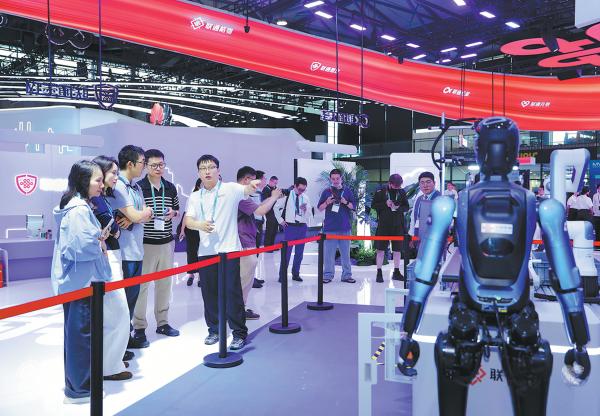
MWC26 Shanghai (June 24-26) delivered one of the clearest signals yet that mobile operators plan to treat AI tokens and autonomous agents as first-class network traffic, not just bandwidth, a shift with direct implications for anyone deploying models at the edge or over mobile networks. GSMA director-general Vivek Badrinath framed a mobile "IQ era" already live in China through humanoid robotics, drones, and autonomous vehicles. Huawei rotating chairman Wang Tao said networks must evolve from "connecting people and things to connecting intelligence itself," projecting hundreds of billions of AI agents by the 2030s and pitching AI tokens as a new unit of network traffic and revenue. China Mobile chairman Chen Zhongyue described a shift from mobile communication to mobile computing to mobile AI, and GSMA data shown at the event put AI at roughly 20% of enterprise digital-transformation spend through 2030, ahead of 5G, cloud, and IoT.
MWC26 Shanghai is one of the clearest recent signals that mobile network operators plan to treat AI tokens and autonomous agents as first-class network traffic, alongside voice and data. That has direct implications for anyone deploying models to edge devices, robots, or mobile apps: operators are explicitly designing spectrum, latency, and pricing around inference and agent-to-agent traffic, not just connectivity.
What happened
Mobile World Congress Shanghai 2026 ran June 24-26 under GSMA's "IQ era" framing. In the opening keynote, GSMA director-general Vivek Badrinath said China's telecom operators, China Mobile, China Unicom, and China Telecom, are already operationalizing AI-native networks through humanoid robotics, the low-altitude drone economy, and autonomous vehicles: "These technologies... are not theories, they're not distant possibilities. They're operational across China." A centerpiece exhibit had eight robotics teams, including Unitree Robotics and Linkerbot, compete in an unscripted humanoid-robot penalty-kick challenge, with each robot independently handling recognition, positioning, and motion control.
Huawei rotating chairman Wang Tao argued networks must expand "from connecting people and things to connecting intelligence itself," predicting the density of AI agents in hotspot areas could exceed 10 million per square kilometer and that agent counts could reach "hundreds of billions, or even trillions" after 2030. He outlined a three-layer intelligent-network architecture (network element, network, and business intelligence) and said operators will need 200-400 MHz of additional continuous spectrum, likely from the upper 6 GHz band, to deliver 6G's targeted fivefold downlink and tenfold uplink gains. Separately, Huawei framed AI tokens as an emerging economic unit alongside their technical meaning, with deputy chairman David Wang (also referred to as Wang Tao in some coverage) saying "AI will move beyond the digital world into the physical world" as AGI approaches.
China Mobile chairman Chen Zhongyue described mobile technology evolving "from Mobile Communication to Mobile Computing to Mobile AI," illustrating the shift with an accessibility case: a hearing-impaired user gaining voice output through the carrier's AI device. China Unicom said it is prioritizing international expansion, submarine cables, cross-border fiber, and satellite IoT infrastructure, alongside a "token-based product suite" for cross-border cloud computing.
Market context
GSMA Intelligence figures presented at the event put AI at roughly 20% of enterprise digital-transformation investment through 2030, ahead of 5G, cloud, cybersecurity, and IoT, with almost 80% of organizations already using AI at a moderate-or-advanced level (85% among large Chinese enterprises). A separate GSMA "Mobile Economy China 2026" report found China accounts for over 40% of global 5G connections today, projected to exceed 1.7 billion by 2030.
Policy context
MIIT chief engineer Zhong Zhihong laid out China's parallel policy push: accelerating 6G R&D and standardization, and urging global consensus on unified 6G standards and AI governance, alongside embodied-intelligence application ecosystems.
What to watch
Whether operators outside China adopt AI-token-based pricing and network architectures, or whether this stays a China-specific model for now; spectrum decisions in the next 12-18 months, which Wang Tao framed as the real determinant of which countries lead AI-native connectivity, not the multi-year 6G standardization timeline; and whether GSMA's "IQ era" agent-density projections hold up against actual agent deployment numbers over the next few years.
Key Points
- 1Huawei and GSMA framed MWC26 Shanghai around networks shifting from connecting devices to connecting AI agents and tokens as network traffic.
- 2GSMA data shown at the event puts AI at about 20% of enterprise digital-transformation spend through 2030, ahead of 5G and cloud.
- 3Chinese operators demoed live use cases, humanoid robot soccer, accessibility AI, drones, signaling where AI-native mobile networks are headed first.
Scoring Rationale
A major telecom industry event with concrete data (GSMA's 20% AI transformation-spend share, 6G spectrum specifics) and multiple named-executive statements across three well-sourced outlets, signaling a real industry shift toward AI-native network design and pricing. Notable for infrastructure and edge-deployment practitioners, though centered on forward-looking projections and China-specific rollouts rather than confirmed global deployment.
Sources
Public references used for this report.
Practice interview problems based on real data
1,625 SQL & Python problems across 15 industry datasets — the exact type of data you work with.
Try 250 free problems


