JAXA Demonstrates Transformer-Style Lunar Explorer Robots
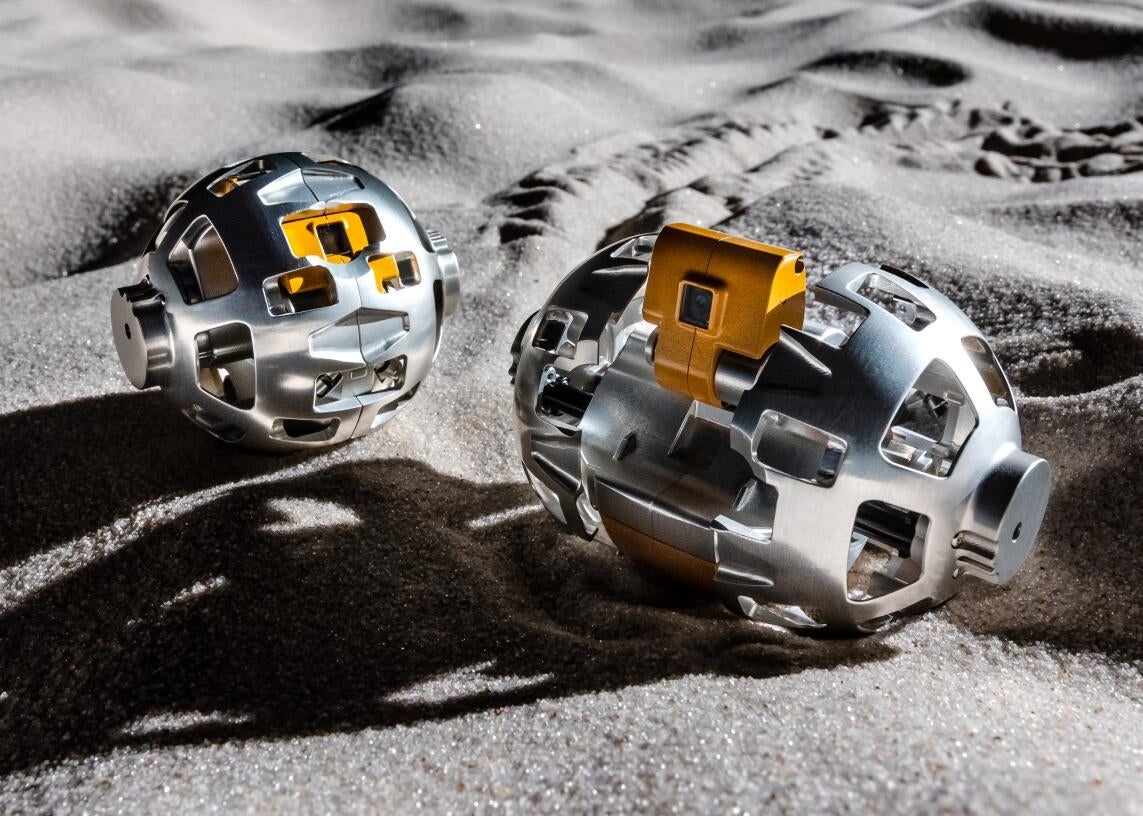
JAXA and partners Sony, TOMY, and Doshisha University published a peer-reviewed study in Science Robotics on June 10, 2026 confirming that Japan's palm-sized LEV-2 rover, nicknamed SORA-Q, operated fully autonomously on the Moon for at least 108 minutes after the SLIM lander's January 2024 touchdown, without any ground-control intervention. The 8-centimeter, 228-gram sphere transformed into a wheeled rover, ran onboard image processing 240 times, and transmitted two images back to Earth via the companion LEV-1 probe, one showing SLIM had landed at an odd tilt. Singularity Hub, which covered the study, additionally reports the rover covered an estimated 24 meters overall; JAXA's own figures confirm it moved at least 5 meters from the lander and 0.13 meters between the two recovered images. For practitioners, this is the first confirmed fully autonomous lunar rover demonstration, a proof point for low-cost robot swarms in future exploration.
This is the first peer-reviewed confirmation that a rover has operated fully autonomously on the lunar surface with zero real-time ground control, a capability that matters more for the swarm-robotics playbook it validates than for the mission itself, which actually flew back in January 2024. For robotics and space-systems practitioners, the useful signal is not that a small rover moved on the Moon, but that toy-derived, low-cost hardware paired with a simple onboard vision algorithm can execute navigate-image-transmit-recover sequences entirely on its own under severe communication constraints, a design pattern that transfers directly to other communication-constrained autonomous systems on Earth.
What happened
A study titled "From ball to rover: Transformable palm-sized rover SORA-Q for autonomous lunar exploration," authored by JAXA researchers with Sony and TOMY engineers, was published in Science Robotics on June 10, 2026 and formally announced by JAXA on June 18, 2026. It reports that LEV-2 (SORA-Q), an 8-centimeter, 228-gram sphere deployed from the SLIM lander in January 2024, autonomously deployed, stabilized itself, and moved across the lunar surface while capturing and selecting images to transmit through the companion LEV-1 probe, all without ground-control intervention.
Timeline
SLIM lands near the Shioli crater and deploys LEV-2, which autonomously transforms and begins capturing images.
JAXA, Sony, TOMY, and Doshisha University announce that LEV-2 captured and transmitted an image of the SLIM lander.
The full technical study of LEV-2's lunar demonstration is published in Science Robotics.
JAXA formally announces the publication, releasing a newly recovered second lunar image and detailed autonomy results.
Technical context
Telemetry analysis shows LEV-2 operated for at least 108 minutes and ran its onboard image-processing pipeline 240 times, using a low-power chip that detects the SLIM lander's gold insulation material to pick which photos to send. One recovered image, taken roughly 5.08 meters from the lander, showed SLIM had touched down at an odd angle with its solar panels misaligned, information that helped ground teams diagnose the spacecraft. JAXA's own analysis of the two recovered images confirms the rover moved about 0.13 meters and rotated roughly 180 degrees between shots; Singularity Hub's coverage additionally reports the rover covered an estimated 24 meters in total, a figure JAXA's press materials do not independently break out. The rover's eccentric-wheel mechanism, which lifts the frame slightly with every rotation, was designed to generate traction in loose lunar regolith that traps conventional small wheels.
For practitioners
The transferable lesson is architectural: LEV-2 pairs a mechanically simple transform-and-drive mechanism with a narrow, task-specific onboard model, rather than a general-purpose vision system, to fit within tight power and compute budgets while still functioning with no communication link. Teams building autonomous systems for other high-latency or power-constrained environments (subsea, disaster sites, other planetary surfaces) can treat this as a template for scoping autonomy to the minimum viable onboard capability rather than defaulting to heavier compute.
What to watch
JAXA and partners describe this as a first step toward deploying multiple small rovers together and combining them with larger primary rovers; watch for follow-on missions that test coordination between several LEV-2-class units and for published data on durability (dust ingress, thermal cycling) beyond this single short deployment.
Key Points
- 1A Science Robotics paper published June 10, 2026 confirms LEV-2 operated autonomously on the Moon for over 108 minutes with no ground control.
- 2The rover paired a simple transform-and-drive mechanism with a narrow onboard vision model, fitting autonomy into tight power and compute limits.
- 3The design offers a transferable template for other high-latency, power-constrained autonomous systems, not just future multi-rover lunar exploration swarms.
Scoring Rationale
Upgraded from single-source blog coverage to a peer-reviewed Science Robotics publication (June 10, 2026) with an accompanying official JAXA/Sony/TOMY/Doshisha press release confirming the first fully autonomous lunar-surface rover demonstration (108+ minutes, zero ground control) plus a newly released second lunar image. Raised from 6.2 to 6.6: a notable, well-corroborated robotics milestone with a clear transferable-autonomy lesson, though scope remains one short deployment rather than an operational multi-rover fleet.
Sources
Public references used for this report.
Practice interview problems based on real data
1,625 SQL & Python problems across 15 industry datasets — the exact type of data you work with.
Try 250 free problems