Heinen's Extends Afresh AI Inventory Platform
On July 29, 2026, Heinen's deployed Afresh's Period Ending Inventory system across produce, meat, deli, cheese, and bakery, replacing after-hours manual inventory counts with AI-generated estimates. The system uses daily ordering, shipment, and sales data, while store teams review and confirm the estimates. Heinen's previously used Afresh for store ordering, avoiding new integrations or devices.
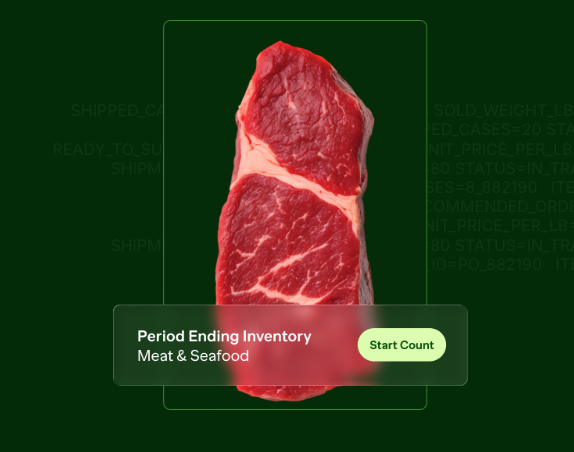
Heinen's has expanded its use of Afresh's AI software to period-ending inventory across its produce, meat, deli, cheese, and bakery departments. The deployment replaces after-hours pen-and-paper counts with item-level inventory estimates generated from store ordering, shipment, and sales data, according to Mass Market Retailers and The Shelby Report.
The Warrensville Heights, Ohio-based grocer had already deployed Afresh for store ordering. The Shelby Report reported that adding the Period Ending Inventory, or PEI, workflow required no new integrations or hardware, and that store teams were already familiar with the underlying workflow.
Replacing a recurring manual process
Period-ending inventory traditionally requires employees to count every item in a store after hours and then enter the results manually. Under Afresh's PEI product, associates review and confirm the platform's "Intelligent Inventory" estimates rather than starting with a full hand count, Mass Market Retailers reported.
Afresh said its Intelligent Inventory estimates are 10% to 40% more accurate than perpetual inventory. That performance figure is a vendor claim reported by Mass Market Retailers and The Shelby Report, not an independently published benchmark. Afresh also said the estimates can produce faster counts, more reliable inventory records, and more accurate financial inputs at period close.
"Taking ending inventory has historically been an arduous and error-prone process dreaded by most team members," Kelsey Heinen, Heinen's director of food service, told The Shelby Report. "With Afresh, we have been able to increase the accuracy of our counts, more quickly pinpoint variances, and simplify the process for our associates."
Ordering and inventory on one platform
Mass Market Retailers described the rollout as placing Heinen's fresh perimeter on one AI platform for both ordering and inventory management. Afresh Chief Revenue Officer Adam Litle characterized the deployment as an example of automating routine grocery work while retaining employee review and decision-making.
For retail data teams, the implementation illustrates a practical distinction between a fully autonomous inventory record and an AI-assisted reconciliation workflow. Afresh's system uses operational data already generated by ordering, receiving, and point-of-sale processes, while associates remain responsible for confirming estimates. In comparable retail deployments, this human-in-the-loop design can make model outputs operationally usable where accounting controls or physical-stock discrepancies require review.
The available reports do not disclose Heinen's measured accuracy results, overtime reduction, financial impact, or the model methodology behind Afresh's estimates.
Heinen's operates 23 stores in the Cleveland and Chicago areas, according to The Shelby Report. Afresh, founded in 2017, supports more than 12,700 departments across 40 states and lists Albertsons, Stater Bros., Meijer, and Wakefern among its partners.
Key Points
- 1Heinen's expanded Afresh from ordering into fresh-department period-end inventory, replacing manual counts with AI-generated estimates subject to associate review.
- 2Afresh reports its Intelligent Inventory estimates are 10% to 40% more accurate than perpetual inventory, although available coverage provides no independent validation.
- 3Comparable retail AI workflows depend on accurate ordering, shipment, and sales data, while human confirmation supports exception handling and accounting controls.
Scoring Rationale
This is a concrete production use of AI-assisted inventory estimation in grocery fresh departments, a domain where perishability and operational data quality matter. Its relevance is strongest for retail ML and data practitioners, but it is a regional deployment without independently published performance or financial results.
Sources
Public references used for this report.
Practice with real Retail & eCommerce data
90 SQL & Python problems · 15 industry datasets
250 free problems · No credit card
See all Retail & eCommerce problems