Developers Build AI-Powered Apps with Angular and Gemini
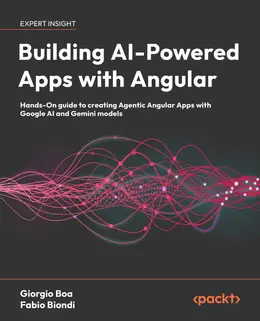
Packt Publishing is releasing "Building AI-Powered Apps with Angular" by Giorgio Boa and Fabio Biondi, a 454-page paperback (ISBN 978-1806383498) publishing June 26, 2026. The book is a hands-on guide to building agentic Angular applications with Google Gemini models, covering Genkit for backend AI orchestration, multimodal AI, MCP, and retrieval-augmented generation (RAG) with Firestore for building intelligent UIs, image and video generation, and cloud-scalable deployments. Fabio Biondi has been a Google Developer Expert for Angular since 2018, and co-author Giorgio Boa brings additional Angular and cloud-architecture experience; the book targets mid-to-senior Angular developers and technical leads evaluating generative AI strategy for front-end products.
For Angular and front-end engineers adding generative features to production apps, this is a concrete signal that mainstream framework publishers now see Gemini-plus-RAG integration as common enough to warrant a dedicated, vendor-adjacent guide - useful as a starting map, though it will not replace official Angular or Genkit documentation for production architecture decisions.
What happened
Packt Publishing is releasing "Building AI-Powered Apps with Angular: Hands-On Guide to Creating Agentic Angular Apps with Google AI and Gemini Models," a 454-page paperback by Giorgio Boa and Fabio Biondi (ISBN-10 1806383497, ISBN-13 978-1806383498), publishing June 26, 2026. Per Packt's and retailers' listings, the book starts with AI/ML fundamentals and an introduction to Google Gemini using Node.js, then builds toward AI features inside an Angular front end, including backends built with Angular Server-Side Rendering and Genkit, multimodal models, and RAG-based search using Firestore.
Technical context
The book covers integrating Gemini and Genkit with Angular, using multimodal models and retrieval-augmented generation to support features such as image and video generation and cloud-scalable deployments. Developers combining generative models with front-end frameworks typically need to architect for latency management, prompt orchestration, and cost control when calling large multimodal models from a client-facing app - areas the book's chapter structure (fundamentals, backend integration, RAG, deployment) suggests it addresses directly rather than only at a conceptual level.
For practitioners
Fabio Biondi is a Google Developer Expert for Angular (recognized since 2018) with about 20 years of front-end experience; the book is aimed at mid-to-senior Angular developers, team leads, and technical decision-makers evaluating generative AI strategy for Angular-based products. A focused guide like this can shorten the learning curve for front-end teams adopting Gemini-based features, though it supplements rather than replaces official Angular and Genkit documentation.
What to watch
Watch for a companion GitHub repository or published code samples, which would materially increase the book's utility for engineers following along, and for reader reviews once the June 26 release date passes that assess how current the content stays against Angular's and Genkit's fast-moving APIs.
Key Points
- 1Packt Publishing is releasing a 454-page guide to building agentic Angular apps with Google Gemini, Genkit, and RAG, out June 26, 2026.
- 2Authors Giorgio Boa and Fabio Biondi cover Gemini integration, Angular Server-Side Rendering backends, multimodal AI, and Firestore-based RAG search.
- 3The book targets mid-to-senior Angular developers and could shorten the learning curve for teams adopting generative features in front-end apps.
Scoring Rationale
A legitimate publisher book (verified via Packt, Amazon, and Waterstones, correcting a prior reliance on a piracy-site listing and a garbled 'Gemmini' product name) that helps Angular developers adopt Gemini-based generative features. Educational/practitioner resource rather than a news event, so it stays in the minor-relevance tier.
Sources
Public references used for this report.

Practice with real FinTech & Trading data
90 SQL & Python problems · 15 industry datasets
250 free problems · No credit card
See all FinTech & Trading problems