Book Publishes Practical Guide to Securing AI Systems
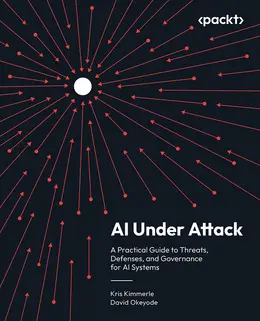
"AI Under Attack: A Practical Guide to Threats, Defenses, and Governance for AI Systems," a 722-page paperback by security practitioners Kris Kimmerle and David Okeyode, is listed for publication around July 9, 2026 by Packt Publishing under ISBN-13 978-1806119936, according to Amazon's product listing. The book covers retrieval-augmented generation (RAG) security, agent security, prompt injection, data-pipeline hardening, Zero Trust architecture, and governance programs for generative AI, per its publisher description. Kimmerle holds CISSP and AI Governance Professional certifications with cloud AI credentials from AWS, Azure, and Google Cloud; Okeyode is a cloud security architect known for Azure security research and training. For ML and security teams building production generative-AI systems, single-volume references that connect concrete technical controls to governance requirements can shorten onboarding, though practitioners should still validate any sample mitigations against their own architecture before adopting them.
Operational, example-driven security references remain useful as generative AI moves into production, because they help close the gap between academic threat research and the runnable mitigations, monitoring signatures, and audit-ready controls that security and ML teams actually need to ship.
What happened
"AI Under Attack: A Practical Guide to Threats, Defenses, and Governance for AI Systems" is listed on Amazon as a 722-page paperback from Packt Publishing, with a publication date around July 9, 2026, ISBN-10 1806119935 and ISBN-13 978-1806119936. The book is authored by Kris Kimmerle, described in author materials as holding CISSP and AI Governance Professional (AIGP) certifications plus AI credentials from AWS, Azure, and Google Cloud, and David Okeyode, a cloud security architect known for Azure security consulting, training, and research. A listing for the same title and ISBN also appeared on wowebook.org, an unauthorized ebook-download site; that listing is not an authoritative source for the book's contents or publication status and should not be treated as one.
Technical context
Publisher and retailer descriptions list the book's scope as:
- •retrieval-augmented generation (RAG) security
- •agent security
- •prompt injection defenses
- •data-pipeline hardening
- •Zero Trust architecture for AI systems
- •sustainable governance, risk, and compliance programs
For practitioners
Teams implementing production generative-AI systems typically need runnable mitigations for prompt injection, monitoring approaches for RAG data theft or poisoning, and governance checklists that tie technical controls to audit evidence. A single-volume guide spanning RAG, agents, and Zero Trust can shorten onboarding for security and ML teams if the material includes concrete detection signatures, test cases, and deployment checklists, but the value depends entirely on execution quality. Readers should evaluate sample chapters and verify that recommended controls match their own architecture and data sensitivity before adopting them wholesale.
What to watch
Independent reviews once the book ships, and whether the authors publish companion code, test suites, or a GitHub repository, which is common practice for Packt security titles and would make the guidance easier to validate and adapt.
Key Points
- 1"AI Under Attack" is a 722-page Packt Publishing paperback by security practitioners Kris Kimmerle and David Okeyode, listed for July 2026 release.
- 2The book covers RAG security, agent security, prompt injection, data-pipeline hardening, Zero Trust, and AI governance programs.
- 3Practitioners should validate sample controls against their own deployment architecture, since mitigation applicability varies by system design.
Scoring Rationale
A single upcoming security reference book with a legitimate publisher (Packt) and credentialed authors, but a low-stakes, low-novelty story: no new research, technique, or incident, just a forthcoming publication. Score reflects marginal-to-minor practitioner relevance as a future reading recommendation, lowered from the prior score because the original sourcing rested entirely on an unauthorized ebook site rather than the publisher or retailer.
Sources
Public references used for this report.


Practice interview problems based on real data
1,625 SQL & Python problems across 15 industry datasets — the exact type of data you work with.
Try 250 free problems