Beijing Requires Annual AI Instruction in Schools
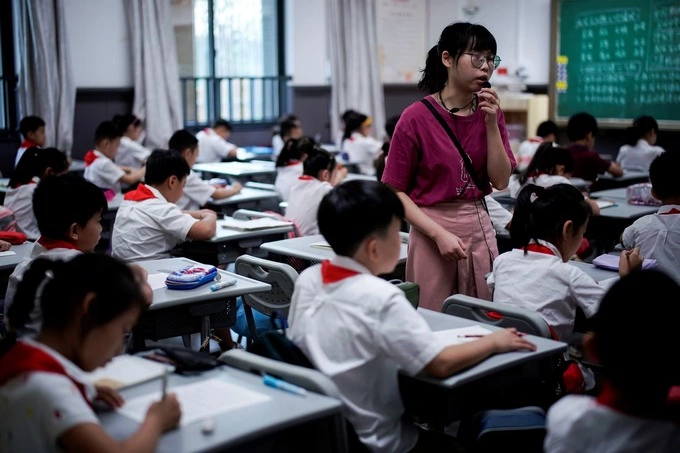
Beijing's education commission adopted a 2025-2027 plan requiring primary and secondary schools to provide at least eight class hours of AI instruction each academic year, beginning with the fall 2025 term. The policy allows standalone or integrated courses and sets age-specific goals spanning basic awareness, practical application, innovation and AI ethics.
Beijing's education commission issued its 2025-2027 school AI plan on March 6, 2025, requiring primary and secondary schools to provide at least eight class hours of AI instruction per academic year beginning with the fall 2025 term. This is a look back at a policy already in force, not an August 2026 announcement.
The municipal policy allows schools to teach AI as a standalone course or integrate it into subjects such as information technology. It also calls for curriculum development, teacher training, expert guidance and regular evaluation of how districts and schools carry out the program.
A curriculum from primary through high school
Business Insider reported that the planned progression begins with hands-on exposure for elementary pupils, moves toward practical use in schoolwork and daily life for middle-school students, and emphasizes applications and innovation in high school. The official plan also discusses AI ethics and a new relationship among teachers, students and machines.
The eight-hour figure is a minimum across the academic year, not a weekly requirement. The retrieved policy establishes instructional time and broad goals, but it does not identify one common model provider or a single technical syllabus for every school.
Evidence of classroom implementation
NPR's January 27, 2026 reporting showed the policy appearing in classroom activities at a Beijing public primary school. Students demonstrated a programmable robotic vehicle and used an AI image-generation tool in projects. A teacher told NPR that AI instruction was being integrated with the information-technology curriculum.
That classroom reporting provides evidence of implementation at one school; it is not a citywide outcome study. The retrieved sources do not establish student achievement gains, a common assessment benchmark or uniform access to devices and trained staff across every school.
Why the policy matters
The mandate treats AI literacy as general education rather than a specialist computer-science elective. Its practical effect will depend on curriculum quality, teacher preparation, infrastructure and safeguards for student data and age-appropriate use.
For data and AI practitioners, the program is relevant as an early example of a large school system formalizing AI concepts and tools across grade levels. The policy sets a baseline for exposure; it does not yet provide evidence about how deeply students understand model limitations, evaluation or responsible use.
Key Points
- 1Beijing's March 2025 policy requires at least eight class hours of AI instruction each academic year from primary through high school, beginning in fall 2025.
- 2The official plan permits standalone or integrated instruction and includes curriculum development, teacher training, evaluation and AI ethics.
- 3NPR documented classroom use of robotics and an AI image-generation tool in January 2026, while citywide learning outcomes remain unreported.
Scoring Rationale
A compulsory AI curriculum in Beijing is a notable education-policy development with long-term relevance for AI literacy and workforce preparation. The mandate is in force and classroom implementation has been reported, but the retrieved sources do not establish citywide outcomes or uniform implementation quality.
Sources
Primary source and supporting public references used for this report.
Practice interview problems based on real data
1,625 SQL & Python problems across 15 industry datasets — the exact type of data you work with.
Try 250 free problems