Asian markets sell off after AI-driven rallies prompt profit-taking
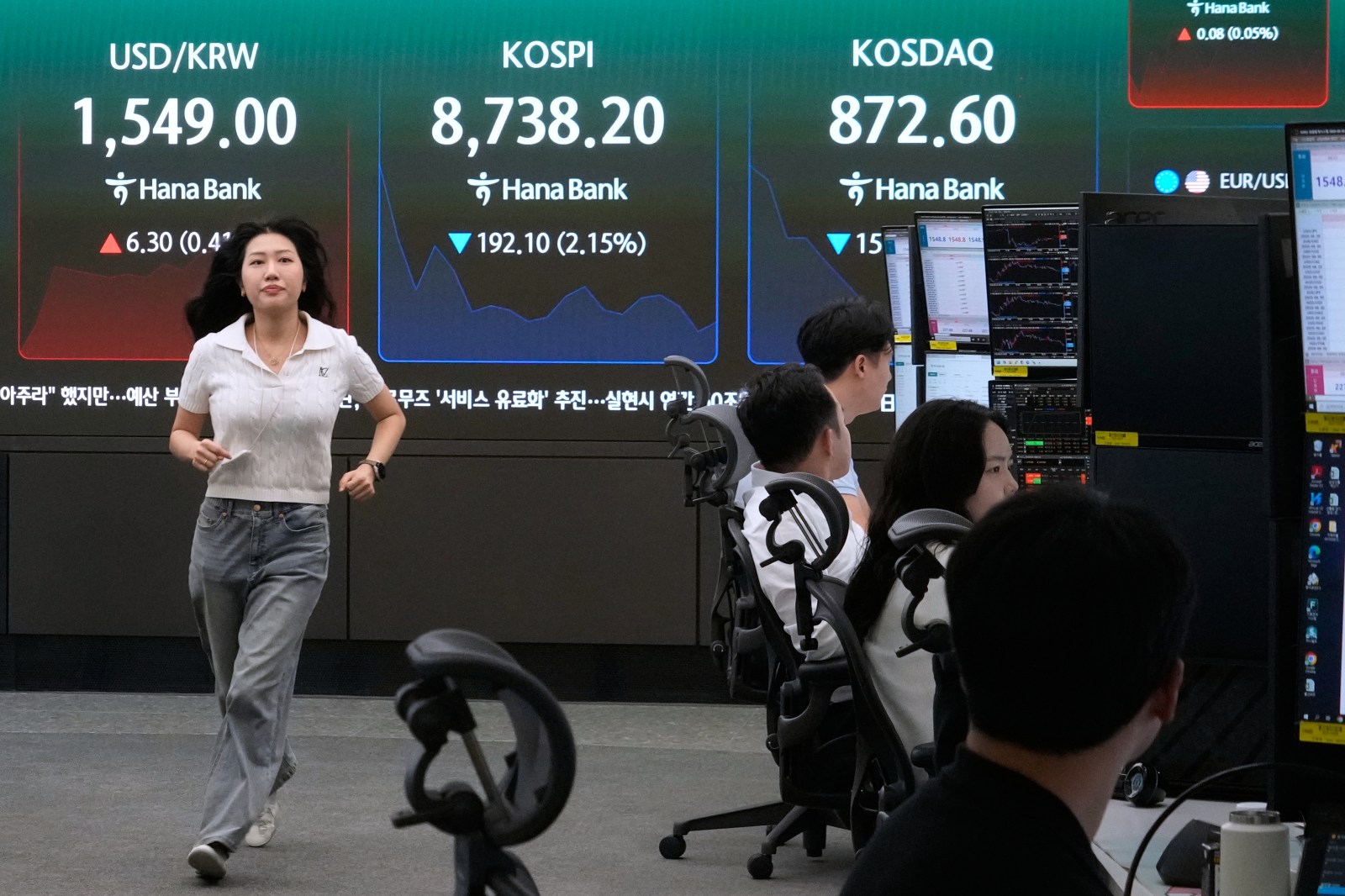
Asian shares plunged Friday as traders sold to lock in gains from recent AI-driven rallies, the Associated Press reports. Tokyo's Nikkei 225 shed 5% and Seoul's Kospi plunged 8.4%, per the AP. Hong Kong's Hang Seng lost 1.9%, the Shanghai Composite slipped 2.1%, and Taiwan's Taiex gave up 3.3%. Earlier in the week, South Korea's market had plunged about 10% and triggered a circuit breaker, per CNN and The New York Times. Major semiconductor names including Samsung Electronics and SK Hynix posted double-digit losses in volatile sessions, per CNBC and CNN. Both the Nikkei and Kospi had hit record highs earlier in the week. Micron Technology jumped 15.7% in U.S. trading on strong quarterly results, per the AP, a signal that AI hardware demand remains intact even as valuations are being reset. Multiple outlets frame the sell-off as profit-taking concentrated in crowded AI and memory-chip positions.
What happened
Asian equity markets fell sharply Friday as recent gains in artificial-intelligence related stocks reversed. Per the Associated Press, Tokyo's Nikkei 225 shed 5% to 68,783.50 and Seoul's Kospi plunged 8.4% to 8,182.54. The AP also reports that Hong Kong's Hang Seng lost 1.9% to 22,644.49, the Shanghai Composite slipped 2.1% to 4,032.30, and Taiwan's Taiex gave up 3.3%.
Reporting earlier in the week documented even deeper single-session moves: The New York Times and CNN recorded a near-10% plunge in South Korea's Kospi that triggered a market circuit breaker, while U.S. benchmarks fell alongside the Asian rout, with the Nasdaq off roughly 2.2% on the worst days, per the New York Times and CNN.
Major semiconductor and AI-infrastructure names were key drivers of the volatility. CNN and CNBC report that Samsung Electronics and SK Hynix tumbled more than 12% in some sessions, and Nvidia and other U.S. AI-related stocks weighed on global benchmarks, per CNBC and the New York Times.
Micron and Qualcomm context
Amid the broader sell-off, Micron Technology jumped 15.7% in U.S. trading Thursday after reporting quarterly profit and revenue well above analyst estimates and providing a stronger-than-expected growth forecast, per the AP. Qualcomm also said the acceleration of the AI era is forcing it to upgrade forecasts for its own upcoming growth, per the AP. These signals suggest the sell-off reflects valuation repricing and profit-taking rather than demand destruction for AI hardware.
Editorial analysis - technical context
Industry-pattern observations: Market moves of this kind typically concentrate around a small set of high-valuation, high-liquidity technology names. Multiple outlets frame the recent volatility as profit-taking after steep rallies in semiconductor, memory, and AI-application stocks, which increases downside sensitivity when sentiment shifts. Analysts cited in CNBC and Business Insider point to crowded positioning in AI infrastructure and memory as a driver of rapid reversals.
Industry-pattern observations: For AI workloads specifically, demand and cashflow expectations are tightly coupled to sales of accelerators and memory. That coupling means investor expectations about model deployment and data-center expansion can translate into outsized price action for a narrow group of suppliers, amplifying benchmark moves.
Context and significance
Reporters and quoted strategists characterize the sell-off as part profit-taking and part reassessment of how much near-term cashflow AI deployments will generate. CNBC cited Wedbush Securities' Dan Ives saying channel checks show "no cracks in the armor," framing some commentary as viewing the pullback as a pause. Business Insider and other outlets highlight that markets with heavy weightings in a few chipmakers, such as South Korea's benchmark, are particularly vulnerable to sharp reversals.
Industry context
The episode matters for data practitioners and infrastructure planners because volatile public valuations can affect M&A windows, hiring sentiment, and vendor financing conditions even if underlying demand for AI hardware and cloud services remains steady. These are industry-level implications reported and interpreted by market analysts in the cited coverage, not statements from the companies themselves.
What to watch
Monitor Kospi and Nikkei follow-through; persistent weakness would indicate a broader sentiment shift, while quick rebounds would suggest transient profit-taking, per reporting patterns in CNBC and Business Insider.
Track quarterly results and guidance from major chip and accelerator vendors, including Nvidia, Samsung Electronics, and SK Hynix, and memory-price trends. Micron's strong beat and Qualcomm's upward AI-era forecast revision - both reported this week per the AP - are early demand signals to weigh against further equity volatility.
Watch flows into and out of AI-themed ETFs and memory-sector funds, and central-bank communication around interest rates, since CNN and the New York Times noted macro signals can amplify sector rotations.
Key Points
- 1AI-driven rallies concentrated market exposure in semiconductor and memory names, with Japan's Nikkei shedding 5% and South Korea's Kospi plunging 8.4% on Friday alone.
- 2South Korea's Kospi triggered a circuit breaker earlier in the week after a near-10% single-session drop, reflecting outsized index sensitivity to chip-stock concentration.
- 3Micron Technology's 15.7% jump on strong AI-hardware earnings and Qualcomm's upward AI forecast revision suggest the sell-off is valuation repricing, not demand collapse.
Scoring Rationale
Notable AI-driven market volatility with circuit-breaker-level moves in South Korea and 5% losses in Japan's Nikkei, affecting investor sentiment and financing climate for AI hardware and cloud suppliers. Well-documented by major outlets but primarily a financial-markets event; Micron's earnings beat and Qualcomm's upward AI forecast revision provide counterbalancing demand signals.
Sources
Public references used for this report.
Practice with real FinTech & Trading data
90 SQL & Python problems · 15 industry datasets
250 free problems · No credit card
See all FinTech & Trading problems