AI Data Centers Strain Power Equipment and Grids
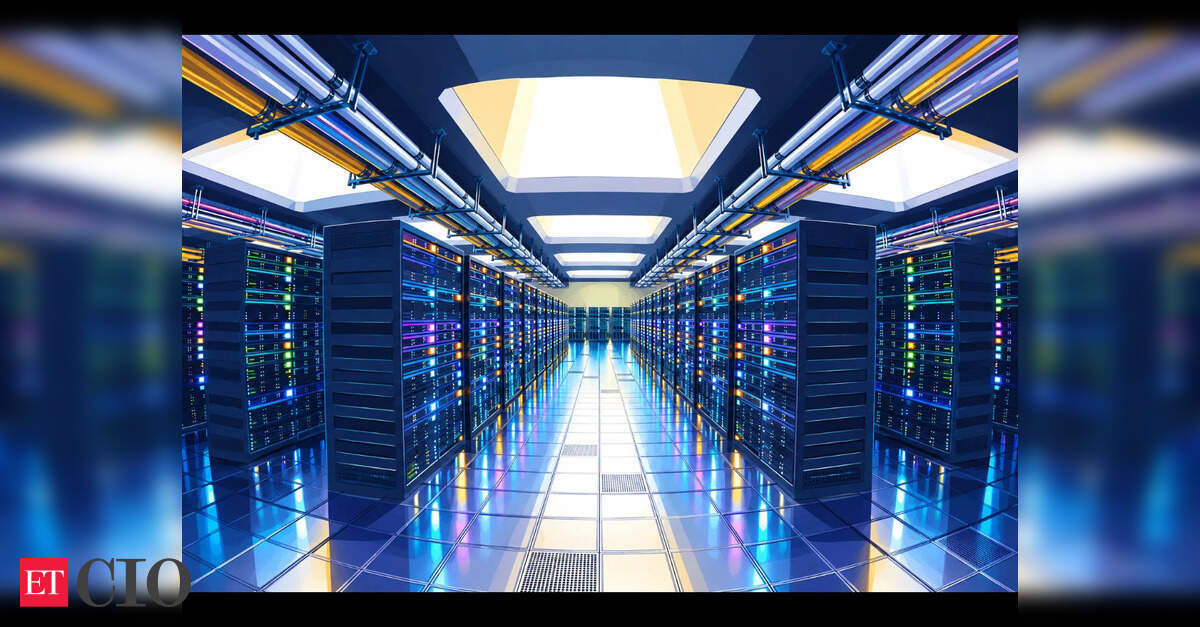
On Aug. 10, ETCIO reported that rapid power swings at AI data centers are accelerating wear and failures in batteries, generators and cooling systems. Citing Bloomberg and E&E News, the report linked synchronized GPU changes during model training to equipment stress and highlighted NERC warnings about significant reliability risks from large data-center loads.
ETCIO reported on Aug. 10 that volatile electricity demand at AI data centers is putting batteries, generators, cooling systems and other critical infrastructure under abnormal stress. The report describes premature equipment failures, higher maintenance requirements and reliability concerns as facilities deploy large GPU clusters.
Unlike conventional data centers, AI training workloads can create sharp changes in load when many GPUs ramp up or down together, ETCIO reported. Shannon Miller, founder and president of Mainspring Energy, told Bloomberg that a one-gigawatt data center can experience seconds-long power swings equal to half the electricity consumption of a city the size of Boston.
Equipment durability and uptime
ETCIO reported that batteries installed to manage power fluctuations have, in some cases, required replacement within weeks or months. The report also said that batteries, transformers, capacitors and flywheels can stabilize power flows, but that many newly built AI facilities lack sufficient deployment of such systems while capacity is being brought online.
Jennifer Scanlon, CEO of UL Solutions, told Bloomberg that worn or damaged electrical equipment can raise the risk of arc flashes that could damage AI chips. Jason Hoffman, chief strategy officer at data-center operator Switch, told Bloomberg that the greater financial consequence is lost revenue from expensive compute capacity sitting offline, rather than the cost of replacing individual power components.
The Los Angeles Times separately reported on Aug. 6 that rapid AI-data-center load changes are straining equipment and can cause batteries, generators and cooling systems to malfunction or wear out earlier than expected. Amber Villegas-Williamson, a principal consultant at the Uptime Institute, told the publication: "AI does create very unusual power demand."
For infrastructure teams, the reporting places transient-load behavior alongside raw megawatt demand as a design and operations concern. In comparable high-density computing environments, power-quality monitoring, energy storage, backup-power controls and thermal systems are interdependent rather than independent facility subsystems. The reports do not quantify a sector-wide failure rate, so they do not establish how frequently these failures occur across AI data centers.
Reliability concerns extend to the grid
The equipment issue coincides with warnings about grid-level effects from large computational loads. In a May report, E&E News wrote that the North American Electric Reliability Corp. (NERC) was preparing a Level 3 alert after reports that data centers abruptly went offline in Virginia and Texas. According to E&E News, the alert was to recommend seven essential actions for risks associated with large loads, including data centers and cryptocurrency mining operations.
NERC warned in material cited by E&E News that computational loads could increase exponentially over four years and that significant bulk-power-system risks required immediate industry action. E&E News also reported that a paper involving scientists from Nvidia, Microsoft and OpenAI warned that AI-related power swings can cause physical damage to grid infrastructure.
The combined reporting points to a practical distinction for AI capacity planning: grid interconnection capacity measures how much power a facility can draw, while load-ramp characteristics affect how that demand interacts with local equipment and grid controls. This distinction is relevant to companies operating comparable facilities as GPU fleets and training workloads scale.
Key Points
- 1ETCIO reports that synchronized GPU load changes are stressing power equipment, making transient demand an operational concern alongside total electricity consumption.
- 2Premature battery replacements and potential arc-flash risks can increase downtime exposure for high-value AI compute, according to Bloomberg-cited reporting.
- 3NERC's reported warning illustrates an industry-wide pattern: large computational loads can create grid reliability challenges beyond data-center walls.
Scoring Rationale
The story concerns a material infrastructure constraint for large-scale AI training and inference: volatile power demand can affect facility uptime, equipment life and grid coordination. It is especially relevant to teams building or procuring hyperscale GPU capacity, although the reporting does not provide broad failure-rate data or a new technical standard.
Sources
Public references used for this report.
Practice interview problems based on real data
1,625 SQL & Python problems across 15 industry datasets — the exact type of data you work with.
Try 250 free problems