ZEST Transfers Athletic Skills From Simulation to Humanoid Robots
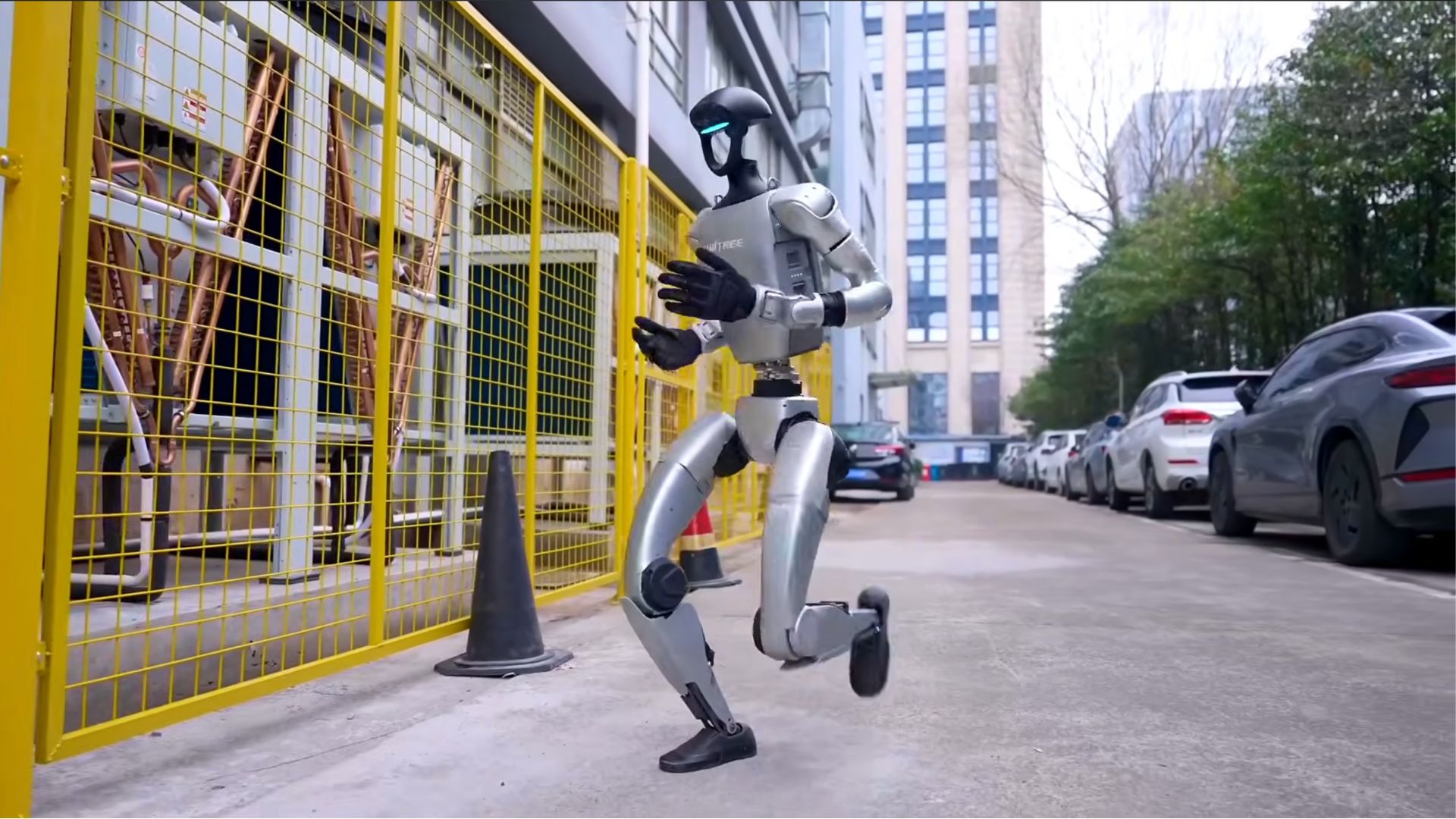
A paper in the August issue of Science Robotics describes ZEST, a motion-imitation framework that trained robot-control policies in simulation and deployed them on physical machines without extra hardware fine-tuning. The demonstrations include cartwheels, crawling, dance, soccer kicks and box climbing across Boston Dynamics Atlas, Unitree G1 and Spot, but each behavior still depends on a specialized policy and a usable robot model.
What the paper shows
A research paper in the August 2026 issue of *Science Robotics* describes ZEST, a framework for taking a reference motion and turning it into a control policy that can run on physical robots. The work focuses on agile, contact-rich movements that usually need substantial per-skill engineering.
The researchers trained policies in simulation from three kinds of references: high-fidelity motion capture, monocular video and keyframe animation. They then deployed those policies to hardware without an additional real-world fine-tuning stage. The demonstrations span Boston Dynamics' electric Atlas humanoid, Unitree's G1 humanoid and the Spot quadruped.
On Atlas, the reported motion-capture results include crawling, rolling, breakdancing and cartwheels. Video-derived references produced a soccer kick and dance sequences, while box-climbing demonstrations extended to both Atlas and G1. Animation-derived policies let Spot perform a continuous backflip and a barrel roll.
Why the distinction matters
The result is a useful example of simulation-to-hardware transfer, but it is not evidence that a robot can instantly learn any new physical skill from a casual demonstration. ZEST still trains specialized policies in simulation, and the paper describes robot modeling and curriculum methods used to make difficult motions tractable.
Its contribution is a more repeatable route from varied motion references to deployed behavior. For robotics teams, the practical question is whether the approach can preserve performance when the motion, terrain or hardware differs from the controlled demonstrations. The authors' reported limits include reliance on non-slippery, flat terrain and the importance of a sufficiently accurate actuator model.
Key Points
- 1ZEST trains motion-imitation policies in simulation from motion capture, monocular video and animation, then deploys them to hardware without an extra real-world fine-tuning stage.
- 2The reported hardware demonstrations span Boston Dynamics Atlas, Unitree G1 and Spot, including cartwheels, crawling, dance, soccer kicks, box climbing and a continuous backflip.
- 3The paper does not show instant general-purpose learning: its approach still uses specialized policies, robot modeling and controlled operating conditions.
Scoring Rationale
The work is a credible robotics research result with real-hardware demonstrations across multiple platforms, but it remains a controlled research framework rather than a broadly deployable humanoid capability.
Sources
Primary source and supporting public references used for this report.
Practice interview problems based on real data
1,625 SQL & Python problems across 15 industry datasets — the exact type of data you work with.
Try 250 free problems