Workers' Party proposes wage subsidies for fresh graduates
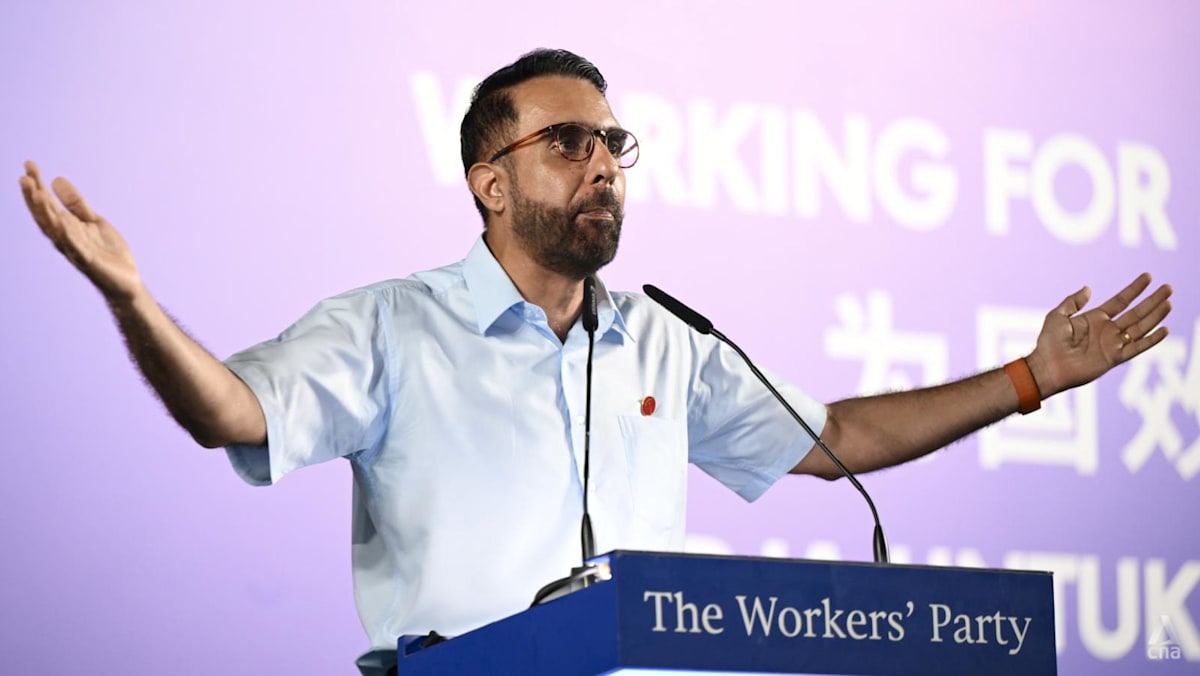
The Workers' Party (WP) on Apr 30 issued a Labour Day message titled "Strengthening Social Solidarity In The Age Of AI," proposing targeted, temporary wage subsidies to encourage firms to hire fresh graduates in apprenticeship roles, according to the WP statement and reporting by Channel NewsAsia (CNA). WP Secretary-General Pritam Singh warned that the rapid proliferation of generative and agentic AI is reshaping the labour market and that some employers expect technology to perform entry-level functions at lower cost, a pattern the message described as "self-defeating" (WP; CNA). The party also reiterated its long-standing call for a comprehensive redundancy insurance scheme that extends to all income levels to cushion workers facing displacement, as reported by The Online Citizen and The Independent.
What happened
The Workers' Party published a Labour Day message on Apr 30 titled "Strengthening Social Solidarity In The Age Of AI," calling for targeted, temporary wage subsidies to reduce firms' perceived risk in hiring fresh graduates for apprenticeship-style roles, per the WP statement (WP website) and Channel NewsAsia reporting. The message warns that the rapid spread of generative and agentic AI is reshaping the labour market and that some employers expect technology to perform many entry-level functions at lower cost, a concern the WP described as "self-defeating," quoting Secretary-General Pritam Singh (CNA; The Online Citizen).
The WP also renewed its call for a comprehensive redundancy insurance scheme that covers workers across income levels to provide a "meaningful cushion against financial pressure," language drawn directly from the WP statement and reported by The Independent and The Online Citizen. The party framed retraining as insufficient without clearer pathways from redundancy to reskilling and re-employment (WP; The Online Citizen).
Editorial analysis - technical context
Industry-pattern observations: As automation and agentic AI tools diffuse, employers in multiple jurisdictions are experimenting with replacing or augmenting entry-level tasks. Companies and public agencies often cite short-term cost savings when reducing junior headcount, while labour analysts note this can erode on-the-job training pipelines that produce mid-career expertise. For practitioners, that trend can tighten the supply of early-career talent with practical workplace experience, increasing the value of structured apprenticeship programs and employer-sponsored training.
Context and significance
Wage-subsidy schemes have historical precedent as a policy tool to lower hiring friction for target groups, from youth employment programmes to apprenticeships in trade sectors. Economists and labour-policy researchers typically evaluate such schemes on design features: targeting, duration, conditionality on training, and incentives for lasting hires versus short-term cost offsets. Redundancy insurance proposals aim to combine income support with re-employment services; however, implementation details determine fiscal cost and labour-market effects.
What to watch
Observers should track three indicators:
- •whether the WP publishes implementation details or cost estimates for the proposed subsidies and redundancy insurance (WP channels)
- •responses from the Singapore Government or Ministry of Manpower regarding feasibility or pilots (official statements)
- •any employer or industry association feedback on uptake risk and administrative burden
Monitoring these signals will clarify if proposals remain advocacy or move toward policy negotiation.
For practitioners
For HR leaders and talent teams, public debate on wage subsidies and redundancy insurance can alter hiring economics and incentives for structured entry-level programmes. Industry-pattern observations: if government support for apprenticeship hiring becomes available, organisations may redesign early-career roles to meet subsidy conditions and link them to measurable training outcomes.
All factual claims above are drawn from the Workers' Party Labour Day message (WP website) and coverage by Channel NewsAsia, The Independent, and The Online Citizen.
Key Points
- 1WP proposes targeted, temporary wage subsidies to incentivise firms to hire fresh graduates in apprenticeship roles, citing AI-driven erosion of entry-level jobs.
- 2The party renewed a call for comprehensive redundancy insurance covering all income levels, framing it as income protection plus pathways to reskilling.
- 3Industry-pattern observations: wage subsidies can preserve training pipelines but outcomes depend on targeting, conditionality, and employer behaviour.
Scoring Rationale
The proposal matters for talent pipelines and early-career hiring economics in Singapore, which has implications for workforce readiness in AI-era organisations. It is a notable regional labour-policy development rather than a frontier technical advance.
Sources
Public references used for this report.
Practice with real Health & Insurance data
90 SQL & Python problems · 15 industry datasets
250 free problems · No credit card
See all Health & Insurance problems