USC Launches Study Targeting APOE4 Brain Inflammation
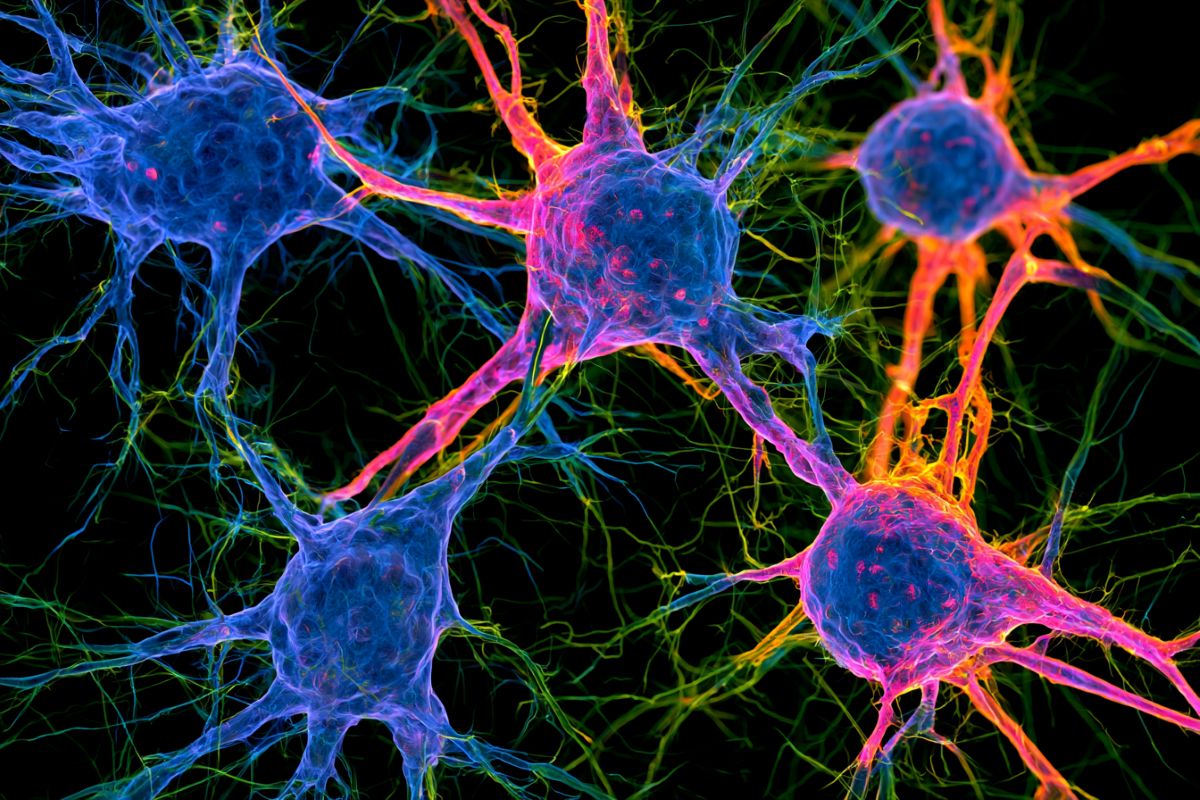
The Norman and Mary Pattiz Foundation gave USC's Keck School of Medicine a $3 million gift on June 2, 2026, to fund AI-driven drug discovery targeting the inflammatory enzyme cPLA2 in APOE4 carriers, the strongest genetic risk factor for Alzheimer's disease. USC Center for Personalized Brain Health director Hussein Yassine is pairing the gift with computational biologist Vsevolod Katritch's V-SYNTHES platform, which combines AI with physics-based molecular simulation to screen billions of compounds for blood-brain-barrier penetration and cPLA2 inhibition; a prior V-SYNTHES run on this same target identified lead drug candidates in under six months. The funding also builds a high-risk early-detection registry and gives neuropathologist Anne Hiniker protected time to screen more than 1,100 brain tissue samples. For AI/ML practitioners, this is a concrete example of AI-plus-physics screening compressing hit-identification timelines, provided blood-brain-barrier permeability and target-engagement validation keep pace.
For AI/ML practitioners in computational drug discovery, this story is less about a new research finding than about which AI method actually gets funded and used: USC is pairing a fresh philanthropic gift with an already-operating AI-plus-physics screening platform, V-SYNTHES, that has a documented track record of turning a validated biological target into drug candidates in under six months.
What happened
The Norman and Mary Pattiz Foundation gave USC's Keck School of Medicine a $3 million gift, announced June 2, 2026, to fund Alzheimer's prevention research at the USC Center for Personalized Brain Health (CPBH), directed by Hussein Yassine, MD. The gift backs AI-driven drug discovery targeting calcium-dependent phospholipase A2 (cPLA2), an enzyme Yassine's team found is elevated in APOE4 carriers who progress to dementia; it also funds a high-risk early-detection registry combining APOE4 genetic data with cardiovascular risk factors, and gives neuropathologist Anne Hiniker, MD, PhD, protected time to screen more than 1,100 human brain tissue samples in the USC Alzheimer's Disease Research Center's Neuropathology Core.
Technical context
The AI-screening work the gift supports builds on V-SYNTHES, a computational platform developed by Vsevolod Katritch at the USC Michelson Center for Convergent Bioscience that combines AI with physics-based molecular simulation. Per USC Today, Katritch's team can computationally narrow trillions of possible small molecules down to 100 to 200 synthesizable candidates likely to bind a given target; applied to cPLA2, the Yassine-Katritch collaboration screened billions of compounds for blood-brain-barrier penetration and enzyme binding and identified leading drug candidates in under six months. The cPLA2 program already carries a separate NIH grant supporting translation into a drug therapy with Stan Louie, professor of clinical pharmacy at USC's Mann School of Pharmacy.
For practitioners
Teams building AI screening pipelines for CNS targets should note what made this workable: a biologically specific, mechanistically validated target (cPLA2's role in APOE4-linked inflammation) narrowed the search space before AI screening began, and a hybrid AI-plus-physics approach, rather than AI alone, was used to filter for blood-brain-barrier permeability, a property still hard to predict from structure alone. The harder, unresolved work is orthogonal validation: confirming target engagement in human tissue and moving from computationally ranked candidates to experimentally confirmed hits.
What to watch
Watch for peer-reviewed preclinical data on the cPLA2 inhibitors, since the current record consists of USC's own announcements rather than published, externally reviewed results; and watch how the new early-detection registry (drawing on USC's GeneScreen and CPBH SPARK cohorts) and the expanded 1,100-sample tissue library get used to generate training labels for future inflammation-focused AI models.
Key Points
- 1USC's Hussein Yassine and computational biologist Vsevolod Katritch are applying the AI-and-physics V-SYNTHES platform to screen billions of compounds against cPLA2 in APOE4 carriers.
- 2Targeting cPLA2-driven inflammation addresses an Alzheimer's mechanism years before symptoms appear, after amyloid-plaque-clearing trials failed to reverse established dementia.
- 3The Pattiz gift and an existing NIH grant now fund translating computationally predicted candidates into blood-brain-barrier-permeable, experimentally validated drug therapies.
Scoring Rationale
This is a solidly notable applied-AI drug-discovery story: the Yassine-Katritch cPLA2 program uses a named, already-operating AI-plus-physics platform (V-SYNTHES) with a documented sub-six-month hit-identification track record and existing NIH translational funding, not just a vague future promise. It stops short of a major/field-changing rating because the underlying scientific target (cPLA2) predates this announcement and peer-reviewed validation of the AI-identified candidates is still pending.
Sources
Public references used for this report.
Practice with real Health & Insurance data
90 SQL & Python problems · 15 industry datasets
250 free problems · No credit card
See all Health & Insurance problems