AI across healthcare: clinical diagnostic models, AI-driven drug discovery, hospital deployments, FDA activity, and the regulatory and payer changes that determine what actually reaches patients.
Stories
473
Latest source update
August 25, 2026
Coverage
Live
Topic brief
What to know about Healthcare AI
Brief updated Aug 6, 2026
Healthcare AI covers machine learning and generative AI used in diagnosis, treatment planning, clinical documentation, drug discovery, and health-system operations, a category subject to regulatory review, clinical validation, and data-privacy requirements that go well beyond general-purpose AI deployment. For data scientists and ML engineers, the field spans clinical natural language processing and retrieval-augmented generation for decision support, imaging and pathology foundation models, wearable and sensor-based health prediction, and AI-assisted drug discovery, each with its own regulatory pathway through bodies such as the FDA in the US, the NMPA in China, or CDSCO in India. Major labs including Anthropic, OpenAI and Google, alongside specialized health AI vendors and pharmaceutical partners, increasingly build dedicated scientific and clinical tooling rather than relying on general chat interfaces.
What makes this space distinct is the gap between demonstrated capability and validated real-world reliability. Studies keep surfacing failure modes, such as retrieval systems that cite real evidence but attach it to the wrong drug or disease, prediction models built on datasets with unverifiable provenance, or care-adjacent chatbots that sound empathetic to users while licensed reviewers still find unsafe medical advice in their answers. Regulators move at different speeds across jurisdictions, from device-class software rules to state-level restrictions on AI in insurance coverage decisions. Retrospective, single-center evaluation is common in the published clinical ML that reaches this hub, and external validation is much rarer, which is why a strong reported metric is rarely the same thing as evidence of clinical benefit. Practitioners here need to treat evaluation, audit trails, and human review as core product requirements rather than optional safeguards.
It is also worth separating the clinical frontier from where deployed value actually accumulates today. A large share of production healthcare AI sits in administrative and operational work: document classification, revenue cycle, patient outreach, prior-authorization review, and content governance, where errors are recoverable and the return is measurable. Clinical decision support carries the higher ceiling and the higher evidentiary burden, and the two should not be evaluated with the same rigor or the same procurement questions.
What changed recently
The clearest shift in this window is that the evidence layer, not the model layer, is where the interesting work is happening. Two of the newest items are about how you check a system rather than what it scores. Johns Hopkins University researchers and U.S. Food and Drug Administration collaborators published G-AUDIT on May 29, 2026, a modality-agnostic framework for detecting dataset attributes that could drive shortcut learning, evaluated across imaging, clinical text and ICU tabular data; the authors report that it surfaces subtle bias risks that qualitative review can miss. That matters against the backdrop of a peer-reviewed BMC Medicine study that traced two widely used Kaggle datasets with unverifiable provenance across 125 clinical prediction studies and 86 review articles, found evidence that three of the resulting models were used in clinical practice, and identified one cited in a medical-device patent. Meanwhile a randomized trial across 13 Ontario hospitals began testing an AI delirium-risk calculator that flags high-risk patients so care teams can prioritize a prevention bundle; six sites were using the platform by August 4, St. Michael's Hospital planned to begin with patients in October, and the year-long trial has yet to establish whether the model and surrounding workflow actually reduce delirium. That kind of prospective design is still uncommon in this evidence base, where a July 21 lung-transplant study reporting a random-forest validation AUC of 0.9989 was single-center and retrospective, and a July 28 two-stage diabetes classifier reported roughly 97% accuracy while its own tables disagreed on whether XGBoost or random forest performed best, with no external clinical validation.
Regulation and consumer deployment moved on separate tracks. India's Central Drugs Standard Control Organisation published final Medical Device Software guidance on July 21, mapping standalone software to Classes A through D by the seriousness of the clinical situation and how strongly the output affects care decisions, and expecting applicants to document dataset selection, bias, drift, cybersecurity, algorithm changes, rollback and post-market performance. China's NMPA has approved several Class III AI medical-device registrations in 2026 extending into pathology, endoscopy and surgical navigation, according to ECNS. In the US, Georgia's SB 444 takes effect January 1, 2027 and bars an AI system from issuing an adverse coverage determination without qualified human review, while Iowa's HF 2635, effective July 1, 2026, allows AI-assisted initial review but bars AI as the sole basis for a medical-necessity denial. The FDA granted Fast Track Designation on July 29 to Insilico Medicine's AI-designed pan-TEAD inhibitor ISM6331 for adults with previously treated unresectable malignant pleural mesothelioma, which the company says is the first such designation in its AI-driven pipeline; the candidate remains in a first-in-human Phase 1 trial, and Fast Track increases FDA engagement rather than establishing safety or efficacy. Consumer-facing products moved faster than any of that scaffolding: OpenAI began rolling out Health in ChatGPT to logged-in US users aged 18 and older on July 23 across Free, Go, Plus and Pro on web and iOS, with Apple Health and supported medical-record connections and a stated exclusion of connected health data from foundation-model training and advertising targeting. One day earlier, Florida resident and former pastor Scott Winters sued OpenAI and Sam Altman in San Francisco Superior Court, alleging that ChatGPT-4o discouraged him from seeking care before a July 2025 hospitalization with a massive pulmonary embolism; OpenAI said ChatGPT is not intended for diagnosis or treatment, and the allegations have not been adjudicated.
What to watch
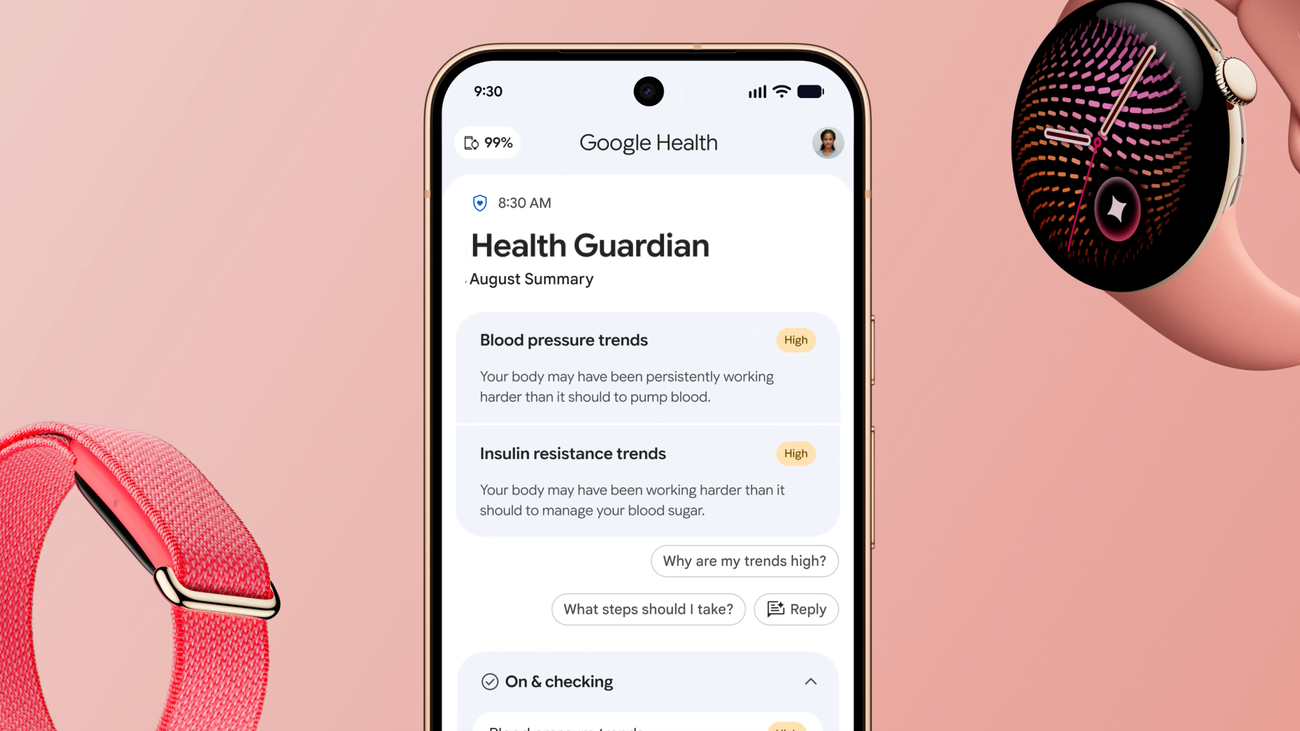
Most of the checkable signals here are dates and missing validation rather than predictions. Watch whether the 13-hospital Ontario delirium trial reports whether the risk calculator plus its surrounding workflow actually reduced delirium, and whether the benefit held fairly across sites, since only six sites were live as of August 4 and St. Michael's planned an October start. Watch for prospective or external validation of Oncoformer beyond its retrospective 3.67-million-person cohort, for replication of the 204-participant Nature Mental Health adolescent speech study, and for independent reproduction of ALICE's author-run evaluation across 21 scenarios, 96 tasks and 48 sources. Watch whether the G-AUDIT framework is picked up in submissions and whether the Scientific Reports diabetes paper resolves the disagreement between its own tables. On regulation, Georgia's SB 444 takes effect January 1, 2027 and Iowa's HF 2635 AI provision took effect July 1, 2026, so watch whether payer systems can produce reviewer-level audit trails; watch how CDSCO's Class A through D scheme is applied in actual Medical Device Software submissions, whether NMPA publishes further guidance as Class III approvals extend into pathology, endoscopy and surgical navigation, and whether Utah's Doctronic sandbox produces safety evidence that scales given Mindgard's red-team report that it manipulated the public chatbot into unsafe responses. On the pipeline, ISM6331 is only at Fast Track with a first-in-human Phase 1 trial ongoing, and the expanded GSK and Relation Therapeutics collaboration is worth up to 110 million dollars in upfront and success-based milestones with the guaranteed upfront amount undisclosed and no model benchmarks or drug candidates reported. Also open: whether the Winters complaint against OpenAI advances, whether OpenAI publishes evidence for its qualified claims about ChatGPT Health model performance relative to clinicians, and whether Google ships the No Coach insights preference found in the Google Health 5.04.1 teardown.
Frequently asked questions
Does a high reported AUC or accuracy mean a clinical model is ready to use?+
No, and several items in this evidence base illustrate why. The July 21 lung-transplant study reported a random-forest validation AUC of 0.9989 for grade 3 primary graft dysfunction, but it was retrospective, single-center, covered 297 recipients and lacked external validation. The July 28 diabetes classifier reports performance near 97% while its own tables disagree on whether XGBoost or random forest performed best, trains its two stages on different public datasets and has no clinically adjudicated subtype labels. The authors of these studies describe them as early or proof-of-concept results. External and prospective validation, not internal metrics, is the gate practitioners should apply.
What did the Oncoformer study actually show?+
A Cell study published July 27 introduced Oncoformer, a multimodal model trained and validated on routine health records, laboratory tests and chest X-rays from 3.67 million people across retrospective multi-cohort data. The authors reported AUROC of 0.956 for current cancer detection and 0.869 for prediction up to one year before diagnosis, and also evaluated tumor stage, treatment response and recurrence risk. The study's own framing is that prospective clinical validation is still required before routine use; the retrospective results do not establish that the model improves screening or patient outcomes.
What is deceptive grounding and why should clinical RAG teams care?+
A preprint from Lunit researchers describes it as a failure in which a response cites real evidence but attaches it to the wrong drug or disease, which means the answer can pass ordinary groundedness and faithfulness checks while still being wrong. Across 13 models the preprint reports failure rates from 8% to 87% under its strongest controlled adversarial conditions, with specialized medical models reaching 86.7%. A production measurement across 740 drug-disease pairs found a 7.8% overall rate rising to 13.6% for recently approved drugs. The authors report that an entity-attribution check reached 97.0% precision and 98.7% recall for detecting the failure, which argues for verifying that each cited source concerns the exact entity named in the answer.
How should teams vet training data provenance in health AI?+
Treat dataset popularity as discovery metadata rather than evidence. A peer-reviewed BMC Medicine study found that two widely used Kaggle datasets with unverifiable provenance had been used across 125 clinical prediction studies for stroke or diabetes, traced the resulting models into 86 review articles, found evidence that three were used in clinical practice, and identified one cited in a medical-device patent. The study used TRIPOD+AI provenance checks. G-AUDIT, published May 29, 2026 by Johns Hopkins researchers with FDA collaborators, addresses a related problem by measuring whether patient, site, acquisition and sensor attributes could act as shortcuts, across imaging, clinical text and ICU tabular tasks.
Where can AI be used in insurance and coverage decisions in the US?+
It depends on the state, and the rules are converging on a common shape rather than a common text. Georgia's SB 444 takes effect January 1, 2027 and bars an AI system from issuing an adverse determination without qualified human review. Iowa's HF 2635, whose AI provision took effect July 1, 2026, allows AI-assisted initial review but bars AI as the sole basis for a denial, delay or downgrade on medical necessity. Reporting from PYMNTS and Sheppard Mullin describes a broader legislative surge, with common requirements for human clinical review, individualized-data baselines, non-discrimination checks and periodic accuracy reviews. For payer-facing model teams the practical requirement is auditability: logs, evidence packages and clinician-review workflows that survive state-by-state review.
What is the current evidence on generative AI mental-health chatbots?+
Thin, according to the studies in this evidence base. A scoping review published July 23 examined 21 studies across 11 countries after screening 1,899 articles from seven databases; users often reported convenience, personalization and empathy, but most interventions were early-stage, engagement commonly declined over time, and outcome measures varied widely, leaving limited evidence on clinical efficacy, long-term use and standardized safety evaluation. A separate USC Viterbi study had 100 mental-health professionals review responses from ChatGPT-4, Llama 3.3 and Gemini 1.5 Pro to real mental-health questions and found the models could sound empathetic while still producing inappropriate medical advice, overgeneralization and unsupported assumptions. Both sets of authors call for licensed-expert evaluation and standardized safety testing before deployment.