UK Parliamentary Minister Endorses Autonomous Ships for Gulf Presence
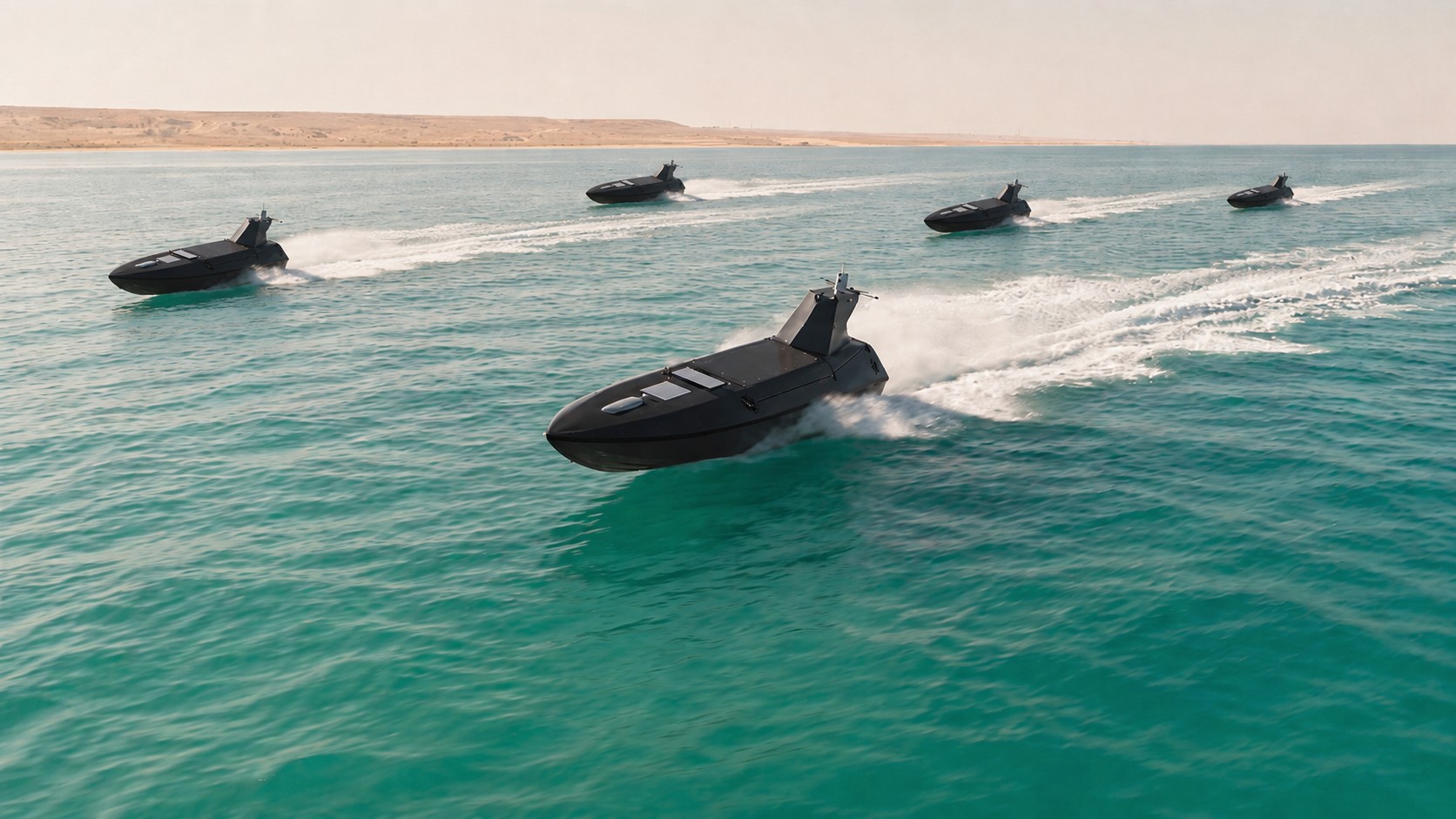
Lord Coaker, the UK's Minister of State for Defence in the House of Lords, has signaled that Britain's future mine-countermeasures presence in the Gulf will lean more on autonomous and uncrewed systems than on traditional crewed minehunters, telling peers the shift is part of a "hybrid navy" and that future mine hunting will "involve much more the use of drones." He noted that "no decision has been made to deploy [RFA Lyme Bay] yet," but pointed to the auxiliary ship's conversion into a drone "mothership" as the way forward. The vessel was refitted in Gibraltar to launch and recover underwater drones and uncrewed minehunting boats, and departed in late May with specialist minehunting personnel for a possible Strait of Hormuz mission. The Royal Navy frames the move as part of a broader hybrid-fleet transition pairing crewed ships with uncrewed systems.
What happened
Lord Coaker, the UK's Minister of State for Defence in the House of Lords, has indicated that Britain will provide future mine-countermeasures capability in the Gulf chiefly through autonomous and uncrewed systems rather than traditional crewed minehunters. He told peers the approach is part of a "hybrid navy" and that future mine hunting will "involve much more the use of drones," adding that "RFA Lyme Bay being made a mothership from which drones can be used to tackle a mine threat is also the way forward." He stressed that "no decision has been made to deploy [RFA Lyme Bay] yet" to the region.
The operational picture
RFA Lyme Bay, an auxiliary landing ship, was refitted in Gibraltar to store, prepare, deploy, and recover a range of crewless systems, from underwater drones to uncrewed minehunting boats, acting as a crewed mothership for the kit. The Royal Navy reported the ship departed Gibraltar in late May 2026 carrying autonomous minehunting systems and more than 100 specialist personnel from its diving and mine-threat groups for a potential Strait of Hormuz mission. First Sea Lord General Sir Gwyn Jenkins described Lyme Bay's mothership role as "a perfect example of how we are building a Hybrid Navy, one where crewed ships and cutting-edge uncrewed systems work together seamlessly." Earlier autonomous minehunter activity in the Gulf, including the uncrewed RNMB Harrier in 2023, predates the current effort.
The AI angle
The autonomy push sits alongside other naval uses of machine intelligence. Lord Coaker has separately said the Royal Navy is "applying artificial intelligence to predict ships that may threaten undersea cables," in operations such as Operation Nordic Warden, an example of AI used for maritime threat prediction rather than for the minehunting drones themselves. For this story, the AI relevance is the autonomy and uncrewed-systems shift more than any single algorithm.
Editorial analysis - what to watch
Industry context
dense commercial traffic, contested electronic environments, and rapid escalation risk make the Gulf a demanding proving ground for maritime autonomy. Observed patterns in similar transitions emphasise interoperability with existing fleet command-and-control, robust communications fallback, and clearly defined rules of engagement for semi-autonomous behaviour. Worth watching: whether the Ministry of Defence publishes a formal concept of operations or acquisition standards; trial results from Lyme Bay and its uncrewed systems; and how multinational mine-clearance coordination handles data-sharing and autonomy.
Bottom line
For practitioners, the significance is less a technical breakthrough than a real-world, ministerially endorsed move to put autonomous maritime systems into a high-stakes theatre, with the caveat that no final deployment decision has been confirmed. Quotes and operational details are drawn from UK parliamentary coverage and Royal Navy statements.
Key Points
- 1A UK defence minister endorsed uncrewed and drone-based minehunting for the Gulf, calling it the way forward over traditional crewed minehunters.
- 2RFA Lyme Bay was converted into a drone mothership and sailed from Gibraltar with autonomous systems for a possible Hormuz mission.
- 3Editorial analysis: contested, cluttered waters like the Gulf stress autonomy programs on comms resilience, interoperability, and reliable degraded-mode operation.
Scoring Rationale
A maritime-defence autonomy story with a tangential AI angle: a UK minister's endorsement of uncrewed and drone-based minehunting for the Gulf, backed by a real deployment of RFA Lyme Bay as a drone mothership. It is policy-plus-procurement rather than a technical AI advance, so it is of niche interest to AI and data-science practitioners; scored in the minor band but kept above the visibility floor given the live operational element.
Sources
Public references used for this report.
View 6 more sources
- Lyme Bay MCM Uncrewed Systems Fit Illustrates 'Hybrid Navy' Flexibilitynavalnews.com
- British Navy announces arrival of autonomous mine hunter in Gulfnaval-technology.com
- Royal Navy Deploys New Mine-Hunting Drone as 15-Nation Hormuz Coalition Takes Shapegcaptain.com
- European Mine-Clearance Force for Strait of Hormuz Forming Upmaritime-executive.com
- UK Equips Ship with Mine-Hunting Drones for Possible Strait of ...english.aawsat.com
- Royal Navy Tests Autonomous Drone Fleet in Strait of Hormuzfuturenavy.com
Practice interview problems based on real data
1,625 SQL & Python problems across 15 industry datasets — the exact type of data you work with.
Try 250 free problems