Tiangong Ultra Wins Beijing Robot 100-Meter Final
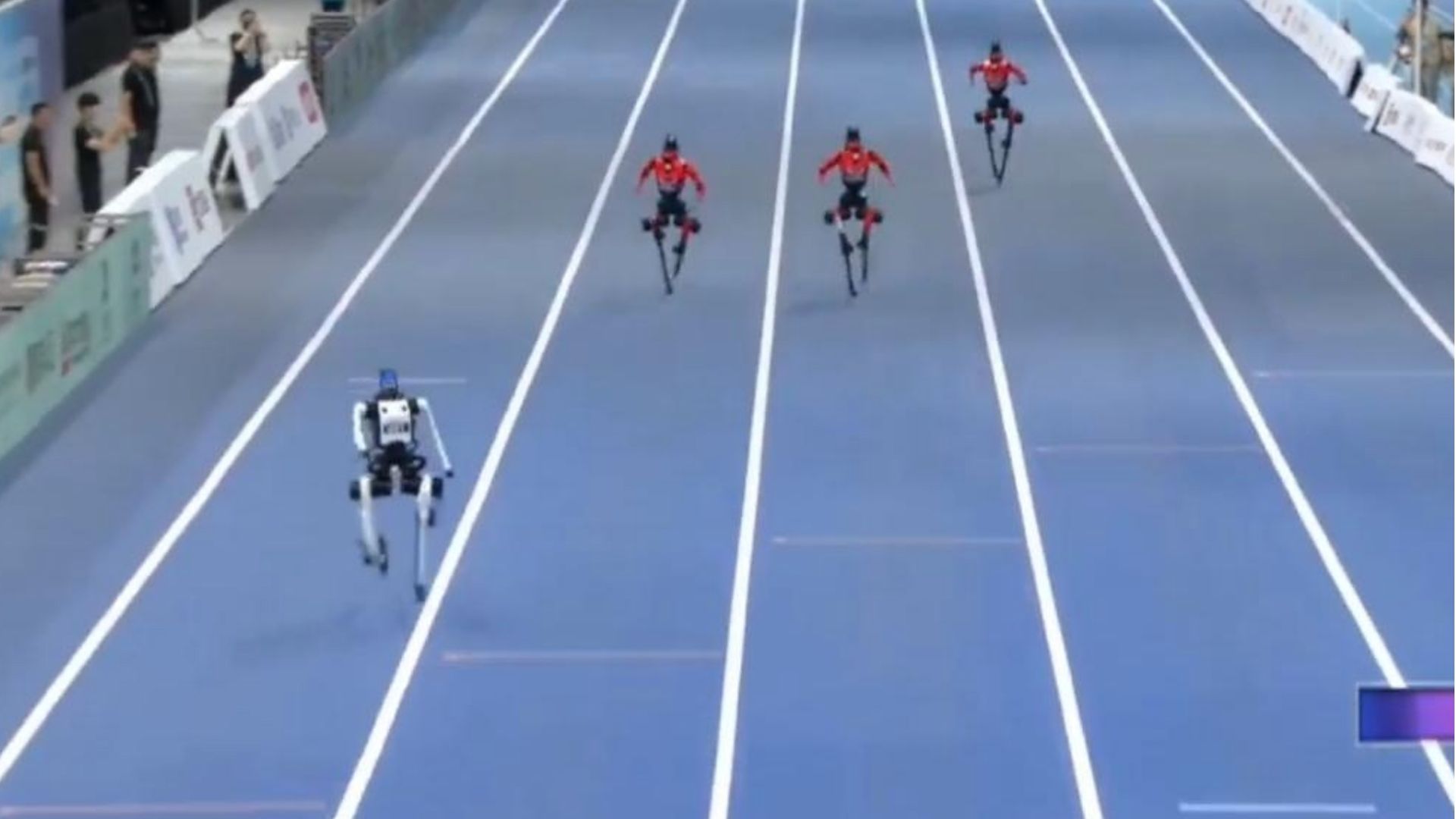
Tiangong Ultra won the large-size humanoid robot 100-meter final at Beijing's second World Humanoid Robot Games on August 26 with an 8.64-second run. Reuters reports that the robot, developed by the Beijing Humanoid Robot Innovation Centre, improved from 9.39 seconds and 8.86 seconds in earlier rounds. The time is faster than Usain Bolt's human record, but the results are not directly comparable.
Tiangong Ultra won the large-size humanoid robot 100-meter final at the second World Humanoid Robot Games in Beijing on August 26, recording 8.64 seconds, Reuters reported. The robot was developed by the Beijing Humanoid Robot Innovation Centre.
The final time improved on Tiangong Ultra's 9.39-second and 8.86-second performances in earlier rounds of the five-day competition, according to Reuters. AP reported that the 9.39-second mark had been set only three days earlier at the same event. Interesting Engineering described the 8.64-second result as the fastest time of the competition.
The run was 0.94 seconds faster than Usain Bolt's 9.58-second men's 100-meter world record, set in Berlin in 2009. That comparison should not be read as a replacement for the human athletics record: Interesting Engineering noted that humanoid robots and human athletes do not compete under the same physiological, technical, or regulatory conditions.
A mobility benchmark, not a human-record replacement
Reuters characterized the 100-meter race as a prominent demonstration of advances in robot mobility, balance, and control systems. High-speed bipedal motion requires coordinated foot placement, dynamic balance, momentum management, and recovery from instability. Interesting Engineering noted that the event uses athletic contests to expose weaknesses in those capabilities under pressure.
The reports also show important constraints around the headline result. The Verge reported that several sprinting robots collided with cushioned barriers after crossing the finish line because they could not stop safely at speed. AP photographs from the final showed officials extinguishing a humanoid robot after it hit a barrier. The available reports do not detail the timing methodology, robot hardware configuration, autonomy level, or track and stopping requirements used for the race.
For robotics teams, repeatable locomotion across acceleration, steady-state running, deceleration, and recovery remains more informative than a single peak time. Across comparable humanoid programs, fast running can reveal progress in whole-body control while also surfacing safety and reliability gaps that matter for deployment around people and equipment.
Scale of the Beijing event
Reuters reported that the World Humanoid Robot Games brought together more than 2,000 robots from 666 teams, most of them Chinese. Its 51 disciplines included sporting events alongside task-based scenarios set in simulated factories, restaurants, offices, and emergency environments.
The broader program places the sprint result alongside tests closer to operational robotics. Reporting by Reuters described the games as a venue developers use to advance robots intended for home and workplace settings. The reports reviewed do not provide performance metrics showing how Tiangong Ultra's sprint capability transfers to those tasks.
The result nevertheless provides a visible benchmark for the rapid improvement reported at the event. Interesting Engineering reported that the fastest 100-meter time at the inaugural games was above 12 seconds, while Tiangong Ultra recorded 8.64 seconds in this year's final. Comparisons across robot competitions require caution, however, unless hardware, control software, course rules, and measurement procedures are disclosed consistently.
Key Points
- 1Tiangong Ultra recorded 8.64 seconds in Beijing's humanoid 100-meter final, improving from earlier 9.39-second and 8.86-second runs.
- 2The time exceeded Bolt's human mark numerically, but differing equipment, conditions, and rules prevent it from replacing an athletics record.
- 3Humanoid sprinting benchmarks whole-body control, while reported barrier collisions show that stopping safety remains a critical systems challenge.
Scoring Rationale
The result is a notable public benchmark for high-speed humanoid locomotion and whole-body control. It offers robotics practitioners a visible performance datapoint, though limited disclosures on hardware, autonomy, and measurement reduce its direct reproducibility and deployment relevance.
Sources
Public references used for this report.
Practice interview problems based on real data
1,625 SQL & Python problems across 15 industry datasets — the exact type of data you work with.
Try 250 free problems