Supermicro Debuts DCBBS Blueprint for NVIDIA Vera Rubin NVL4
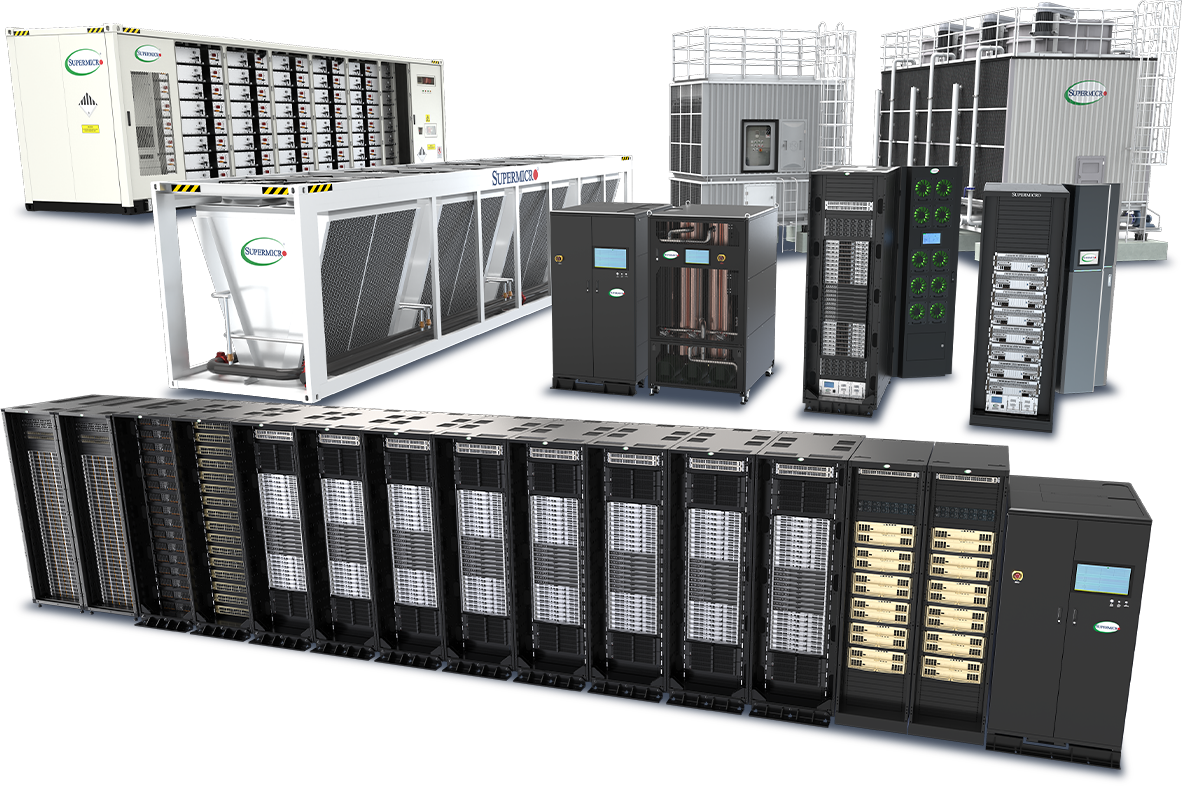
Supermicro introduced a Data Center Building Block Solutions (DCBBS) Blueprint for high-performance computing based on the NVIDIA Vera Rubin NVL4 platform, announced at ISC 2026, according to a June 22 press release distributed by PR Newswire. The end-to-end blueprint specifies configurations of up to 1,152 NVIDIA Rubin GPUs and 576 NVIDIA Vera CPUs in liquid-cooled racks, with a 3.2MW Scalable Unit and DLC-2 direct liquid cooling supporting 362 kW per rack, per the PR Newswire release. The package combines compute, networking, liquid cooling, power distribution, and site services as a pre-engineered deployment model. Charles Liang, president and CEO of Supermicro, was quoted in the PR Newswire release on the role of AI in scientific research. Market coverage reports the announcement drove a multi-day stock rally for Supermicro, with outlets such as Yahoo Finance reporting a 15.66% one-day gain on June 22.
What happened
Supermicro introduced a Data Center Building Block Solutions (DCBBS) Blueprint for high-performance computing built on the NVIDIA Vera Rubin NVL4 platform, announced at ISC 2026, per a June 22 press release distributed by PR Newswire. The press release specifies an end-to-end solution that can include up to 1,152 NVIDIA Rubin GPUs and 576 NVIDIA Vera CPUs in liquid-cooled racks, organized as a 3.2MW Scalable Unit, and states that DLC-2 direct liquid cooling supports 362 kW per rack. StorageReview and HPCwire reported the blueprint extends Supermicro's DCBBS methodology from enterprise AI use cases into scientific computing and national laboratory environments. Charles Liang, president and CEO of Supermicro, appears quoted in the press release on AI's role in research.
Technical details
The PR Newswire release describes the DCBBS Blueprint as a packaged offering covering project planning, site survey, manufacturing, factory testing, and on-site deployment. The release highlights liquid-cooling components including cold plates, manifolds, in-row CDUs, and an SMC PG25-A coolant with high electrical impedance. StorageReview notes the blueprint follows earlier Supermicro DCBBS disclosures for NVIDIA Vera Rubin NVL72 and HGX Rubin NVL8 platforms.
Editorial analysis - technical context
Research and commercial HPC workloads increasingly mix double-precision simulation (FP64) with AI training and inference. Native FP64 performance, high GPU density, and rack-level liquid cooling are technical levers commonly used to reconcile those requirements. Organizations building converged clusters typically prioritize rack-level thermal design, coolant electrical properties, and power-distribution planning to sustain high utilization and manage facility constraints.
Context and significance
Industry coverage ties the announcement to broader vendor activity around the NVIDIA Vera Rubin family and to demand for turnkey, liquid-cooled rack designs in hyperscale and national-lab deployments. Public market reporting shows investor enthusiasm: Yahoo Finance and other outlets reported Supermicro shares jumped in the days after the announcement, with a cited one-day gain of 15.66% on June 22. For practitioners, the combination of packaged site services plus a specified rack-power and cooling envelope reduces the number of design decisions a facility must make, which can lower integration risk for large deployments.
What to watch
For practitioners and procurement teams: monitor vendor documentation for validated performance results using NVL4 in mixed FP64/AI workloads and for published thermal limits at sustained utilization. Industry observers should watch availability and lead times for liquid-cooling components and for ROS/firmware stacks validated against large-scale clusters. For those tracking vendor economics, follow whether packaged DCBBS offerings become a standard procurement line item in research centers and how OEMs price 3.2MW scalable units.
Key Points
- 1Supermicro's DCBBS NVL4 blueprint packages compute, cooling, networking, and site services to accelerate large-scale HPC/AI deployments.
- 2Native FP64 and high GPU density with liquid cooling address mixed simulation and AI workloads, reducing thermal and power design complexity.
- 3Pre-engineered rack units and specified power/cooling envelopes lower integration risk, a pattern that accelerates procurement for research centers.
Scoring Rationale
The announcement matters to practitioners designing converged HPC and AI clusters because it packages validated hardware, cooling, and site services at rack and facility scale. It is not a new architecture or model release, but it materially affects deployment complexity and procurement for large research and supercomputing sites.
Sources
Public references used for this report.
View 9 more sources
- Supermicro introduces HPC blueprint for Vera Rubin NVL4engineering.com
- Supermicro Provides NVIDIA Blueprint for Converged HPC and AIdigitalengineering247.com
- Super Micro's stock is seeing its best run in a year thanks to Nvidia partnershipmarketwatch.com
- Super Micro (SMCI) Gets 15.66% Boost from Nvidia-Powered Blueprintfinance.yahoo.com
- Supermicro stock rises 8% on new Nvidia AI infrastructure blueprintinvesting.com
- Supermicro Unveils NVIDIA Vera Rubin NVL4 Blueprint - A Game-Changer for Scalable AI HPCmarketchameleon.com
- Super Micro Surges 17% on Nvidia Vera Rubin Partnership and Analyst Upgrademlq.ai
- Supermicro unveils NVIDIA Vera Rubin NVL4 HPC blueprintstocktitan.net
- Super Micro Stock Spotlighted After NVIDIA AI Blueprintinsiderfinance.io
Practice interview problems based on real data
1,625 SQL & Python problems across 15 industry datasets — the exact type of data you work with.
Try 250 free problems