Study Finds People More Likely to Lie to AI
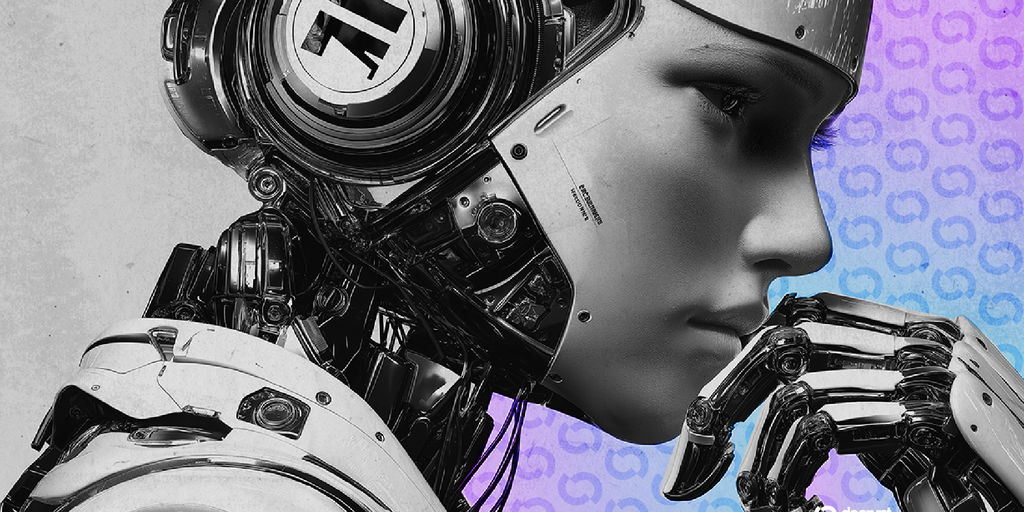
According to Decrypt, a recent study finds that consumers report feeling less social pressure when lying to an AI chatbot than when lying to a human, increasing the prevalence of dishonest responses in interactions with conversational agents. Decrypt reports the same research shows that adding human-like social cues to the chatbot interface reduces dishonest behavior. The coverage frames these results as behavioral evidence that interface design and perceived social presence alter user honesty when interacting with AI. The study and Decrypt's reporting do not appear to include industry-level recommendations or quantified fraud rates.
What happened
According to Decrypt, a study found that people are more willing to lie to an AI chatbot than to a human interlocutor, with respondents reporting reduced social pressure when the interlocutor was an AI. Decrypt also reports that the same research observed lower rates of dishonest responses when the chatbot displayed human-like social cues in the interface.
Technical details
Editorial analysis - technical context: Behavioral research on human-agent interaction typically measures honesty via controlled prompts, incentives, and varied social cues. For ML practitioners, these experiments signal that user input quality can depend on perceived agent socialness; researchers and product teams commonly control for this when constructing training datasets and user studies.
Context and significance
Industry context: Reduced social pressure when interacting with nonhuman agents creates two practical implications. First, evaluation datasets gathered from chatbot interactions may contain higher rates of deliberate deception than equivalent human-to-human datasets. Second, interface-level design choices that increase perceived social presence tend to alter user behavior, which affects measurement of real-world model performance and safety.
What to watch
For practitioners: look for follow-up work that quantifies effect sizes, replicates results across demographics, and tests which specific social cues (voice, avatar, politeness framing) drive changes in honesty. Observers should also watch for papers or industry reports that translate these behavioral findings into dataset collection protocols or moderation signals.
Decrypt is the reporting source for the claims above.
Key Points
- 1Study reporting indicates users feel less social pressure lying to AI chatbots, implying higher deliberate-misinfo risk in chatbot-collected data.
- 2Experiments show that adding human-like social cues reduces dishonest responses, suggesting UX design can materially change user-input quality.
- 3For practitioners, dataset collection and evaluation protocols should account for social-presence effects to avoid biased performance estimates.
Scoring Rationale
Behavioral findings about honesty in AI interactions matter for dataset quality, user-safety, and model evaluation; the story is notable but not a paradigm shift. Coverage is based on a single report without detailed effect sizes, which limits immediate operational impact.
Practice interview problems based on real data
1,625 SQL & Python problems across 15 industry datasets — the exact type of data you work with.
Try 250 free problems