ServiceNow Expands Autonomous Workforce Across Enterprise Functions
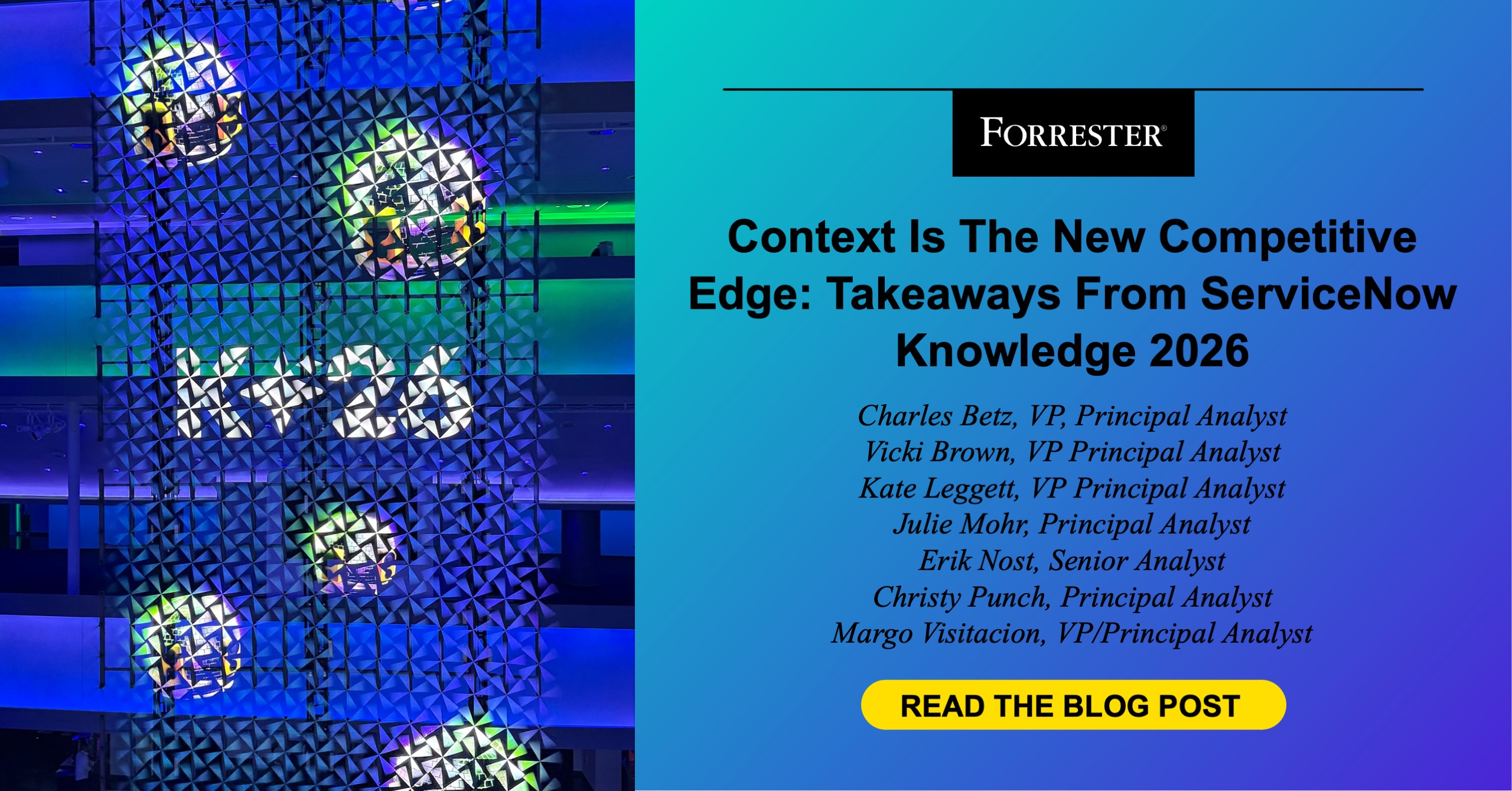
At ServiceNow Knowledge 2026, ServiceNow announced an expansion of its Autonomous Workforce offering, adding AI specialists for IT, CRM, employee service teams, and security and risk, according to a ServiceNow press release. The vendor presented Otto as a conversational front door and described shared governance, audit trails, and role-scoped permissions as core platform capabilities, per the press release. Forrester characterised the event as evidence of ServiceNow's ambition to become an "autonomous operating layer for the enterprise," in a Forrester blog. Reporting in TechTarget highlighted differing priorities between HR and IT when adopting agentic workflows and quoted CVS Health and HR advisory firm McLean & Co. as examples. For practitioners, the announcements consolidate a pattern where major enterprise platforms bundle agentic AI, workflow orchestration, and governance to reduce integration overhead and accelerate rollouts.
What happened
According to a ServiceNow press release, ServiceNow unveiled an expanded Autonomous Workforce at Knowledge 2026, adding new AI specialists scoped to IT, CRM, employee service teams, and security and risk. The press release includes a direct quote from Amit Zavery, president, chief product officer, and chief operating officer at ServiceNow: "Advisory AI has run its course; enterprises need AI that senses, decides, and securely acts in accordance with organizational guardrails." The company presented Otto as a conversational front door that routes work across agentic components and positioned shared governance, role-scoped permissions, and audit trails as built-in capabilities, per the same release. Industry reporting and partner posts documented additional ecosystem moves, including references to Project Arc with NVIDIA and partnerships with Lenovo, Microsoft, and FedEx, as reported by Simply Wall St and conference coverage.
Technical details
Editorial analysis - technical context
Public materials emphasise three technical pillars practitioners should note: platform-level context and operational intelligence, agent-to-agent handoff and orchestration, and integrated governance. ServiceNow frames Autonomous Workforce as reusing shared platform context and conversational entry points so AI specialists can act across records, incident workflows, and security events without bespoke point-to-point integrations, according to the vendor press release and partner blogs. Dynatrace documented a Now Assist and Dynatrace MCP Server integration that enriches incidents and CMDB data for more automated remediation workflows, demonstrating how observability and platform automation are being combined at the integration layer.
Context and significance
Multiple outlets framed Knowledge 2026 as a moment where a major enterprise workflow vendor moved from advisory AI to agentic execution. Forrester wrote that the conference painted a clearer picture of ServiceNow's ambition to function as an "autonomous operating layer for the enterprise." Coverage in TechTarget and BizTech highlighted that organisations are experimenting with cross-functional agentic workflows and that business units have different tolerances for automation risk. TechTarget quoted Joe Lombardi, associate vice president of digital workplace at CVS Health: "We all wanted different things," and cited Lisa Highfield of McLean & Co. on the divergent risk profiles between IT and HR, noting HR errors can trigger compliance or employee-relations problems.
Observed trade-offs and partner strategy
What to watch
For practitioners
monitor early adopters for metrics on error rates, handoff reliability, and auditability across HR, security, and customer-service use cases. Watch partner integrations (for example, observability tools, device telemetry, and identity/data controls) for evidence that end-to-end automation actually reduces mean time to resolution without increasing compliance exposure. Also watch vendor-provided governance primitives in practice: role-scoped permissions, immutable audit trails, and model-versioning controls will determine whether agentic workflows can be operated at enterprise scale.
Bottom line
Editorial analysis
The combination of agentic capabilities and governance is being marketed as a way to lower integration friction and centralise controls. Reporting links ServiceNow's announcements to prior acquisitions such as Armis and Veza and to partnerships that extend device and supply-chain telemetry into workflows, which increases the breadth of signals available to automated agents but also raises integration and data-governance complexity for adopters.
ServiceNow's Knowledge 2026 announcements consolidate an industry pattern where leading workflow platforms bundle agentic AI, orchestration, and governance to make automation consumable for enterprise teams. Practitioners should treat these platform bundles as integration accelerants that shift implementation effort from connectors toward policy and data-quality work, while paying careful attention to domain-specific risk boundaries, especially in HR and regulated processes.
Key Points
- 1Platform vendors are bundling agentic AI, orchestration, and governance to reduce point-to-point integration costs for enterprises.
- 2Cross-domain agents surface trade-offs: IT tolerates automated retries, while HR and compliance use cases demand stricter accuracy and audit controls.
- 3Practitioners should prioritise governance primitives, observability integrations, and handoff reliability when evaluating agentic workflow deployments.
Scoring Rationale
ServiceNow's Knowledge 2026 announcements matter to practitioners because they signal a major workflow platform moving from advisory AI toward agentic execution with governance and partner integrations. The story is notable for enterprise automation practice but not a frontier-model milestone.
Sources
Public references used for this report.
View 5 more sources
- ServiceNow AI push exposes different priorities in HR and ITtechtarget.com
- ServiceNow Knowledge 2026: Enterprises Look to Fast-Track ...biztechmagazine.com
- ServiceNow Knowledge 2026: Accelerating intelligent automationdynatrace.com
- The Post-Concept Era of AI: Key Takeaways from Knowledge 2026stayrelevant.globant.com
- 10 ServiceNow Knowledge 26 Updates You'll Be Hearing About ...aelumconsulting.com
Practice interview problems based on real data
1,625 SQL & Python problems across 15 industry datasets — the exact type of data you work with.
Try 250 free problems