Sereact raises $110M to scale Cortex 2 model
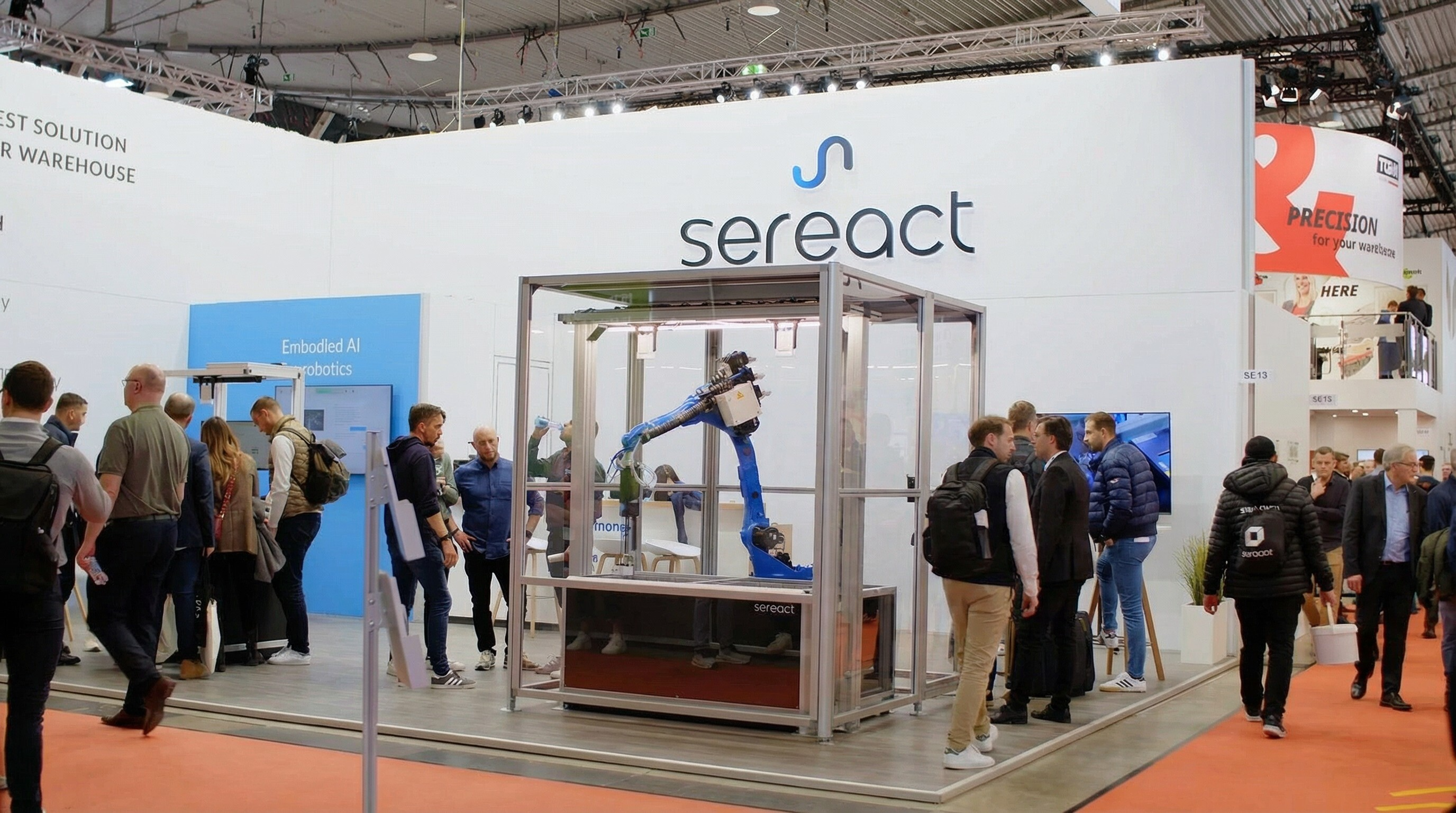
According to multiple reports, Stuttgart-based robotics software company Sereact has raised $110 million in a Series B round led by VC firm Headline (The Next Web, Tech.eu, Bloomberg). New investors include Bullhound Capital, Felix Capital, and Daphni, with returning backers Air Street Capital, Creandum, and Point Nine also participating (Tech.eu, EU-Startups). Tech.eu and The Next Web report the funds will support development and global scaling of Sereact's latest model, Cortex 2, and expansion into the US with a new Boston office (Tech.eu, EU-Startups). EU-Startups and Tech.eu note real-world deployments at customers including BMW, Daimler Truck, Bol, and Active Ants, and EU-Startups quotes CEO Ralf Gulde citing deployment metrics including 200 systems and one billion picks.
What happened
According to Bloomberg, The Next Web, Tech.eu, and EU-Startups, Stuttgart-based robotics software company Sereact raised $110 million in a Series B funding round led by Headline. The Next Web and Tech.eu list new investors Bullhound Capital, Felix Capital, and Daphni, and Tech.eu and EU-Startups report participation from returning investors Air Street Capital, Creandum, and Point Nine. Tech.eu and The Next Web report that Sereact did not disclose a valuation. Tech.eu and EU-Startups state the company intends to use the funding to develop and scale its latest model, Cortex 2, and to expand operations in the US, including a new Boston office planned for the coming summer (Tech.eu, EU-Startups). EU-Startups quotes CEO Ralf Gulde with deployment metrics: 200 systems, one billion picks, and an intervention rate of one intervention per 53,000 picks, which the article presents as the company's performance claim (EU-Startups).
Technical details
Tech.eu and The Next Web describe Sereact's approach as a software-first stack built around Vision Language Action Models (VLAMs) that combine visual perception, language understanding, and action planning into a unified model. Tech.eu reports that Cortex 2 trains on diverse physical behaviours so a robot can select the most promising action for a given manipulation task, extending beyond simple pick-and-place to contact-sensitive work such as assembly and kitting (Tech.eu). The Next Web adds that Sereact's systems run on a range of hardware form factors, from single-arm and dual-arm setups to humanoid platforms, and that real-world deployments feed a data flywheel used to improve models over time (The Next Web, Tech.eu).
Industry context
Editorial analysis: Companies commercialising physical-AI for manipulation increasingly prioritise closing the sim-to-real gap by collecting production data from warehouses and factories. Observers following the sector note that a data flywheel fed by real deployments can materially improve robustness on edge cases compared with models trained predominantly in simulation. For practitioners, this pattern emphasizes operational engineering (sensor integration, safety, intervention logging) as much as model architecture when moving manipulation models into production.
Context and significance
Editorial analysis: A $110 million Series B led by a major cross-border VC like Headline signals investor conviction in enterprise robotics software rather than hardware-heavy automation players. For ML and robotics engineers, the notable parts are the reported scale of real deployments (customer names and the numbers quoted by Ralf Gulde in EU-Startups) and the explicit claim that Cortex 2 targets contact-rich tasks. Those two elements matter because contact-sensitive manipulation is substantially harder than bin picking and is where software-level generalisation can create differentiation if it holds up in diverse production settings.
What to watch
Editorial analysis: Observers and practitioners should track three indicators:
- •independent benchmarks or third-party demonstrations of Cortex 2 on contact-rich tasks
- •customer case studies from the named partners (BMW, Daimler Truck, Bol, Active Ants) showing deployment scope and maintenance burden
- •how Sereact documents safety, intervention rates, and tooling for supervised corrections in production
Tech.eu and The Next Web report that a US office in Boston is part of the expansion plans; EU-Startups places that timeline in the coming summer, which will be an observable milestone for hiring and local deployments (Tech.eu, EU-Startups).
Key Points
- 1Sereact closed $110M Series B led by Headline to scale Cortex 2 and US operations, underscoring investor appetite for physical-AI (The Next Web, Tech.eu).
- 2Cortex 2 targets contact-rich manipulation and is trained from production deployments, a pattern where real-world data improves reliability over simulation-heavy approaches.
- 3For practitioners, independent tests and customer case studies will be crucial to validate claimed metrics such as one billion picks and low intervention rates (EU-Startups).
Scoring Rationale
The story is a notable funding and product-scale update for robotics practitioners: sizable Series B plus a new manipulation-focused model and real-world deployments. It is important for teams working on production robot perception and manipulation but not a frontier-model breakthrough.
Sources
Public references used for this report.
Practice interview problems based on real data
1,625 SQL & Python problems across 15 industry datasets — the exact type of data you work with.
Try 250 free problems