Researchplanetary sciencelineaemessengervolatile loss
Scientists Find Volatile Outgassing Creating Mercury Streaks
7.3
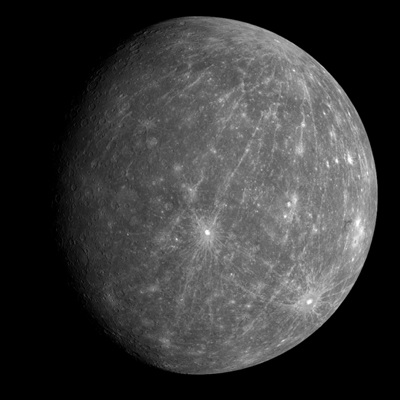
Researchers from the University of Bern and INAF analyzed about 100,000 MESSENGER images (2011–2015) and mapped roughly 400 bright lineae, the team reports in Nature Communications Earth & Environment on January 27, 2026. The streaks cluster on sun-facing slopes of young impact craters and are attributed to volatile-driven outgassing and hollows, indicating ongoing geological activity; BepiColombo observations in late 2026 will enable direct comparison.
Key Points
- 1Detected ~400 lineae across Mercury using machine learning on 100,000 MESSENGER images.
- 2Indicate volatile-driven outgassing from crater-induced fractures, concentrated on sun-facing slopes.
- 3Enable quantification of Mercury’s volatile loss and provide targets for BepiColombo comparisons in 2026.
Scoring Rationale
Peer-reviewed, novel global census of ~400 lineae supports volatile-driven activity; limitation is primarily niche planetary-science relevance to data professionals.
Practice with real Ride-Hailing data
90 SQL & Python problems · 15 industry datasets
Used by DS/ML engineers at top companies
250 free problems · No credit card
See all Ride-Hailing problems