ScaleFlux Introduces KV Cache SSD Platform
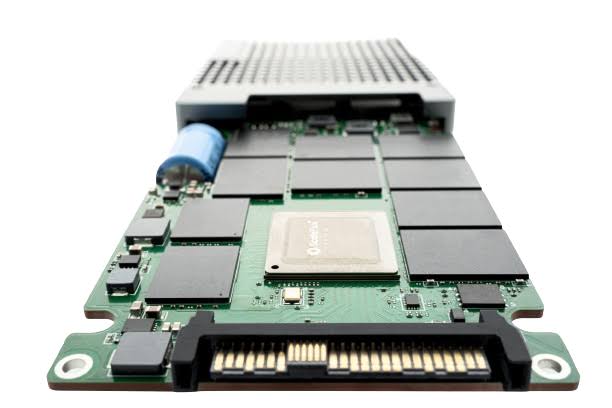
ScaleFlux introduced an AI-optimized SSD platform on July 30 for NVIDIA CMX and other inference systems that offload KV cache beyond GPU HBM and host DRAM. According to the company's announcement, the platform combines Context-Insight telemetry, 7 to more than 10 effective DWPD at five years, and more than 200 Flexible Data Placement write streams per drive.
ScaleFlux introduced an AI-optimized SSD platform for NVIDIA CMX and other inference architectures that use SSDs as a shared KV-cache tier beyond GPU HBM and host DRAM. The July 30 announcement describes a combination of high-endurance SSD hardware, Context-Insight workload telemetry, and Flexible Data Placement (FDP) support intended for high-churn AI inference state.
According to ScaleFlux's PR Newswire announcement, the platform is designed for 7 to more than 10 effective drive writes per day (DWPD) at five years for KV-cache workloads. The company qualifies that figure by workload characteristics, FDP utilization, and device configuration. It also claims support for more than 200 FDP write streams per drive.
Lifecycle-aware placement
ScaleFlux and StorageReview describe KV-cache offload as a storage workload in which blocks can be written frequently, retained for different durations, reactivated after inactivity, and invalidated asynchronously across sessions, workers, and tenants. When data with incompatible lifecycles occupy the same flash blocks, garbage collection can increase write amplification.
FDP exposes placement streams that software can use to group writes with similar expected lifecycles. According to StorageReview, ScaleFlux proposes grouping data by attributes such as session, tenant, shared-prefix classification, ownership, or reuse behavior. The stated objective is to reduce internal flash data movement during garbage collection and limit interference between data classes.
ScaleFlux reported preliminary controlled testing showing more than a twofold reduction in write amplification with lifecycle-aware FDP placement compared with a baseline placement configuration. The available reporting does not provide workload traces, device configurations, or independently reproduced results, so the performance claim should be treated as vendor-reported preliminary testing.
Endurance economics for inference
The company calls that overhead an "endurance tax." Its argument is that higher effective endurance can leave a greater share of installed flash capacity available for active KV cache and other runtime state rather than write-budget overhead.
For infrastructure teams, the announcement underscores a broader systems issue: long contexts, shared-prefix reuse, agentic workflows, and retained sessions can shift inference bottlenecks from accelerator memory toward tiering, cache admission, placement policy, and flash wear. Comparable deployments depend on whether serving software can classify cache objects consistently enough to use placement streams, and whether observed reuse and invalidation behavior matches the assumptions used in endurance testing.
Key Points
- 1ScaleFlux targets SSD-backed KV-cache offload with vendor-reported 7 to more than 10 effective DWPD at five years.
- 2More than 200 FDP streams could let inference software segregate cache objects by lifecycle, reducing garbage collection interference across tenants and sessions.
- 3Across comparable inference systems, cache-tier economics increasingly depend on placement metadata, write amplification, and endurance rather than raw SSD capacity alone.
Scoring Rationale
The platform addresses a growing infrastructure constraint for long-context and shared-cache inference: durable, high-write-rate storage tiers beyond HBM and DRAM. Its relevance is substantial for operators designing KV-cache offload, but the reported endurance and write-amplification results are vendor claims rather than independently validated benchmarks.
Sources
Primary source and supporting public references used for this report.
Practice interview problems based on real data
1,625 SQL & Python problems across 15 industry datasets — the exact type of data you work with.
Try 250 free problems