Researchneuromorphicpdeshigh performance computingenergy efficiency
Sandia Demonstrates Neuromorphic Solver For PDEs
8.0
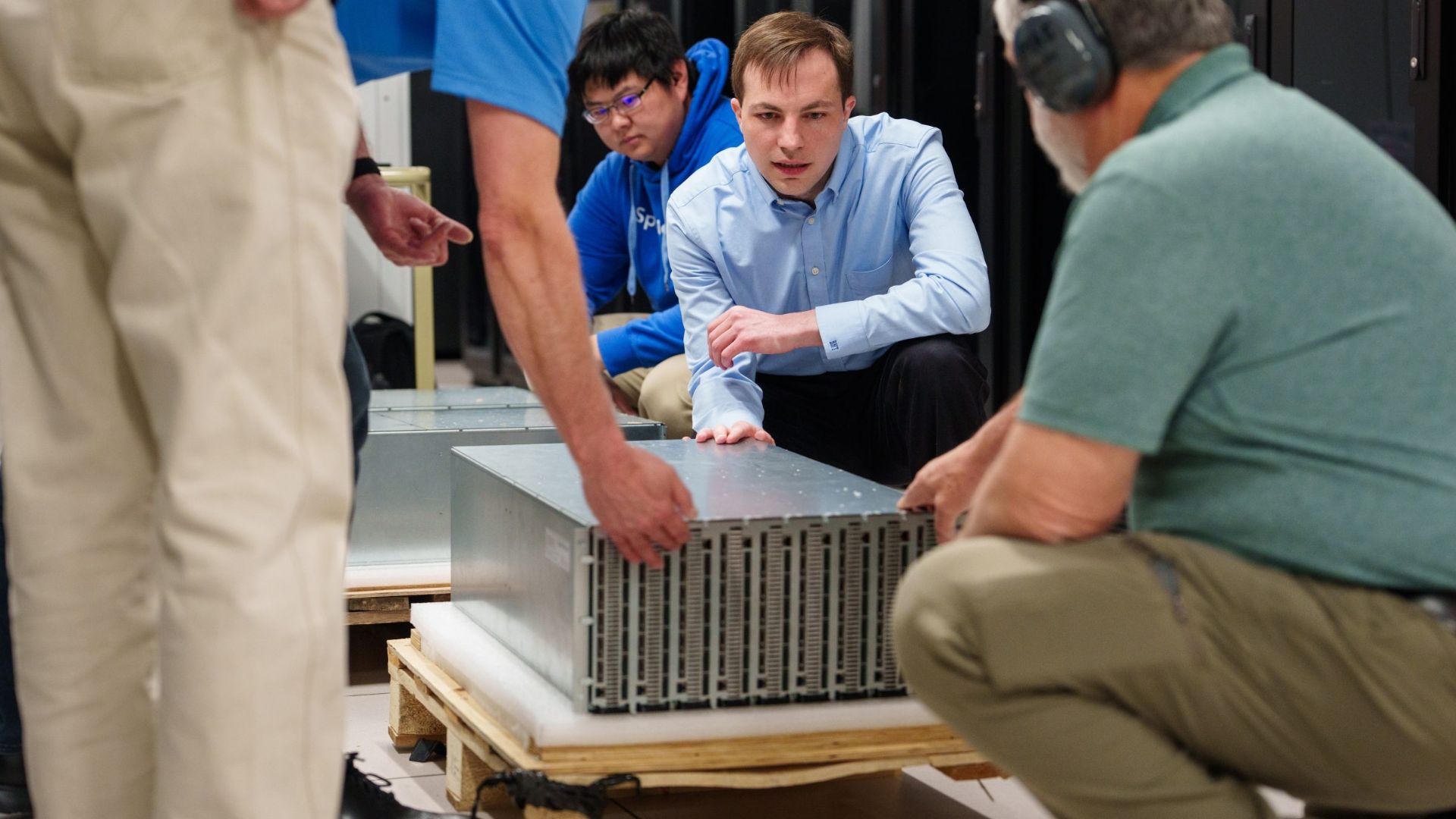
Researchers at Sandia National Laboratories have demonstrated a novel algorithm that runs on neuromorphic hardware to solve partial differential equations (PDEs), reported in Nature Machine Intelligence. The algorithm preserves cortical network dynamics, enabling energy-efficient large-scale simulations for fluid dynamics, structural mechanics, nuclear-weapon physics and potentially informing computational models of brain disease.
Key Points
- 1Demonstrates neuromorphic algorithm solving PDEs on brain-inspired hardware with preserved cortical dynamics
- 2Offers large-scale simulation capability with far lower energy than conventional supercomputers
- 3Enables practitioners to explore efficient PDE workflows for fluids, mechanics, and nuclear simulations
Scoring Rationale
High novelty and peer-reviewed publication drive score, but early-stage research limits immediate practical deployment.
Practice interview problems based on real data
1,625 SQL & Python problems across 15 industry datasets — the exact type of data you work with.
Try 250 free problems