Researchers Frame AI as Button-pushing Explorers
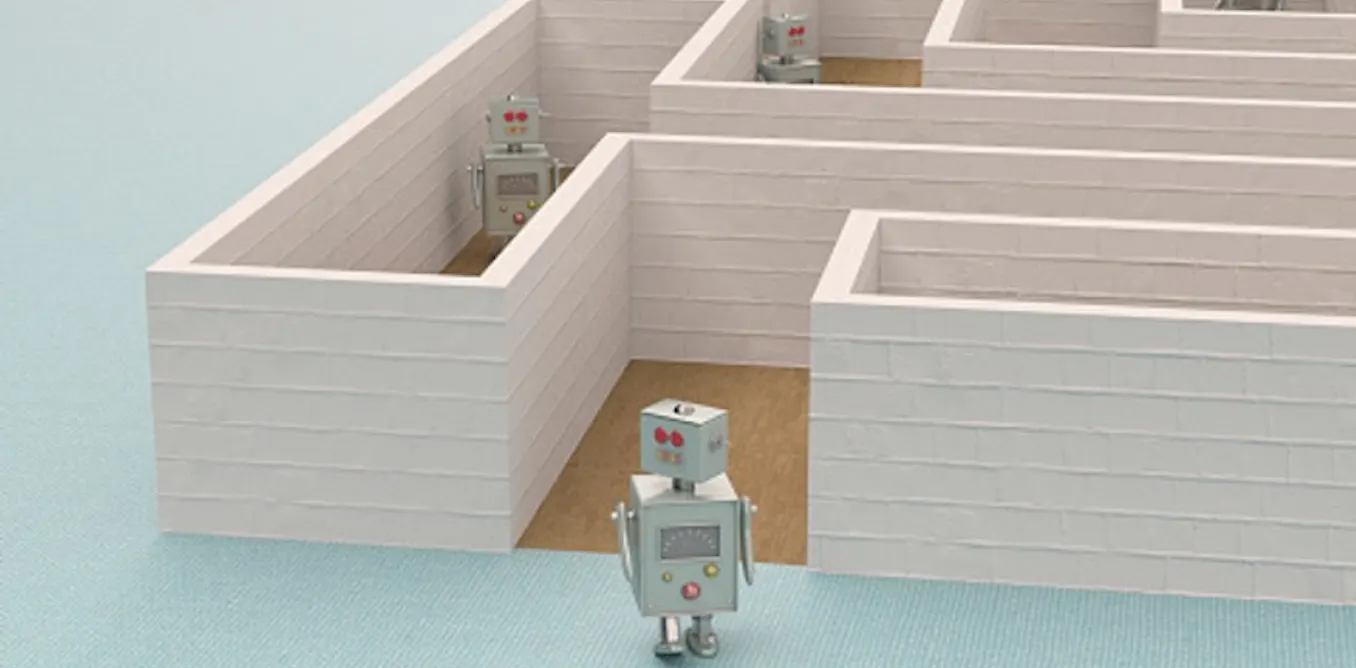
The Conversation published an essay on May 12, 2026, by Ji Y. Son (Professor of Psychology, California State University, Los Angeles) and Alice Xu (Ph.D. student, UCLA) that proposes a new mental model for today's AI agent systems: "button-pushing explorers," per the article. The piece notes that simple trial-and-error behaviour, take an action, observe consequences, adjust, can produce smart-seeming results without humanlike understanding. The Conversation reports that a nonprofit released a test on May 1, 2026 in which humans scored 100% while advanced AI systems scored under 1%, a disconnect the authors use to motivate the mental-model framing. The authors draw on classroom observations of students integrating AI tools to argue the model helps people recognise both capabilities and limitations.
What happened
The Conversation published an essay on May 12, 2026, by Ji Y. Son (Professor of Psychology, California State University, Los Angeles) and Alice Xu (Ph.D. student, University of California, Los Angeles) that recommends thinking of contemporary AI agents as "button-pushing explorers", per the article. The piece documents that a simple process, take an action, assess what happens, and adjust, can generate behaviour that looks intelligent without implying humanlike understanding. The Conversation reports that a nonprofit released a test on May 1, 2026 in which humans scored 100% while the most advanced AI systems scored under 1%, a result the article uses to highlight the gap between polished outputs and underlying competence.
Editorial analysis - technical context
The authors' core claim is a cognitive framing, not a technical specification. Industry-pattern observations: reinforcement-style loop behaviour (action, feedback, adaptation) can produce robust emergent competence in narrow domains even when the agent lacks symbolic understanding or causal models. For practitioners, this framing aligns with empirical work showing that optimisation-driven policies can succeed on complex tasks by exploiting environmental regularities rather than building human-comprehensible representations.
Context and significance
Editorial analysis: The article addresses a recurring public misconception: that fluent natural-language outputs imply humanlike reasoning. For communicators, product teams, and policy observers, the mental-model emphasis matters because it provides a concise way to explain why systems can both appear superhuman in some outputs and fail at trivial-seeming problems. The Conversation piece uses classroom anecdotes to show that users often ascribe intentionality to systems, increasing the risk of overtrust as AI becomes more embedded in workflows.
What to watch
Editorial analysis: Observers should track:
- •evaluation benchmarks that isolate procedural competence from surface fluency
- •user-research documenting how mental models shape reliance and error detection
- •public-facing explanations from vendors and educators that adopt or rebut succinct framings like "button-pushing explorers." Such indicators will clarify whether the framing helps reduce overtrust and improves human oversight
Key Points
- 1A simple action-feedback-adjust loop can produce behaviour that appears intelligent without underlying humanlike understanding, creating a perception gap.
- 2Clear mental models help users and stakeholders judge when to trust or verify AI outputs, reducing risks from misplaced reliance.
- 3Evaluations that separate surface fluency from procedural competence are necessary to reveal real agent limits and guide safer deployment.
Scoring Rationale
The piece offers a useful communicative framing for practitioners and educators confronting overtrust in AI, but it does not present new models, benchmarks, or technical breakthroughs. Its practical value is moderate: helpful for design, user research, and risk communication.
Practice interview problems based on real data
1,625 SQL & Python problems across 15 industry datasets — the exact type of data you work with.
Try 250 free problems