
ASUS Unveils ProArt P16, P14 and ProArt Mini PC
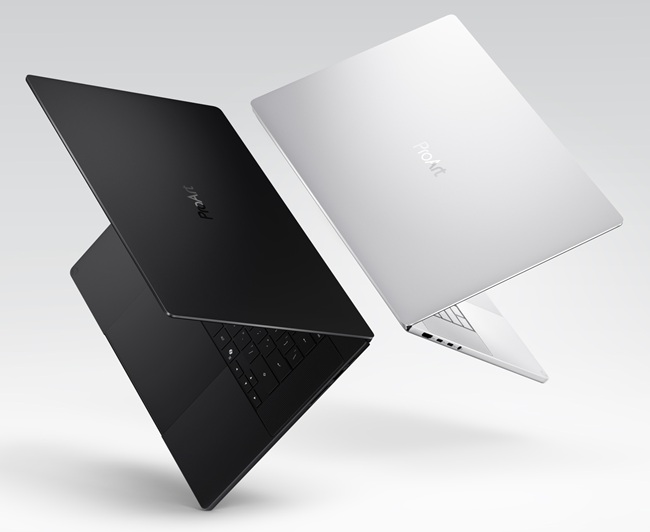
At Computex 2026, ASUS unveiled new ProArt AI creator systems, the ProArt P16 and P14 laptops and a ProArt Mini PC, all built around NVIDIA's new RTX Spark platform, according to an ASUS press release. RTX Spark pairs a Blackwell-based RTX GPU with 6,144 CUDA cores and a 20-core NVIDIA Grace CPU, delivering up to 128 GB of unified memory and up to 1 petaflop of AI performance, enough to target local 120B-parameter LLM inference with up to 1-million-token context. ASUS says the P16 is about 13% thinner and 16% lighter than its predecessor, per FoneArena and ASUS product pages, with availability beginning fall 2026 in select regions. ASUS joins Dell, HP, Lenovo, MSI, and Microsoft in shipping RTX Spark laptops this year, per The Verge.
RTX Spark's real significance is architectural, not just a spec bump: pairing a Blackwell GPU with a Grace CPU over NVLink-C2C gives these machines up to 128 GB of memory the GPU and CPU can share directly, which is what actually unlocks running 120B-parameter models locally rather than just faster rendering, a meaningfully different pitch than prior "AI PC" marketing built around smaller on-chip NPUs.
What happened
ASUS unveiled new ProArt creator systems at Computex 2026: the ProArt P16 (H7607) and ProArt P14 (H7407) laptops and a ProArt Mini PC, all powered by NVIDIA RTX Spark, according to ASUS's press release. The platform pairs an NVIDIA Blackwell-based RTX GPU with 6,144 CUDA cores and fifth-generation Tensor Cores with FP4 precision, connected via NVLink-C2C to a 20-core NVIDIA Grace CPU, delivering up to 128 GB of unified memory and up to 1 petaflop of AI performance. ASUS and FoneArena list workload targets including rendering 90 GB+ 3D scenes, 12K 4:2:2 video editing, 4K AI video generation, and running 120B-parameter language models with up to 1 million-token context. FoneArena reports the ProArt P16 is about 13% thinner and 16% lighter than the previous H7606 model.
Technical context
Industry reporting frames RTX Spark as a system-level "superchip" combining a Blackwell GPU and Grace CPU over NVLink-C2C, enabling a unified memory architecture that ASUS and Digital Trends highlight when describing the ProArt machines; unified memory reduces cross-device memory copying and can materially simplify workflows that load very large models or scene datasets. The laptops also ship with ASUS Lumina Pro OLED displays offering Delta E < 1 color accuracy and peak brightness up to 1,600 nits on the P16, plus variable refresh and NVIDIA G-SYNC support. ASUS bundles software including ProArt Creator Hub, MuseTree, and StoryCube, and says the ecosystem supports 1,000+ accelerated applications such as Adobe Creative Cloud, Blender, Blackmagic Design tools, ComfyUI, and OTOY (ASUS press release; FoneArena).
For practitioners
More CUDA cores, next-generation tensor cores with FP4 precision, and 128 GB of unified memory suggest meaningfully better single-machine model loading and inference density than discrete-GPU laptop designs. For teams building local inference, model prototyping, or on-device generative tools, that combination lowers the friction of experimenting with larger models and longer-context LLMs without immediate cloud dependency, though real-world throughput and thermal limits will only be clear once independent review units ship.
Industry context
Several PC OEMs, including Dell, HP, Lenovo, MSI, and Microsoft, announced RTX Spark systems at Computex, and reporting from The Verge and Digital Foundry positions RTX Spark as a cross-vendor platform that could shift some AI-heavy workloads from cloud to higher-end client devices; Digital Foundry separately reports RTX Spark's gaming performance is roughly equivalent to an RTX 5070 laptop GPU.
What to watch
- •Independent benchmarks and teardown reporting on thermal, sustained performance, and power-efficiency characteristics (Digital Foundry, The Verge).
- •Software and driver maturity for local LLMs and generative-video stacks across Windows-on-ARM toolchains.
- •Final pricing and configuration details from ASUS and rival OEMs ahead of the fall 2026 launch window.
Key Points
- 1ASUS launched ProArt P16, P14, and Mini PC built on NVIDIA RTX Spark, bringing desktop-class AI specs to thin laptops and small desktops.
- 2Unified memory up to 128 GB and 1 petaflop of AI performance can ease running larger models locally, reducing cloud dependence for prototyping.
- 3Independent benchmarks, thermal performance, and software maturity will determine whether real-world gains match ASUS's on-paper specifications.
Scoring Rationale
A unified-memory Blackwell+Grace RTX Spark platform reaching thin laptops and small desktops is a real architectural shift for local AI compute, not just a spec refresh, and is well corroborated across 11 independent outlets including technical performance framing from Digital Foundry. Practical impact still depends on independent benchmarks and software maturity once units ship.
Sources
Public references used for this report.
View 6 more sources
- Nvidia reveals RTX Spark N1/N1X "superchip" at Computex, with Gaming Performance Equivalent to RTX 5070 Laptopdigitalfoundry.net
- Asus arms its new ProArt P16 and P14 laptops with Nvidia's beefy RTX Spark processordigitaltrends.com
- ASUS just dropped the ultimate Arm-based creator laptops; 128GB of RAM and NVIDIA Blackwell in a 13mm chassis.windowscentral.com
- ASUS ProArt P16 / P14 and ProArt Mini PC powered by NVIDIA RTX Spark announcedfonearena.com
- Asus' New ProArt P16 and P14 Pack Nvidia's powerful RTX Spark chipxda-developers.com
- Asus unveils RTX Spark MacBook Pro rivals: 14 and 16-inch 4K displays, 99.9 Wh battery, 128GB RAMnotebookcheck.net
Practice interview problems based on real data
1,625 SQL & Python problems across 15 industry datasets — the exact type of data you work with.
Try 250 free problems