Researchers find consistency improves robot dexterity learning
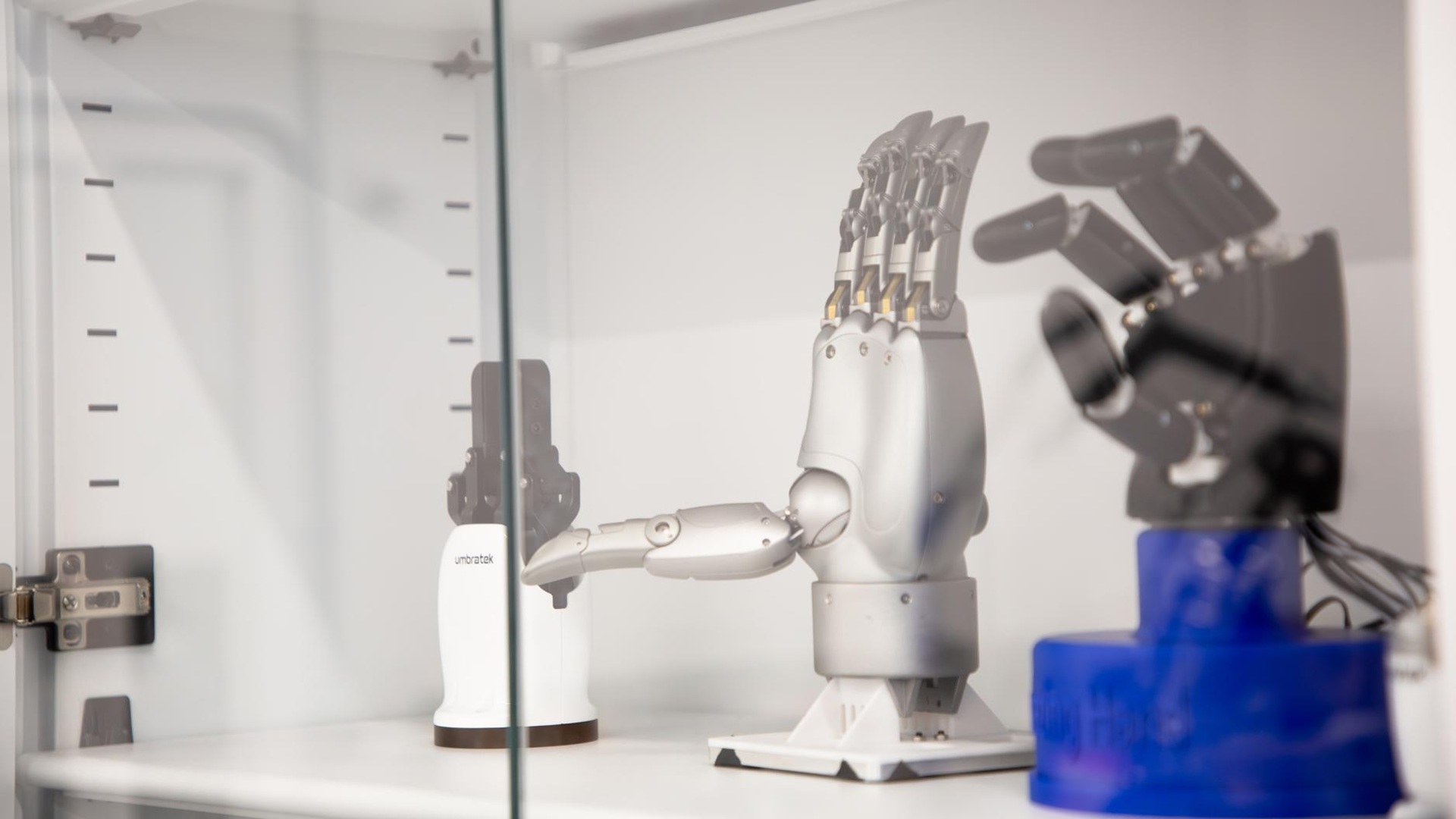
Researchers at NYU Tandon School of Engineering and the Robotics and AI Institute report that robots learn dexterous manipulation more effectively from consistent, structured demonstrations than from highly variable ones, according to an NYU release and coverage in TechXplore and Interesting Engineering. The team used motion-planning algorithms to generate synthetic training data and found that common planners called rapidly exploring random trees (RRTs) produced high-entropy, inconsistent trajectories that hindered imitation learning. Lead author Huaijiang Zhu said that 'when every solution looks different, the learning system struggles to figure out what behavior it should imitate.' The researchers built alternative planners, one favoring steady progress toward a goal and another reusing a library of predefined motions, and validated the approach on difficult tasks including a two-arm rotation problem. The paper received the IEEE RA-L Best Paper Award. For robotics teams, this reframes dataset design, where consistency can beat naive diversity when the learner needs clear, repeatable behavior.
What happened
Researchers from NYU Tandon School of Engineering and the Robotics and AI Institute published work showing that structured, predictable demonstrations can produce better imitation-learning outcomes for dexterous manipulation than highly variable demonstrations. The finding was reported in an NYU release and covered by TechXplore and Interesting Engineering, and the paper received the IEEE RA-L Best Paper Award.
The core idea
Instead of relying solely on human demonstrations, the team generated training data using motion-planning algorithms inside physics simulations. They found that popular planners called rapidly exploring random trees (RRTs) produced high-entropy, inconsistent trajectories. Lead author Huaijiang Zhu said that 'when every solution looks different, the learning system struggles to figure out what behavior it should imitate.'
The fix
The researchers built alternative planning approaches that generate more consistent demonstrations, one that emphasizes steady progress toward a goal rather than random exploration, and another that reuses a library of predefined motions to reduce variability. They validated the methods on difficult manipulation problems, including a two-arm rotation task.
Why it matters
For robotics and imitation-learning practitioners, the result reframes dataset design: reducing effective label noise by constraining how demonstrations are generated can improve downstream policy learning more than simply maximizing diversity. That has practical implications for teams generating synthetic training data at scale.
What to watch
Key open questions include how well consistency-focused data generation transfers from simulation to physical hardware and how it generalizes across a broader range of manipulation tasks.
Key Points
- 1NYU Tandon and the Robotics and AI Institute find robots learn dexterity better from consistent, lower-entropy demonstrations than from highly varied ones; the paper won the IEEE RA-L Best Paper Award.
- 2Common motion planners (RRTs) generate inconsistent trajectories that hinder imitation learning; constrained planners or reused motion primitives reduce that variability.
- 3For practitioners: validation on hard tasks, including a two-arm rotation problem, suggests checking planner-generated dataset variability before scaling synthetic demonstrations to hardware.
Scoring Rationale
A best-paper RA-L result from NYU Tandon and the Robotics and AI Institute offers a practical reframing of dataset design for imitation learning, where demonstration consistency can outperform diversity. The award and concrete validation tasks raise its relevance for robotics practitioners, though it is an incremental research advance rather than a field-defining breakthrough.
Sources
Public references used for this report.
Practice interview problems based on real data
1,625 SQL & Python problems across 15 industry datasets — the exact type of data you work with.
Try 250 free problems