Researchers Develop Biocomputers Using Human Neurons
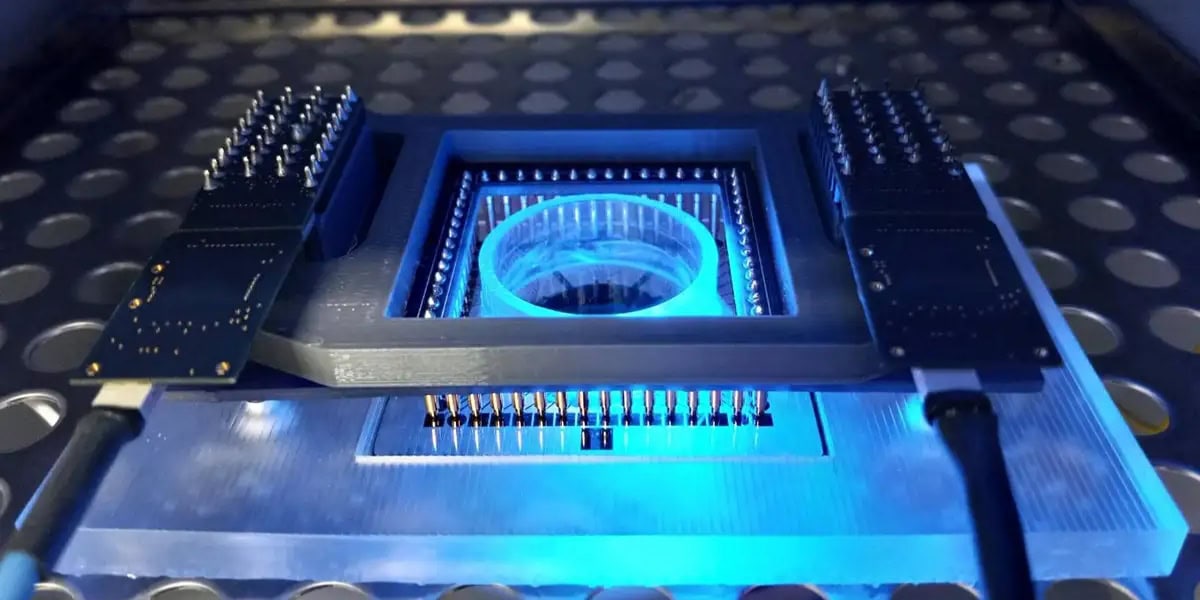
Researchers report progress in biocomputers that integrate three-dimensional human neuronal organoids with electronic interfaces, including a prototype platform called CL1 that sustains tissue and shows adaptive firing. The systems aim to leverage human neural tissue for efficient pattern recognition, parallel processing and energy savings, with early applications in drug discovery and disease modeling. Key challenges include long-term cell health, scaling, bioelectronic interfaces and ethical concerns.
Key Points
- 1Showcases CL1: human neuronal organoids connected to silicon exhibit adaptive firing and early learning
- 2Indicates efficiency gains: biological tissue may outperform silicon in pattern recognition and energy consumption
- 3Enables research and drug-discovery use cases, but requires solutions for scaling, longevity, and ethics
Scoring Rationale
Notable experimental advance with a named prototype, though limited by early-stage evidence, scalability issues, and unresolved ethical concerns.
Sources
Public references used for this report.
Practice interview problems based on real data
1,625 SQL & Python problems across 15 industry datasets — the exact type of data you work with.
Try 250 free problems