Reliance's Strand Life Sciences Secures Indian Patent
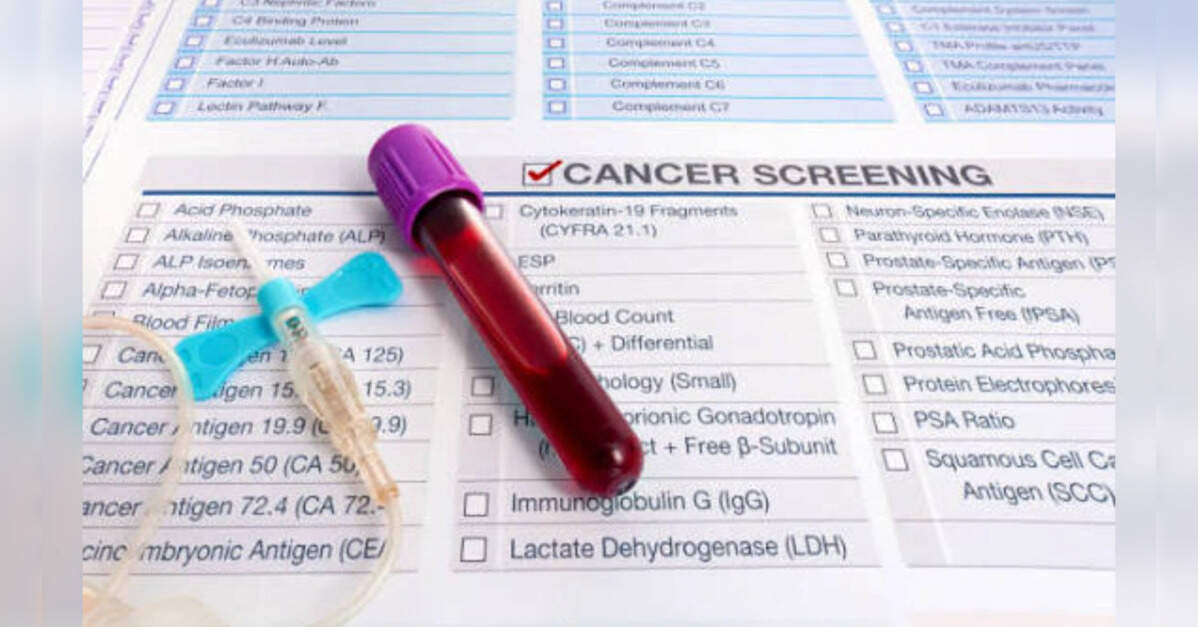
Reliance Industries' subsidiary Strand Life Sciences was granted an Indian patent on July 7, 2026 for an AI-enabled blood test that detects early-stage cancer using cell-free DNA analysis, the company said in a press release carried by ANI. The patented platform combines high-quality genome sequencing, quality control, and machine-learning-based methylation and fragmentomic feature extraction to detect cancer and predict its tissue of origin from a single blood draw. CEO Ramesh Hariharan said the technology aims to make precision cancer screening "more accurate, scalable, and accessible" as India faces over 1.5 million new cancer cases a year. For practitioners, the patent is a concrete example of ML models built on sequencing and epigenetic features being deployed for real clinical screening, not just research.
The patent is a useful marker of how machine learning is moving from genomic research into deployed clinical screening: the claimed innovation is not a new sequencing chemistry but a feature-extraction and modeling approach -- capturing widespread DNA methylation changes across the genome with minimal signal loss -- that is squarely an ML/bioinformatics problem, not just a wet-lab one.
What happened
Strand Life Sciences, a subsidiary of Reliance Industries, said in a press release on Tuesday, July 7, 2026, that it has been granted an Indian patent for an integrated platform that detects early-stage cancer from a simple blood test using cell-free DNA (cfDNA) analysis, according to ANI. The platform combines high-quality genome sequencing, rigorous quality control, and biologically informed methylation and fragmentomic feature extraction with machine learning to detect cancer and predict its tissue of origin from a blood sample. CEO Ramesh Hariharan said the patent "reflects our commitment to developing scientifically rigorous, AI-enabled liquid biopsy technologies that can help detect cancer earlier from a simple blood sample."
Technical context
The company describes the key patented innovation as the ability to capture widespread methylation pattern changes across the genome with minimal loss or failure -- methylation shifts are a recognized hallmark of cancer, and reliably detecting them at low signal-to-noise is what makes early-stage, rather than late-stage, detection possible. Strand has already commercialized a related product, CancerSpot, a blood-based multi-cancer early-detection test built on similar methylation-profiling technology.
For practitioners
This is a concrete, IP-protected example of an ML pipeline -- sequencing plus quality control plus engineered epigenetic and fragmentomic features plus a classifier -- being positioned for real-world screening rather than a research benchmark. India offers a large, underserved population for this kind of screening: the company says current guideline-recommended cancer screening covers only a small fraction of India's more than 1.5 million annual new cancer cases and is not easy to scale, and that falling sequencing costs make blood-based screening feasible at scale without new local infrastructure.
What to watch
A patent grant is IP protection, not a clinical-validation or regulatory-clearance milestone. Watch for peer-reviewed sensitivity and specificity data, regulatory approvals, and real-world deployment numbers for CancerSpot or a patent-linked product, which would be stronger signals of clinical impact than the patent grant itself.
Key Points
- 1Strand Life Sciences, a Reliance subsidiary, patented an AI-driven blood test combining sequencing, methylation, and fragmentomic features for early cancer detection.
- 2The core innovation is capturing genome-wide methylation changes with minimal signal loss, enabling earlier-stage rather than late-stage cancer detection.
- 3A patent grant is IP protection only; clinical validation and regulatory approval data would be the stronger markers of real-world impact.
Scoring Rationale
A real, well-corroborated IP milestone (Indian patent grant, verified via direct fetch of the ANI wire report plus the company's own quoted rationale) for an AI-enabled liquid-biopsy cancer-screening platform from a major Indian conglomerate's biotech subsidiary. Held at solid rather than notable because a patent grant alone is IP protection, not clinical validation, regulatory clearance, or a deployment milestone.
Sources
Primary source and supporting public references used for this report.
Practice with real Health & Insurance data
90 SQL & Python problems · 15 industry datasets
250 free problems · No credit card
See all Health & Insurance problems