President Signs Voluntary AI Pre-Release Sharing Order
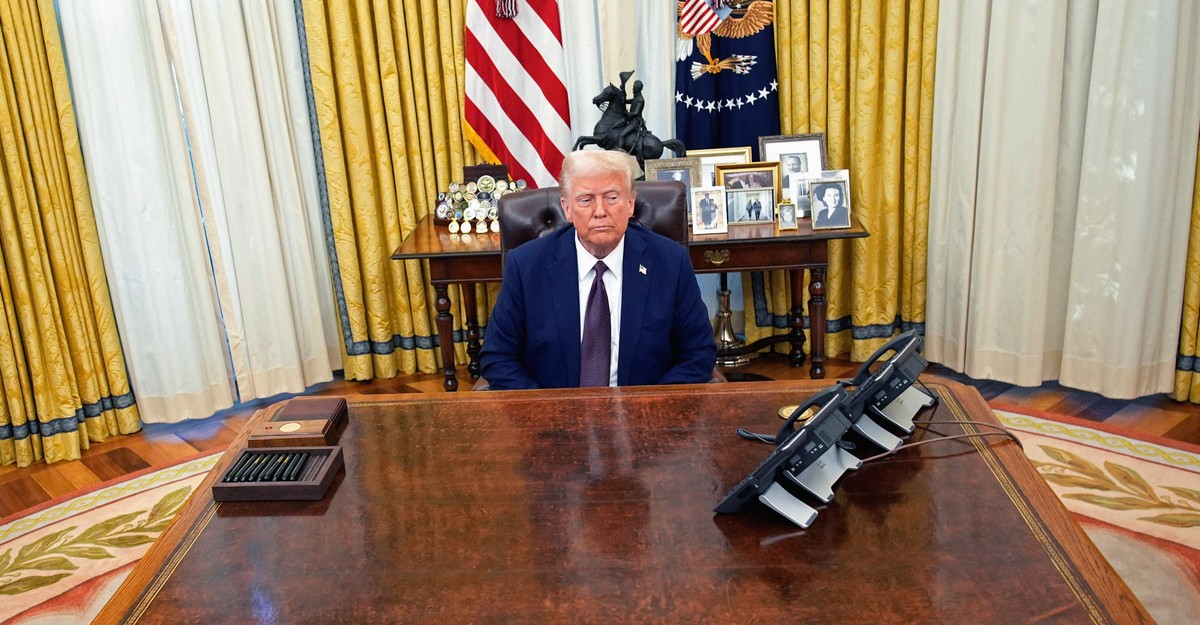
According to The Atlantic, President Donald Trump signed an executive order creating a process for leading AI companies to voluntarily share certain upcoming models with the federal government for safety testing as much as 30 days before wider release. The Atlantic reports the order also asks firms such as OpenAI and Anthropic to help strengthen federal, state and local cyber defenses. White House spokesperson Liz Huston is quoted calling it a "common-sense approach of collaborating with industry to balance innovation and security," and Daniel Remler of the Center for a New American Security told The Atlantic the rule "effectively formalizes what has already been happening." CNBC and NPR report the review window was set at about 30 days, down from up to 90 in an earlier draft. Reporting from The Washington Post and commentary from R Street note the order sits alongside earlier federal moves to preempt state AI regulation, leaving its enforcement reach unclear.
What happened
According to The Atlantic, President Donald Trump signed an executive order that creates a process for leading AI firms to voluntarily share certain upcoming models with the federal government for safety testing as much as 30 days before broader release. The Atlantic reports the order also asks firms such as OpenAI and Anthropic to help strengthen federal, state, and local cyber defenses. White House spokesperson Liz Huston is quoted calling the policy a "common-sense approach of collaborating with industry to balance innovation and security," and Daniel Remler of the Center for a New American Security told The Atlantic the rule "effectively formalizes what has already been happening between the US government and the leading AI companies." The Atlantic also reports the president had canceled a planned signing hours before the ceremony, then later issued the order. CNBC and NPR report the final review window was set at about 30 days, shortened from up to 90 days in an earlier draft.
The mechanism
The reported arrangement is a voluntary, pre-release disclosure window for safety testing. Editorial analysis - industry-pattern observation: voluntary, time-limited model-access arrangements are commonly framed as a compromise between rapid deployment and external auditing, but they vary in scope, including what artifacts are shared and whether weights or only evaluation endpoints are provided. Where governments lack statutory authority to compel access, such frameworks tend to rely on existing relationships, nonbinding memoranda, or contractual agreements between agencies and vendors.
Context and significance
Reporting from The Washington Post documents a December 2025 executive order that directed the federal government to pursue lawsuits against states whose AI regulations were judged to undermine "global AI dominance," and R Street commentary describes related actions emphasizing federal preemption and reduced regulatory constraints. A press release from Representative Zoe Lofgren criticized the administration's approach as unlawful and urged congressional engagement. Taken together, the coverage shows the administration pairing an industry-collaboration framing for federal oversight with measures intended to limit state-level regulation.
What to watch
- •Whether major model developers accept the voluntary sharing window and what artifacts they provide.
- •Whether the Department of Justice follows through on directives discussed in commentary; R Street notes the related order directs the Attorney General to create an AI Litigation Task Force to challenge conflicting state laws.
- •Any congressional action to create binding standards or codify disclosure obligations.
Editorial analysis - practitioner impact
For practitioners, the immediate operational change is likely modest if, as Remler told The Atlantic, the order mainly formalizes preexisting arrangements. Industry-pattern observation: when governments formalize voluntary review channels without new enforcement tools, organizations running models must weigh legal risk, customer expectations, and the cost of preparing models for external testing. Legal and compliance teams should also track state-federal conflicts, since reporting indicates continued federal efforts to challenge state AI rules.
Bottom line
The order creates a voluntary, short-window process for federal safety testing and sits alongside prior actions aimed at preempting state regulation. Coverage frames the move as more procedural than transformational, while litigation over state laws remains an active vector that will shape how the policy affects deployments and compliance.
Key Points
- 1The order sets a voluntary review window of about 30 days, down from 90 in an earlier draft, formalizing prior testing arrangements.
- 2It also asks leading labs such as OpenAI and Anthropic to help bolster federal, state and local cyber defenses, per The Atlantic.
- 3The measure sits alongside earlier federal efforts to preempt state AI laws, leaving its practical enforcement reach uncertain.
Scoring Rationale
This story concerns national AI policy affecting model disclosure and state preemption, which is notable for practitioners managing compliance and deployments. It is important but not a paradigm-shifting rule change; practical effects hinge on implementation and company cooperation.
Sources
Public references used for this report.
View 5 more sources
- Trump signs executive order threatening to sue states that regulate AIwashingtonpost.com
- Trump AI Executive Order Targets State Regulatory Overreach To ...rstreet.org
- Ranking Member Lofgren Slams Trump White House for Illegal Plan ...democrats-science.house.gov
- Executive Order: Removing Barriers to American Leadership in ...ballotpedia.org
- Why Trump's AI Executive Order Makes Business Compliance ...kelleykronenberg.com
Practice interview problems based on real data
1,625 SQL & Python problems across 15 industry datasets — the exact type of data you work with.
Try 250 free problems