
Optimal Transit Unveils 100 MW Kraaken Utility Platform
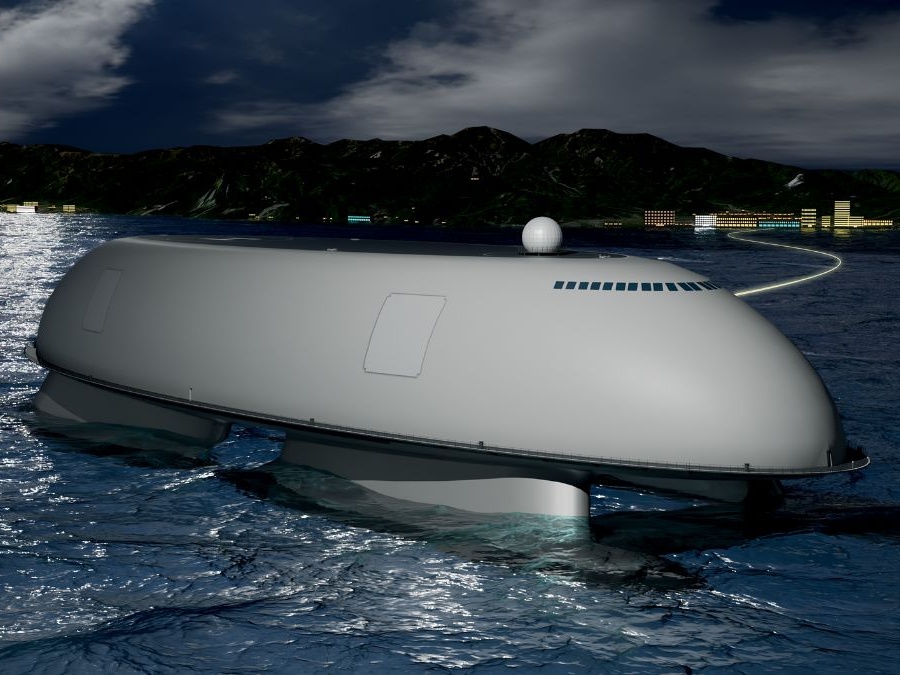
Optimal Transit unveiled the Blue Economy VITAL 100 MW Kraaken on August 11, a floating platform reported to combine offshore electricity generation, desalinated water production, and AI compute capacity. Interesting Engineering and Notebookcheck report that the proposed vessel is designed to support roughly 32,000 homes, supply water for 150,000 people, and host 60 MW of AI workloads.
Optimal Transit unveiled the Blue Economy VITAL 100 MW Kraaken on August 11, a proposed floating offshore platform that combines electricity generation, desalinated-water production, and AI computing capacity. Reporting by Highways.Today describes the new configuration as redirecting part of the Kraaken platform's output from compute toward continuous electricity and fresh water delivered to shore.
According to Interesting Engineering and Notebookcheck, the vessel is designed to provide enough power for approximately 32,000 homes, produce nearly 8 million gallons of desalinated water per day for about 150,000 people, and host 60 MW of AI compute capacity. The reports describe the platform as a zero-emissions design that does not require fuel deliveries.
Platform architecture and shore connection
The Kraaken uses a small waterplane area twin hull, or SWATH, architecture and a flexible mooring system, according to Interesting Engineering and Notebookcheck. Those outlets report that electricity, water, and data would connect to the coast through a quick-disconnect umbilical, allowing the vessel to disconnect and relocate during severe weather.
Notebookcheck reports that the platform's proprietary Digital Ocean Thermal, or DOT, system combines ocean thermal energy with computing waste heat. Cold seawater is also described as a source of cooling for compute equipment. The reporting does not provide third-party performance validation for the DOT system, its thermodynamic efficiency, or the stated combined power, water, and compute outputs.
Claimed economics and deployment case
Notebookcheck reports that Optimal Transit estimates a comparable land-based project would cost $750 million to $1.33 billion and require six to ten years, while a 100 MW Kraaken would cost less than $500 million to build before computing hardware. The company also reportedly projects annual operating costs of $10 million to $20 million.
Highways.Today places the concept against lengthy grid-interconnection timelines, citing an International Energy Agency assessment that more than 2,500 GW of renewable, large-load, and storage projects are stalled in grid queues worldwide. It also cites more than 2,060 GW of US generation and storage capacity seeking grid connection at the end of 2025.
For AI infrastructure teams, the reported design is notable because it treats compute power, cooling, and physical siting as a single offshore systems problem. Comparable remote-compute deployments generally face practical constraints beyond generation capacity, including subsea network connectivity, redundancy, hardware servicing, corrosion control, and local grid integration. Those constraints will determine whether floating infrastructure can support production AI workloads rather than only specialized or temporary deployments.
The available reports describe additional Kraaken configurations from 10 MW and 20 MW upward, as well as the possibility of grouping multiple units offshore. No independently verified construction timeline, customer deployment, or operational benchmark was included in the retrieved coverage.
Key Points
- 1Optimal Transit's reported 100 MW floating platform combines electricity, desalination, and 60 MW of AI compute capacity in one offshore asset.
- 2The design uses ocean thermal energy, waste-heat recovery, and seawater cooling, but retrieved coverage provides no independent performance validation.
- 3Comparable offshore compute projects can reduce land constraints, yet network links, maintenance, corrosion, and grid integration remain critical operational variables.
Scoring Rationale
The concept combines AI compute infrastructure with offshore power generation, cooling, and desalination, making it relevant to practitioners tracking alternative data-center siting. Its practical impact remains uncertain because the retrieved coverage describes a proposed platform without independent technical validation or disclosed production deployment.
Sources
Public references used for this report.
Practice interview problems based on real data
1,625 SQL & Python problems across 15 industry datasets — the exact type of data you work with.
Try 250 free problems


