Nvidia unveils DLSS 4.5 Ray Reconstruction support
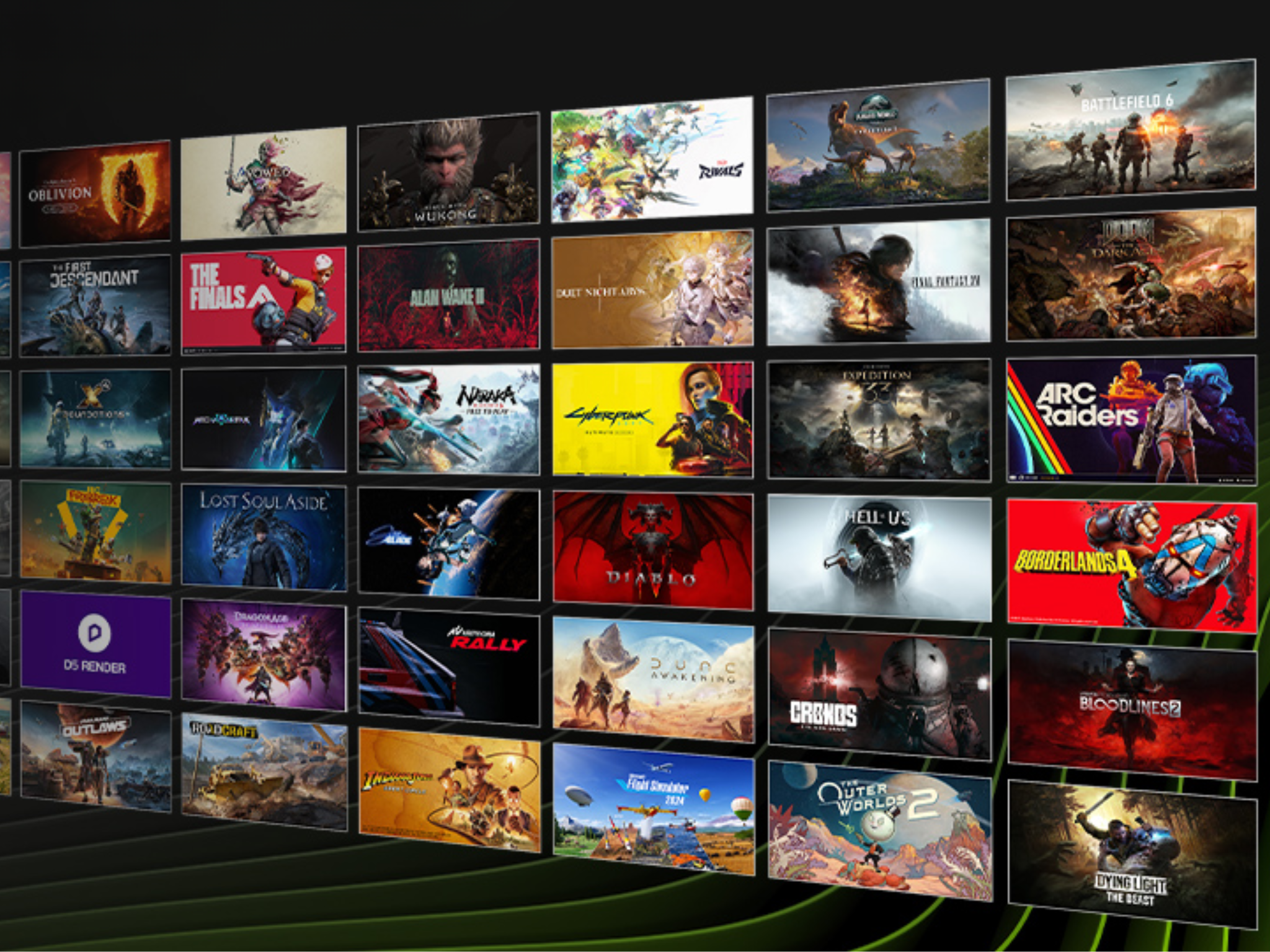
Nvidia announced DLSS 4.5 Ray Reconstruction, a second-generation transformer-based update for its DLSS pipeline, and lists general availability in August 2026, per Nvidia's GeForce announcement. The company reports the model increases compute capability by 35% and processes 20% more parameters versus the prior generation, and says the feature will run on all GeForce RTX GPUs including RTX 20/30/40/50 series (per VideoCardz and Nvidia). Notebookcheck and Nvidia documentation name a 27-title day-1 list of games receiving support, including Avatar Frontiers of Pandora, F1 25, Star Wars Outlaws, and DOOM: The Dark Ages. Independent testing reported by Tom's Hardware (summarizing Digital Foundry) found DLSS 4.5 can in some cases reconstruct ray-traced reflections without engine denoisers, producing visibly cleaner results. Nvidia also reports an expanded training dataset to improve reconstruction quality.
What happened
Nvidia announced DLSS 4.5 Ray Reconstruction, a second-generation transformer-based update to its DLSS suite that Nvidia lists as generally available in August 2026, per Nvidia's GeForce announcement. Notebookcheck reports that Nvidia describes the updated model as delivering 35% more compute capability and processing 20% more parameters compared with the prior generation. VideoCardz and Nvidia note the feature will run across GeForce RTX 20, 30, 40, and 50 series GPUs. Notebookcheck publishes a 27-title day-1 compatibility list that includes Avatar Frontiers of Pandora, F1 25, Star Wars Outlaws, DOOM: The Dark Ages, and others.
Technical details
Nvidia presents the upgrade as a transformer-based denoiser and image reconstruction system integrated into the DLSS pipeline; the company reports the model improves temporal stability, lighting accuracy, reduced ghosting, and clearer motion in ray-traced workloads. Nvidia's developer blog for DLSS 4.5 also frames the release as an Unreal Engine plugin that brings Dynamic Multi Frame Generation and other engine integration points, per Nvidia's developer post. Notebookcheck and VideoCardz report the update benefits from a significantly expanded training dataset, which Nvidia says helps the model better map to game-engine data.
Reported independent findings
Tom's Hardware, summarizing Digital Foundry's testing, reports that DLSS 4.5 in some games can reconstruct ray-traced reflections nearly perfectly without the engine denoiser, producing less boiling and smoother reflections in titles like Crysis 3 and Silent Hill 2 under the tested conditions. Tom's Hardware and Digital Foundry observed that running DLSS 4.5 Presets M and L with in-engine denoisers disabled sometimes yielded superior visual fidelity compared to the same scenes with denoisers enabled.
Editorial analysis: Technical context
Context and significance
What to watch
Editorial analysis
Transformer-based image reconstruction inside a real-time upscaler represents a continued trend of migrating traditionally separate rendering stages into learned neural components. Industry-pattern observations: Comparable moves to fuse denoising, reconstruction, and upscaling into single neural pipelines have shown gains in reconstruction quality but raise new engineering trade-offs around training data coverage, generalization across engines, and runtime determinism. For practitioners, this means increased importance of instrumentation and visual regression testing when integrating neural reconstruction into diverse rendering pipelines.
For game developers and rendering engineers, the practical significance is twofold. First, broader availability across RTX 20 through 50 series GPUs lowers the hardware barrier for adoption, per VideoCardz and Nvidia. Second, reported findings from Digital Foundry, cited by Tom's Hardware, imply that in some titles the upscaler itself can replace or reduce reliance on engine denoisers, which could simplify render paths but also shift where quality regressions appear. Industry observers have previously noted similar shifts when learned components replace hand-tuned algorithms, often creating new testing and maintenance needs.
Observers should watch for expanded developer documentation and post-launch performance data from the titles on Nvidia and Notebookcheck's day-1 list. Also monitor independent benchmarks that quantify performance-cost per visual improvement across different RTX generations. Finally, track whether game engines provide first-class hooks for the DLSS 4.5 plugin and whether studios opt to disable traditional denoisers in production builds, as Digital Foundry's tests suggest some developers might experiment with.
Bottom line
DLSS 4.5 Ray Reconstruction is a notable incremental advance in neural rendering for games: Nvidia and independent reporters highlight tangible image-quality gains, while industry-pattern observations signal new integration and testing work for developers adopting the technology.
Key Points
- 1Nvidia unveils DLSS 4.5 Ray Reconstruction, a second-generation transformer model Nvidia lists for August 2026 general availability.
- 2Independent testing (Digital Foundry via Tom's Hardware) shows DLSS 4.5 can, in some cases, reconstruct ray-traced reflections without engine denoisers, improving perceived quality.
- 3Editorial analysis: Consolidating denoising and reconstruction into a learned upscaler simplifies pipelines but increases reliance on training data and requires stricter visual regression testing.
Scoring Rationale
The update is a notable engineering advance for real-time rendering because it integrates a second-generation transformer into a mainstream upscaler and is slated to run across multiple RTX generations. It is important for game developers and graphics engineers but not a frontier research milestone, so its practitioner impact is solid but not industry-shaking.
Sources
Public references used for this report.
View 4 more sources
- DLSS Ray Reconstruction might be living on borrowed time, DLSS ...tomshardware.com
- Nvidia unveils DLSS 4.5 Ray Reconstruction for RTX GPUs - OC3Doverclock3d.net
- NVIDIA Doubles Down on DLSS 4.5 With Smarter Ray ... - Wccftechwccftech.com
- NVIDIA DLSS 4.5 Ray Reconstruction coming in August for RTX 20, 30, 40 and 50 seriesvideocardz.com
Practice interview problems based on real data
1,625 SQL & Python problems across 15 industry datasets — the exact type of data you work with.
Try 250 free problems