Nvidia Includes China in $200 Billion CPU Market Forecast
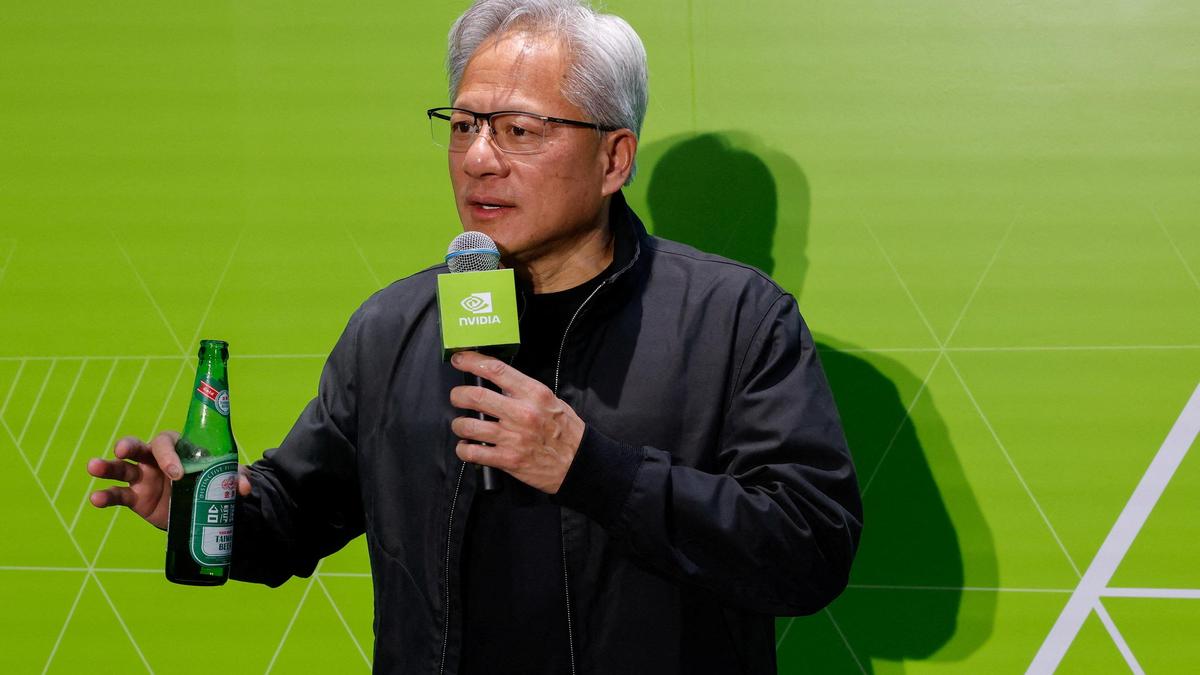
Nvidia CEO Jensen Huang said on May 23 that his forecast of a $200 billion market for CPUs includes China, Reuters and CNBC report. Asked by reporters in Taipei whether China was part of that total, Huang said, "I would think so," CNBC reports. Huang has argued on an earnings call that Nvidia's new Vera CPUs open access to a "brand new" $200 billion addressable market, CNBC and TechCrunch reported. Reuters reports Nvidia is ramping production of its Vera Rubin platform. CNBC reports Nvidia has U.S. licenses to sell its H200 AI chips but has not yet received Chinese approval. Inclusion of China in the TAM highlights the continued global relevance of Chinese demand for AI compute despite export controls.
What happened
Nvidia CEO Jensen Huang said on May 23 that his forecast of a $200 billion market for central processing units includes China, Reuters and CNBC report. CNBC quotes Huang answering reporters in Taipei with the line, "I would think so," when asked whether China was included. CNBC and TechCrunch report Huang told investors on an earnings call that the company's new Vera CPUs open access to a "brand new" $200 billion total addressable market. Reuters reports Nvidia is ramping production of its Vera Rubin platform. CNBC reports Nvidia has received U.S. export authorizations to sell its H200 AI chips but has not yet secured Chinese approval.
Technical details
Editorial analysis - technical context
Public reporting frames Vera as a CPU designed for so-called agentic AI workloads, where inference and task orchestration lean on CPU-style processing rather than GPU-only training. Industry coverage (TechCrunch, CNBC) highlights a design emphasis on low-latency token processing and throughput profiles different from traditional multi-core cloud CPUs. Industry-pattern observations: Vendors that target agentic AI workloads often trade core count for single-thread latency and specialized I/O, which changes system integration and software stack requirements for orchestration, scheduling, and telemetry.
Context and significance
Reporting places Huang's comment against a backdrop of ongoing U.S.-China technology tensions and recent U.S. export controls. CNBC notes the U.S. has cleared some Chinese firms to buy certain chips while Chinese approvals for sensitive AI accelerators remain constrained; Reuters and other outlets frame Nvidia's remarks as signalling continued demand expectations in China despite that friction. Industry observers note that the overlap of large TAM estimates and restricted export channels creates a split dynamic: commercial demand is global, while regulatory access to high-end silicon can be uneven across jurisdictions.
What to watch
- •Whether Chinese regulators grant approvals for H200 or related product lines, as reported by CNBC, which would materially affect China revenue potential.
- •Adoption signals for Vera from major hyperscalers and system makers, which TechCrunch reports Huang said are partnering on deployment.
- •Competitive responses from cloud providers and chip vendors that have announced or are developing their own CPUs for inference and agent workloads.
Takeaway for practitioners
For ML engineers and infrastructure teams, the public coverage underlines two practical points: demand models for AI compute are evolving beyond GPUs toward heterogeneous CPU-GPU designs, and supply/regulatory pathways remain an operational factor when designing global deployments. Observers and operators should separate product-technology fit from market-access constraints when evaluating vendor roadmaps and procurement timelines.
Key Points
- 1Nvidia publicly includes China in its $200 billion CPU TAM, signaling global demand expectations despite export-control frictions.
- 2Vera CPUs are framed as purpose-built for agentic AI, reflecting an industry shift toward CPU-optimized inference and orchestration workloads.
- 3Regulatory approvals, especially for H200-class parts in China, remain a watch item that can materially affect market access and deployments.
Scoring Rationale
The story matters because Nvidia framing a new $200 billion CPU addressable market changes how practitioners and infrastructure planners think about AI compute heterogeneity and vendor roadmaps. The immediate impact is moderated by regulatory uncertainty over sales in China and the early stage of Vera deployments.
Sources
Public references used for this report.
Practice interview problems based on real data
1,625 SQL & Python problems across 15 industry datasets — the exact type of data you work with.
Try 250 free problems