Nvidia Deploys AI Models To Improve Quantum Hardware
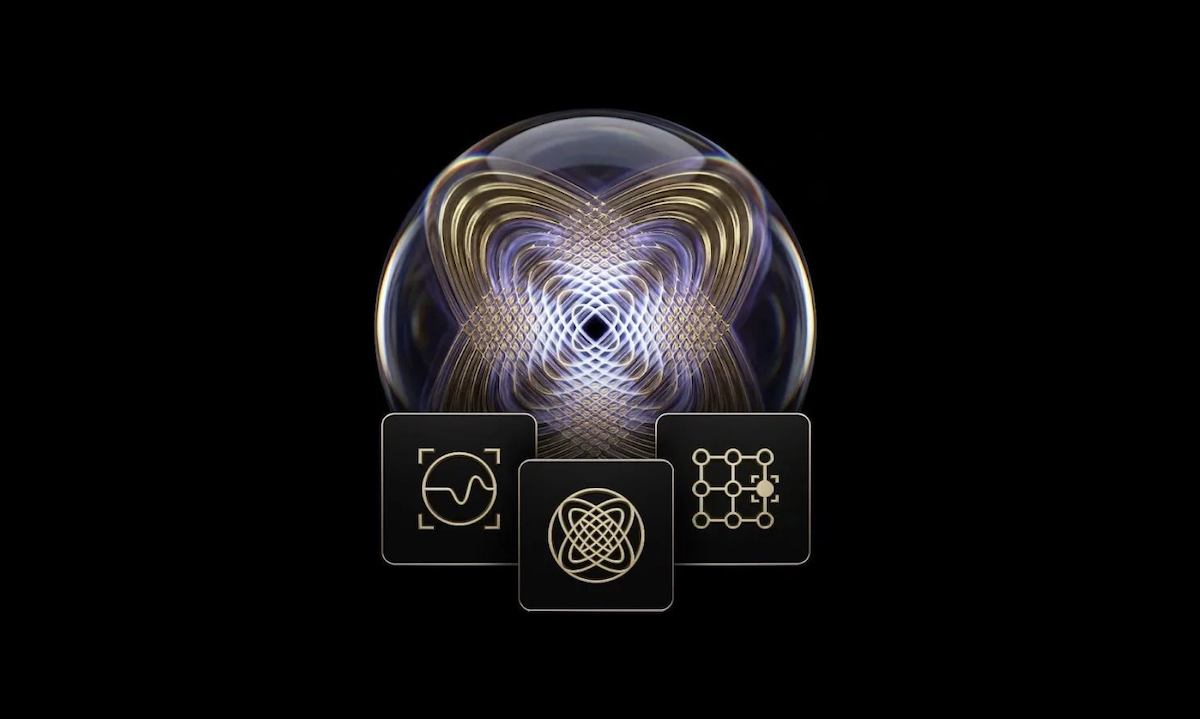
NVIDIA launched the open-source Ising model family to automate quantum processor calibration and improve quantum error-correction decoding. The release includes Ising Calibration, a visual-language model for automating setup and tuning, and Ising Decoding, two 3D convolutional models for real-time decoding. NVIDIA claims calibration automation shrinks setup from days to hours and that decoding delivers up to 3x higher accuracy and 2.5x faster throughput versus industry-standard methods under relevant conditions. Models run on-premise, support fine-tuning and quantization workflows, and are designed to scale to millions of qubits by integrating classical GPU inference as the control plane for QPUs.
What happened
NVIDIA launched the open-source Ising family of AI models in April 2026 to address the two gating problems for practical quantum computing, calibration and quantum error correction. The release includes Ising Calibration and Ising Decoding, and NVIDIA reports calibration automation cuts setup time from days to hours while decoding yields up to 3x accuracy improvement and 2.5x faster performance versus current baselines. Jensen Huang framed AI as the control plane that converts fragile qubits into scalable quantum-GPU systems.
Technical details
Ising Calibration is described as a VLM capable of interpreting experimental outputs, comparing them to expected trends, and driving agentic workflows that iteratively tune a QPU back into spec. Ising Decoding is implemented as two 3D CNN models for the high-throughput, low-latency decoding needed by quantum error correction. NVIDIA ships open base models plus a training framework and workflows for fine-tuning, quantization, and deployment. Key capabilities include:
- •Pre-trained open base models that work out of the box and can be specialized for vendor-specific noise characteristics
- •Agentic calibration pipelines that respond to measurements and automate parameter adjustments
- •Low-latency decoders engineered to meet classical real-time decoding deadlines
- •Tools for fine-tuning, quantization, and on-prem inference to keep QPU data local
- •Roadmap orientation toward scaling inference to support millions of qubits and quantum-GPU supercomputers
Why this matters
Calibration and decoding are the biggest engineering bottlenecks blocking useful quantum workloads. Current high-end QPUs exhibit raw error rates on the order of 1/1,000 operations; practical, fault-tolerant computing requires error rates closer to 1/1,000,000,000,000 (one in a trillion). Classical software for calibration and decoding can be slow and brittle, requiring days of expert intervention. AI models that learn noise patterns and map outputs to control actions offer a path to compress calibration cycles, increase effective fidelity, and scale decoding throughput as qubit counts rise.
Practical implications for practitioners
The open-source nature of Ising matters. Teams can evaluate pre-trained models, fine-tune them on hardware-specific noise, and deploy inference on site to meet latency and privacy constraints. However, this also means compute trade-offs: real-time decoding demands predictable, low-latency GPU inference colocated with the control stack. The models will need robust transfer across hardware families; synthetic training data and simulations may not fully capture rare noise modes seen in deployed QPUs. Validation on physical devices by early adopters such as national labs and quantum hardware vendors will determine real-world gains.
Context and significance
This release is a convergence of two trends: large pretrained models applied to scientific instrumentation, and the growing need for classical accelerators to shepherd quantum hardware to practical utility. NVIDIA frames Ising as the operating layer that lets existing QPUs become usable, shifting the scaling problem from solely hardware engineering to hybrid AI-classical control. If the claimed speed and accuracy gains are reproducible across vendors and topologies, Ising could materially lower the barrier to demonstrating near-term useful quantum workloads.
What to watch
Independent benchmarks on diverse QPU architectures, latency and resource requirements for real-time deployment, and uptake by cloud and on-prem quantum providers. Validate claims on live hardware, monitor open-source contributions, and track how the models integrate with existing quantum software stacks and decoders.
Key Points
- 1Ising automates calibration and decoding, reducing manual setup time from days to hours, speeding experimentation and iteration.
- 2Open pre-trained models plus fine-tuning workflows let teams adapt AI decoders to vendor-specific noise while keeping QPU data on-prem.
- 3Real-time decoding gains hinge on low-latency GPU inference; practical impact depends on benchmarks across diverse, real QPUs.
Scoring Rationale
NVIDIA releasing open, targetted AI models for quantum calibration and decoding is a major development that could materially accelerate practical quantum experiments. The work intersects foundational research and deployable tooling, affecting both model and infrastructure teams. Score reflects broad technical relevance and potential industry impact, pending independent cross-vendor validation.
Sources
Public references used for this report.
Practice interview problems based on real data
1,625 SQL & Python problems across 15 industry datasets — the exact type of data you work with.
Try 250 free problems