
Nvidia Debuts N1 and N1X Laptop Chips
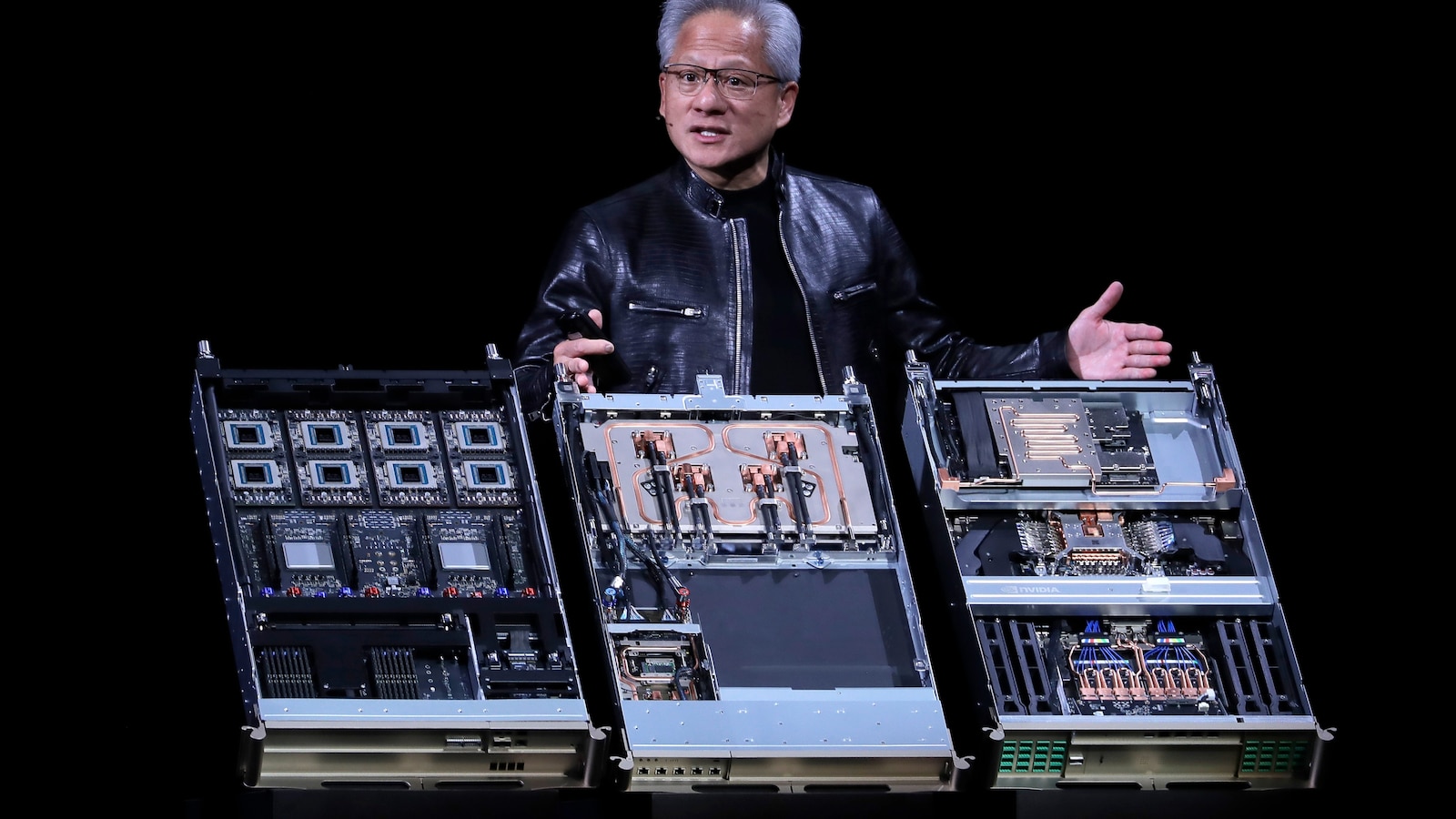
Nvidia unveiled its first Arm-based laptop system-on-chips, the N1 and N1X, at Computex 2026 in Taipei, where CEO Jensen Huang presented the hardware in his keynote, per coverage from The Verge, Tom's Hardware, and other outlets. The flagship N1X pairs a 20-core Arm CPU with a Blackwell GPU reported at 6,144 CUDA cores (roughly desktop RTX 5070-class) and supports large unified LPDDR5X memory; the standard N1 is reported in 10- and 12-core configurations. The chips push Nvidia into the Windows-on-Arm laptop market against Qualcomm, following coordinated teasers from Nvidia, Microsoft, and Arm. Reporting says first N1X laptops from Dell, Lenovo, Asus, and MSI are expected before the 2026 holiday season, with broader availability in early 2027. Software compatibility and x86 emulation remain the key open questions.
What happened
Nvidia unveiled laptop-focused system-on-chips, the N1 and N1X, at Computex 2026 in Taipei, where CEO Jensen Huang presented the hardware during his keynote. The reveal, covered by The Verge, Tom's Hardware, and many other outlets, follows weeks of coordinated teasers from Nvidia, Microsoft, and Arm and marks Nvidia's entry into the Windows-on-Arm laptop market.
Technical details
The flagship N1X reportedly pairs a 20-core Arm CPU with a Blackwell-architecture GPU listed at 6,144 CUDA cores, roughly comparable to a desktop RTX 5070, and supports large unified LPDDR5X memory. The standard N1 is reported in 10- and 12-core configurations with smaller memory budgets. Several specifications first appeared in leaks reported by Tom's Hardware ahead of the show and were broadly confirmed by the Computex reveal, though full independent benchmarks are not yet available.
Industry context
Moving high-performance GPU capability into mobile form factors targets local AI inference, generative workflows, and low-latency experiences. An Arm-based laptop SoC with a Blackwell GPU broadens options beyond x86 and Qualcomm's Snapdragon platforms and could accelerate Windows-on-Arm momentum, but ecosystem readiness, especially x86 emulation for legacy applications, remains a material constraint.
What this means for practitioners
For ML engineers and product teams, laptop SoCs with integrated Blackwell GPUs and large unified memory suggest a nearer-term path to running larger local models and mixed local-plus-cloud inference. Expect new opportunities for on-device acceleration and model-optimization work (quantization, kernel fusion, memory efficiency) alongside fragmentation across Arm toolchains, runtime backends, and Windows-on-Arm compatibility layers.
What to watch
- •Independent benchmarks and power-efficiency numbers validating the 6,144 CUDA cores and memory claims.
- •OEM laptop announcements and availability: reporting cites first devices from Dell, Lenovo, Asus, and MSI before the 2026 holiday season, with broader availability in early 2027.
- •Microsoft and third-party software support for Windows on Arm, x86 emulation performance, and native Blackwell GPU drivers.
Bottom line
Nvidia's Computex reveal puts it into the laptop SoC market with Arm CPUs and Blackwell GPUs aimed at on-device AI. The move underscores the industry's push toward local AI acceleration while leaving software compatibility and real-world performance as the key open questions.
Key Points
- 1Nvidia revealed the N1 and N1X, its first Arm-based laptop SoCs, at Computex 2026, pairing Arm CPUs with Blackwell GPUs for on-device AI.
- 2The flagship N1X reportedly carries a 20-core CPU and 6,144 CUDA cores (RTX 5070-class); first laptops from Dell, Lenovo, Asus, and MSI are expected by the 2026 holidays.
- 3The launch pushes Nvidia into Windows on Arm against Qualcomm, but x86 emulation and software compatibility remain the key adoption questions.
Scoring Rationale
Nvidia's confirmed Computex 2026 reveal of its first Arm-based laptop SoCs (N1 and N1X) with Blackwell GPUs is a major hardware and ecosystem event that pushes the company into Windows on Arm against Qualcomm. Broad practitioner relevance for on-device AI, so it scores in the major band at 7.7.
Sources
Public references used for this report.
View 6 more sources
- Nvidia's N1X could be the jolt Windows laptops need - with one big catchpcworld.com
- "A new era of PC": Microsoft and NVIDIA tease major announcement experts predict to be the fabled N1X chipwindowscentral.com
- NVIDIA N1x & N1 laptop chip specificationsvideocardz.com
- Nvidia N1X and N1 CPU: Everything we know so far | Tom's Guidetomsguide.com
- Nvidia N1 and N1x Laptop chip Specifications Leakoverclock3d.net
- Microsoft and NVIDIA Jointly Tease Possible N1X Debut as a "New ...techpowerup.com
Practice with real Health & Insurance data
90 SQL & Python problems · 15 industry datasets
250 free problems · No credit card
See all Health & Insurance problems

