Nvidia CEO Joins Trump's Delegation to China
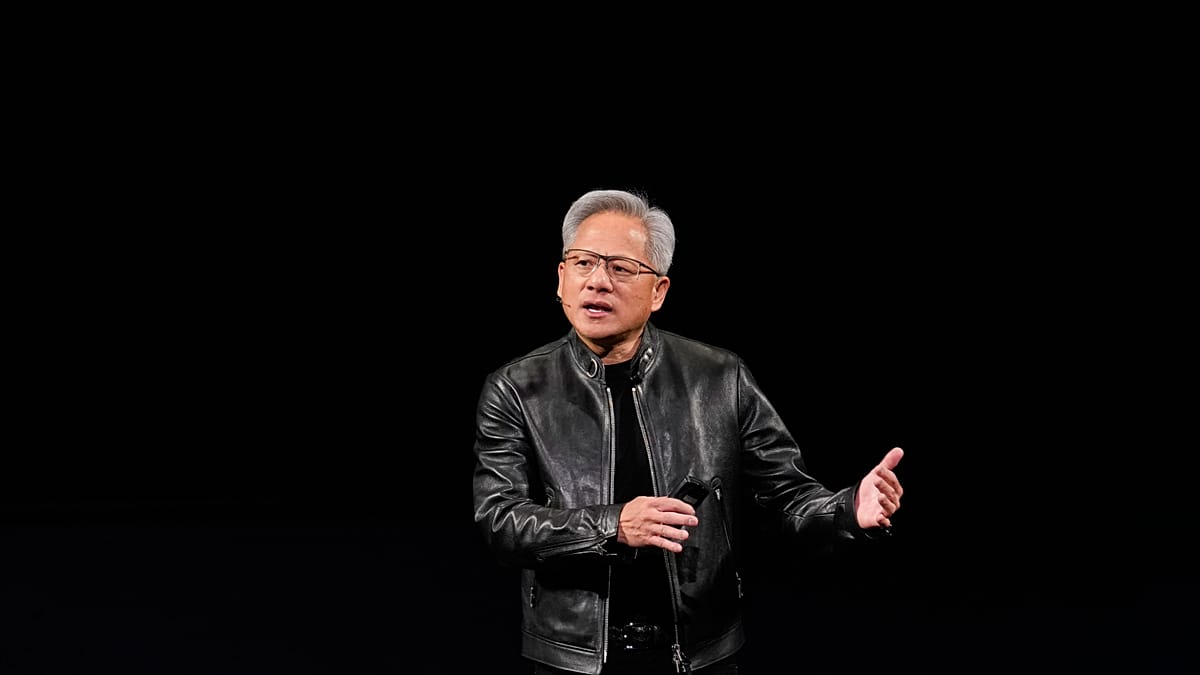
U.S. President Donald Trump invited Nvidia CEO Jensen Huang to join a business delegation traveling to Beijing and Huang boarded Air Force One in Alaska, Reuters and The New York Times report. Reuters and CNBC say the invitation came after Huang was omitted from an initial White House list of chief executives (the New York Times reported the list had about 16 names); CNBC quoted an Nvidia spokesperson saying Huang was attending "at the invitation of President Trump." Reuters and other outlets report U.S. officials have said Nvidia has struggled to secure Chinese approval to sell its most advanced H200 AI chips, and The New York Times reports Huang has lobbied officials in Washington and Beijing to allow sales. Trump posted on Truth Social that he would ask Chinese President Xi Jinping to "open up" China, a line quoted by Reuters.
What happened
Donald Trump added Nvidia CEO Jensen Huang to a business delegation en route to Beijing and Huang boarded Air Force One during a refuelling stop in Alaska, Reuters and The New York Times report. Reuters and The New York Times report the move followed media attention after Huang was omitted from an initial White House list of chief executives (the New York Times reported the list had about 16 names). CNBC quoted an Nvidia spokesperson saying, "Jensen is attending the summit at the invitation of President Trump to support America and the administration's goals." Reuters and other outlets report the delegation accompanies presidential talks with Chinese President Xi Jinping on May 14-15.
Technical details
Reuters and other outlets report that U.S. officials say Nvidia has faced difficulty obtaining regulatory approval in China to sell its most advanced H200 artificial intelligence chips. The New York Times reports Huang has spent the past year lobbying officials in both Washington and Beijing to permit sales of Nvidia AI hardware. Reporting by The New York Times also notes that Washington previously approved the sale of an older generation of Nvidia chips last summer, but that Beijing had not approved purchases of the more advanced hardware.
Editorial analysis: industry context
Companies that build and sell advanced AI accelerators operate at the intersection of export controls, national security policy, and commercial demand. Observed patterns in comparable situations show governments use a mix of export restrictions, licensing processes, and diplomatic channels to manage high-end chip flows, often leaving manufacturers to pursue parallel technical and political routes to market.
Context and significance
Industry observers will note this is a high-profile example of a semiconductor CEO being included in state-level diplomacy. Reporting frames Huang's presence as tied to commercial access to China for AI compute, an outcome that matters for cloud providers, hyperscalers, and research labs that rely on global supply and deployment channels for GPUs and accelerators. For practitioners: changes in cross-border availability of high-end hardware can alter procurement lead times, pricing, and choices between on-premise vs cloud training strategies.
What to watch
- •Whether Chinese authorities approve purchases of H200-class hardware, as reported by Reuters and The New York Times, which would directly affect market access.
- •Any public statements or joint communiques from the summit that reference trade or tech-specific licensing, which Reuters says are on the agenda for talks.
- •Regulatory signals from the U.S. or China on export controls or licensing that could follow diplomatic discussions; industry observers and vendors typically interpret such signals as precursors to formal policy changes.
Key Points
- 1Jensen Huang joined President Trump's China delegation after a last-minute invitation, a development reported by Reuters and The New York Times.
- 2U.S. reporting links Huang's presence to Nvidia efforts to secure Chinese approvals for H200 AI chips, a commercial access issue with regulatory and diplomatic dimensions.
- 3Industry observers note that diplomatic engagement often precedes regulatory shifts, making summit outcomes a potential near-term indicator for hardware availability and procurement planning.
Scoring Rationale
The story matters to practitioners because diplomatic outcomes could affect access to high-end AI accelerators and procurement planning. It is notable but not a frontier-model or policy watershed event, so the importance is moderate.
Sources
Public references used for this report.
View 5 more sources
- Nvidia CEO Joins Trump's Mission to 'Open Up' Chinausnews.com
- Nvidia's Jensen Huang heads to Beijing with Trump after allasia.nikkei.com
- Developing | Nvidia’s Jensen Huang joins Trump’s trip to China at last minutescmp.com
- Nvidia CEO Huang to join Trump on China trip - reportsinvesting.com
- Nvidia's Jensen Huang to join Trump's China visit, sources sayfinance.yahoo.com
Practice with real Ad Tech data
90 SQL & Python problems · 15 industry datasets
250 free problems · No credit card
See all Ad Tech problems