Nvidia Acknowledges Huawei Dominance in China AI Chip Market
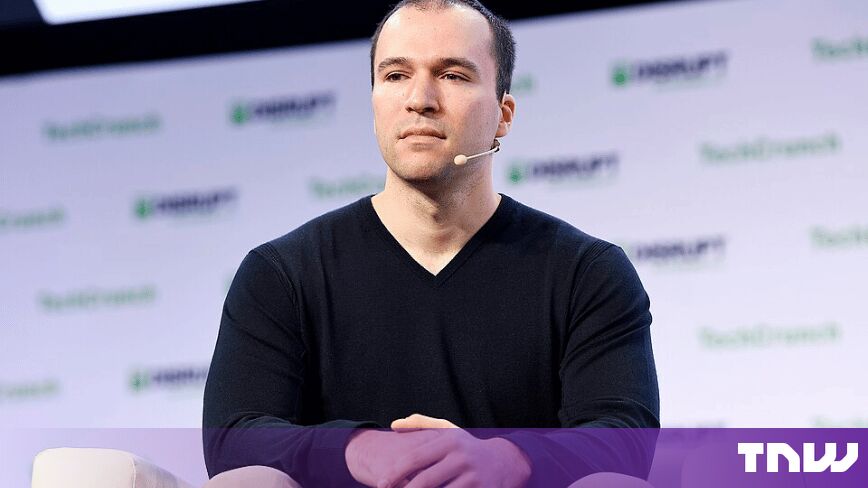
Nvidia founder and CEO Jensen Huang told CNBC that the company has "largely conceded" China's artificial intelligence chip market to Huawei, CNBC reports. The comments came as Nvidia reported another strong quarter and unveiled an $80 billion share buyback and a higher dividend, CNBC says. CNBC also reports that the Trump administration told Nvidia in April it would need a license to export advanced chips to China and several other countries, a restriction that has effectively shut Nvidia out of that market. Huang told CNBC that demand in China remains large and that Huawei "had a record year" and is likely to have an "extraordinary year coming up," CNBC reports.
What happened
According to CNBC, Nvidia founder and CEO Jensen Huang said the company has "largely conceded" China's artificial intelligence chip market to Huawei. CNBC reports Huang made the remarks while discussing Nvidia's latest quarterly results and the company's corporate actions, including an $80 billion share buyback program and an increased dividend. CNBC also reports that the Trump administration told Nvidia in April it would need a license to export advanced chips to China and a handful of other countries, a requirement that has significantly limited Nvidia's direct sales into China.
Technical details
Editorial analysis - technical context: Companies in the AI infrastructure space operate on a hardware-software stack where access to the latest accelerators materially affects performance and product parity. Export controls that restrict advanced GPU exports to China remove a supplier for high-end datacenter GPUs, accelerating local efforts to develop compatible accelerators and supporting software ecosystems.
Context and significance
Industry context: Reporting from CNBC frames Huang's comments as evidence of how U.S. export policy and Beijing's semiconductor push are reshaping global AI hardware markets. For practitioners this matters because tighter export controls can accelerate regional alternatives, influencing procurement, benchmarking baselines, and long-term compatibility assumptions for model training and inference workloads.
What to watch
Industry context: Observers should monitor several signals: third-party performance benchmarks from China-based accelerators, announcements from Huawei and local fabless partners about availability and software stacks, changes in procurement policies from cloud and enterprise buyers in Asia, and any follow-up guidance from Nvidia or U.S. regulators about licensing. CNBC reports Nvidia executives expressed a desire to return to China despite low expectations for approvals, which leaves open whether future licensing, product segmentation, or software-only solutions will alter access.
Bottom line
Editorial analysis: The combination of export controls and Huawei's growth, as reported by CNBC, is likely to speed the emergence of alternative hardware-software ecosystems in China. For ML engineers and infrastructure teams, that trend can lead to greater heterogeneity in accelerator performance and tooling, raising the importance of portable runtimes, cross-architecture benchmarks, and reproducible training workflows.
Key Points
- 1Huang said Nvidia has "largely conceded" China's AI chip market to Huawei, per CNBC; export controls are a key driver.
- 2Export licensing requirements reported by CNBC remove Nvidia as a supplier in China, accelerating local accelerator development.
- 3Industry pattern: constrained hardware supply tends to increase ecosystem heterogeneity, raising portability and benchmarking priorities.
Scoring Rationale
The story is notable because it combines a major vendor's public concession with concrete policy-driven market effects, affecting procurement and infrastructure planning for ML teams. The impact is significant but not frontier-shifting.
Sources
Public references used for this report.
Practice interview problems based on real data
1,625 SQL & Python problems across 15 industry datasets — the exact type of data you work with.
Try 250 free problems