NetApp Releases StorageGRID 12.1 with Federated Namespace
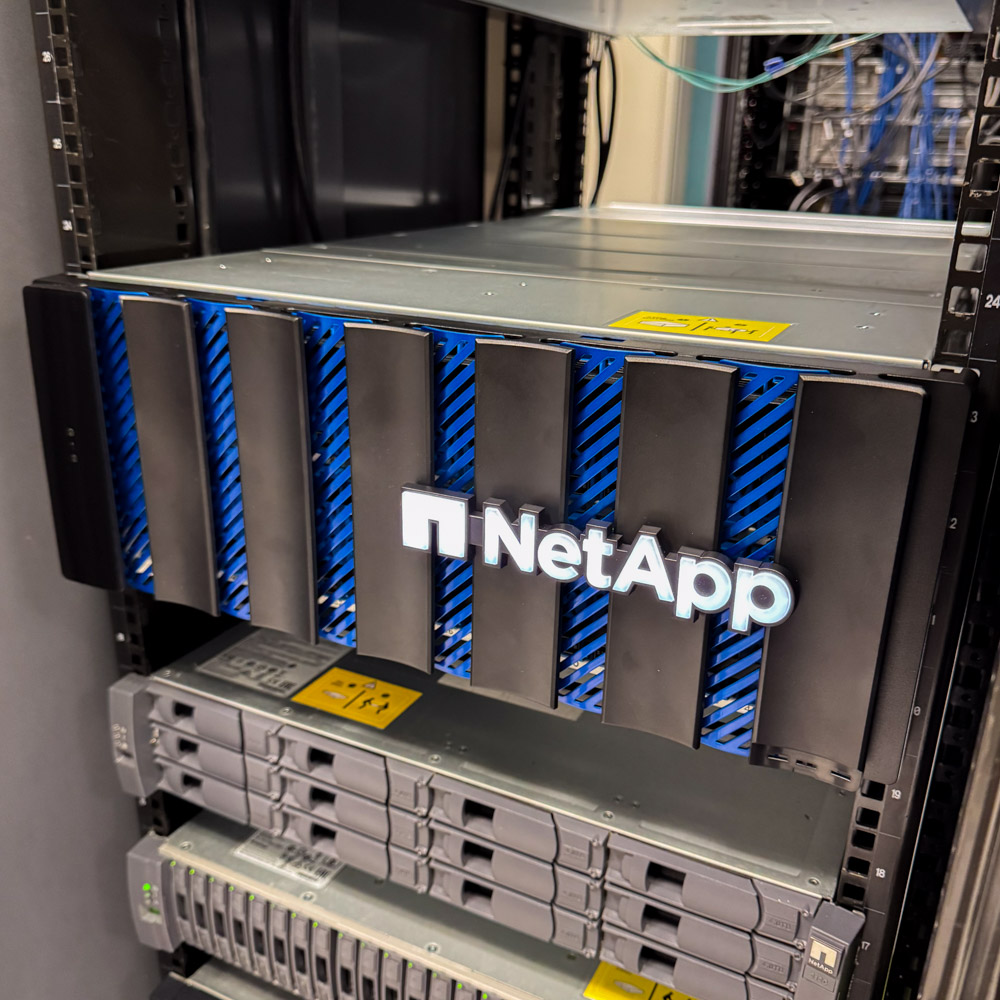
NetApp released StorageGRID 12.1, introducing a Global Federated Namespace that can scale to 10 Exabytes, along with performance, data-management, and security enhancements aimed at AI and large-scale object workloads. According to NetApp's June 23 press release, the update can deliver up to 400% higher throughput versus StorageGRID 12.0 depending on workload and object size, and up to 12 TB/s of aggregate throughput for large AI deployments. Reported operational features include batch operations across billions of objects, enhanced change-tracking to help AI agents identify bucket updates, and multi-admin verification for governance. StorageReview, Blocks & Files, DBTA, and other outlets republished NetApp material and added implementation context. For practitioners, the release targets the scaling and management pain points of distributed AI data lakes but leaves pricing, exact hardware configurations, and real-world benchmarks to customer trials and third-party tests.
What happened
In a June 23 press release, NetApp announced StorageGRID 12.1, which introduces a Global Federated Namespace for managing multiple geographically distributed StorageGRID systems as a single namespace, scaling up to 10 Exabytes, according to NetApp. The release also includes performance and operational improvements that NetApp states yield up to 400% higher throughput versus StorageGRID 12.0 depending on workload characteristics and object size, and up to 12 TB/s of aggregate throughput for AI-scale deployments, per the press release and reporting in StorageReview and Blocks & Files. The announced management features include batch operations that can run across billions of objects, enhanced change-tracking to let agents detect updates since a previous scan, and expanded governance controls including multi-admin verification, all described by NetApp and repeated in trade coverage.
Technical details
Editorial analysis - technical context
The Federated Namespace feature unifies multiple object-store deployments under a single global namespace, which in practice reduces application-level reconfiguration when data is spread across regions. NetApp frames this as operating without rearchitecting applications or workflows in its press materials. The performance claims, up to 400% throughput improvement and 12 TB/s aggregate, are presented as dependent on workload and object size, which implies workload-specific tuning, caching, and network considerations will determine realized gains, according to vendor messaging and technical reporting in StorageReview and Blocks & Files.
Context and significance
Object storage vendors and cloud providers have been positioning object repositories as sources for AI data lakes and model training pipelines. Forrester is cited in NetApp materials noting generative AI has pushed object storage into an AI-optimized data platform role, a point repeated in the press release and secondary coverage. The new StorageGRID capabilities address several recurrent operational needs for AI practitioners: global data access, large-scale metadata and batch operations, and governance for regulated environments. That said, vendor press claims are not the same as independent benchmarks; public reporting does not include third-party, reproducible performance tests that validate the top-line throughput numbers across representative AI workloads.
What to watch
For practitioners
monitor independent benchmark results and third-party case studies that show sustained throughput and end-to-end pipeline impact, not just peak aggregate numbers. Watch for NetApp documentation that details hardware requirements, networking topology, caching behavior (inner/outer ring architecture was discussed in Blocks & Files), and failure-recovery characteristics under federation. Also track connector and compatibility details for common AI frameworks and data orchestration tools so teams can assess migration effort and latency implications for training and inference workflows.
Observed limitations in reporting
Editorial analysis
Coverage to date is based primarily on NetApp press materials republished by industry outlets. Trade articles summarize features and quote NetApp executives but do not provide independent measurement data, pricing disclosures, or explicit upgrade/migration paths for existing StorageGRID customers. That leaves practical questions about cost per TB, per-node network provisioning needed to reach the claimed throughput, and the behavior of the federated namespace under real-world failure modes.
Bottom line
For enterprise storage and ML infrastructure teams, StorageGRID 12.1 is a vendor-grade response to rising demands for globally accessible, object-based AI data platforms, with explicit claims about scale (10 Exabytes) and throughput (up to 12 TB/s) coming from NetApp's press release and supported by multiple trade outlets. Organizations evaluating the release should treat vendor numbers as directional until independent benchmarks and deployment reports become available.
Key Points
- 1NetApp announced StorageGRID 12.1 with a Global Federated Namespace scaling to 10 Exabytes, easing global object-data management.
- 2Vendor claims include up to 400% higher throughput versus 12.0 and up to 12 TB/s aggregate, but published coverage lacks independent benchmarks.
- 3Industry observers: federated object namespaces and large-scale batch ops reduce orchestration overhead for AI data lakes, conditional on network and cache design.
Scoring Rationale
The release matters to AI infrastructure and storage practitioners because it targets global scale and throughput for AI pipelines, but impact is limited until independent benchmarks, pricing, and configuration guidance appear. The story is notable but not paradigm-shifting.
Sources
Public references used for this report.
View 4 more sources
- NetApp StorageGRID 12.1 Supports Data Intensive Workloads to Scale AIdbta.com
- Is NetApp's New StorageGRID 12.1 And Keystone Alliance Altering AI Workload Capabilitiesfinance.yahoo.com
- NetApp Enhances Support for AI Workloads at Massive Scalelasvegassun.com
- NetApp Enhances Support for AI Workloads at Massive Scaleeagletribune.com
Practice interview problems based on real data
1,625 SQL & Python problems across 15 industry datasets — the exact type of data you work with.
Try 250 free problems