MiniCPM5 Prioritizes Reasoning for 1B On-Device Inference
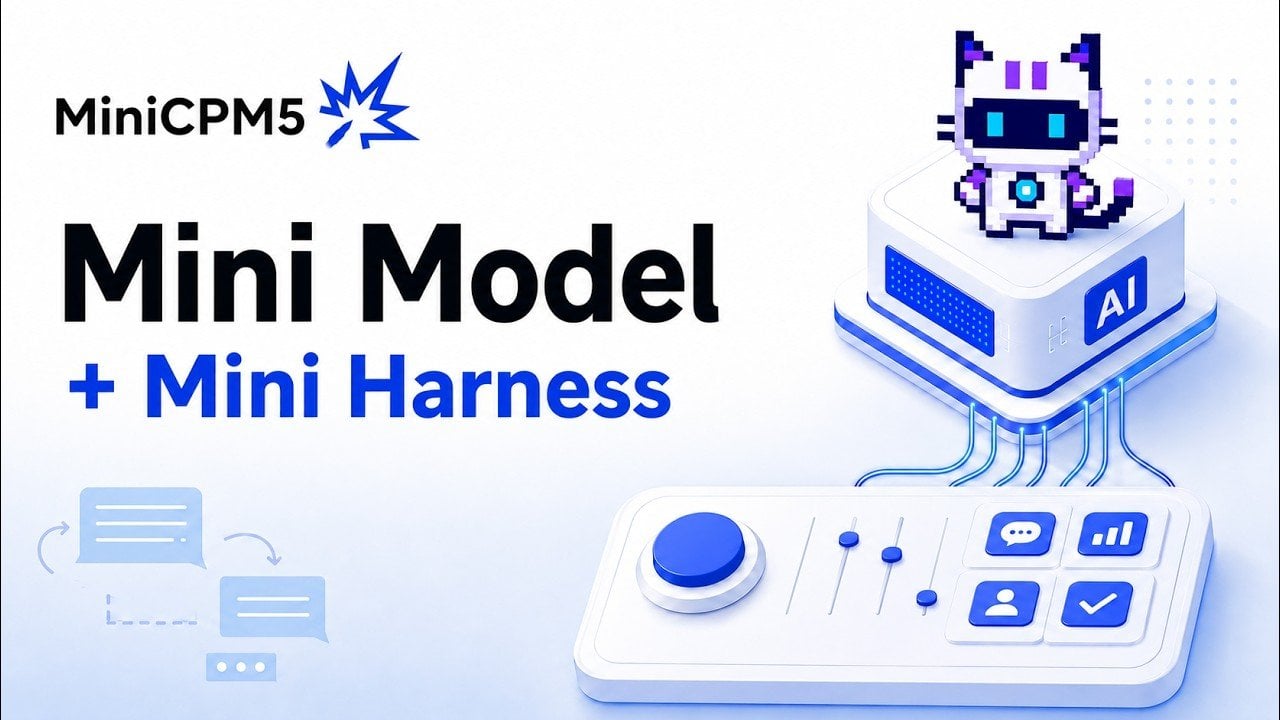
OpenBMB's MiniCPM5-1B release presents a 1B-parameter dense model for local, on-device, and resource-constrained inference, with the project claiming 1B-class open-source SOTA results across reasoning, code, math, and agentic benchmarks. Geeky-Gadgets and HyperAI framed the model around reasoning-first design, RL+OPD training, hybrid thinking modes, and long-context use, while the official GitHub and Hugging Face pages provide the deployment source of record. For practitioners, the signal is practical rather than absolute: small models are being optimized for tool use and reasoning, so edge deployments need to evaluate latency, memory, context length, and task reliability together.
MiniCPM5-1B is useful signal in the small-model race because it targets reasoning and tool-use behavior, not just a lower parameter count. For edge AI teams, the practical question is whether a compact checkpoint can handle local workflows with acceptable latency, memory, and reliability.
What happened
OpenBMB's GitHub repository describes MiniCPM5-1B as the first MiniCPM5 checkpoint, a dense 1B Transformer built for on-device, local, and resource-constrained scenarios. The project claims an average score of 42.57 across reasoning, knowledge, code, instruction-following, math, logic, and agentic benchmarks, above the highest cited 35.61 average among strong open-source models in the same size class. Hugging Face lists deployment and fine-tuning materials, while Geeky-Gadgets and HyperAI summarize the model's reasoning focus, RL+OPD training discussion, and long-context claims.
Technical context
The practitioner issue is not whether a 1B model replaces larger frontier systems. It is whether reasoning templates, tool-call support, and efficient runtimes make a small model good enough for privacy-sensitive or offline tasks where latency and hardware constraints dominate.
What to watch
Treat the reported benchmark claims as starting points. Teams should run device-specific tests for KV-cache pressure, context-window behavior, tool-call reliability, and hallucination risk before using a compact model in production edge workflows.
Key Points
- 1MiniCPM5-1B targets local and edge deployments where latency, memory, and privacy constraints matter more than maximum scale.
- 2Official OpenBMB sources claim strong 1B-class benchmark results, but teams should reproduce tests on their own tasks.
- 3The deleted Communeify source covered Kimi Linear, not MiniCPM5, so it could mislead readers about the model.
Scoring Rationale
This is notable because a 1B open-weight model with official deployment materials and claimed reasoning/tool-use strengths matters for edge AI and local-agent experimentation. The score stays below major because the strongest performance claims still need independent reproduction on real device workloads.
Sources
Public references used for this report.
Practice with real Ad Tech data
90 SQL & Python problems · 15 industry datasets
250 free problems · No credit card
See all Ad Tech problems