Microsoft unveils in-house AI models, agents and Majorana 2 chip
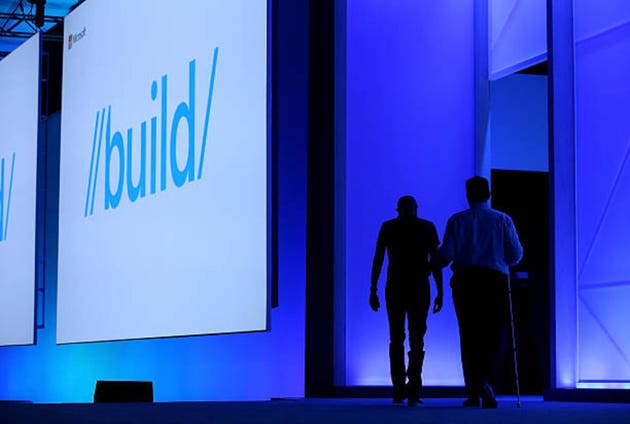
At Build 2026, Microsoft introduced a family of in-house "MAI" models, branded Microsoft AI, including MAI-Thinking-1, MAI-Code-1-Flash, MAI-Image-2.5, MAI-Transcribe-1.5, and MAI-Voice-2, per Microsoft's Build live blog and GeekWire, which frames the move as a bid for long-term self-sufficiency. Microsoft says MAI-Thinking-1, its first reasoning model, is a 35-billion-active-parameter model with a 256K context window trained from scratch without distillation. Microsoft also unveiled its next-generation quantum chip Majorana 2, reporting qubits 1,000x more reliable than the prior generation, a mean qubit lifetime of 20 seconds, and some instances approaching one minute, attributing gains to a new lead-based materials stack. Microsoft said the chip moves its scalable quantum computer target to 2029. Reporting also notes new agent and search products, and some quantum experts urged independent validation, per Digitimes.
What happened
At Build 2026, Microsoft introduced a family of new in-house models branded Microsoft AI, with reporting describing seven homegrown models. Microsoft's Build live blog and GeekWire list MAI-Thinking-1, MAI-Code-1-Flash, MAI-Image-2.5, MAI-Transcribe-1.5, and MAI-Voice-2, with GeekWire framing the effort as a bid for "long term self-sufficiency." Separately, Microsoft unveiled Majorana 2, its next-generation quantum chip, reporting qubits that are 1,000x more reliable than the previous generation with a mean qubit lifetime of 20 seconds and some instances lasting as long as one minute. Reporting by Seeking Alpha documents new agent and search products shown at Build, including an autonomous agent called Scout Autopilot and a search and agent capability labeled Web IQ.
The MAI model family
Per Microsoft's announcement as reported by GeekWire and Windows-focused coverage, MAI-Thinking-1 is Microsoft AI's first reasoning model, a mid-sized 35-billion-active-parameter model with a 256K context window, trained from scratch with zero distillation on commercially licensed data; Microsoft says blind-test raters preferred it to Claude Sonnet 4.6 and that it matches Opus 4.6 on coding on SWE-Bench Pro. MAI-Code-1-Flash is described as a 5-billion-parameter coding model deployed in Visual Studio Code and GitHub Copilot. MAI-Image-2.5 supports text-to-image and image-to-image tasks and is active in PowerPoint, MAI-Transcribe-1.5 covers 43 languages, and MAI-Voice-2 adds more than 15 languages. These performance and cost figures are Microsoft's own stated claims and are not independently verified in the cited coverage.
Majorana 2 quantum chip
Per Microsoft, gains in Majorana 2 come from a new materials stack, with the company describing a move from aluminum-based to lead-based superconducting structures that it says better resist environmental disturbances such as cosmic rays and background radiation, and from using agentic AI (Microsoft Discovery) to accelerate firmware and calibration workflows. Microsoft says the advance moves its target for a scalable quantum computer to 2029. Independent outlets, including Digitimes, report both industry interest and expert skepticism, noting the qubit lifetime claims are unusually large relative to typical superconducting or trapped-ion figures reported publicly, which makes reproducible benchmarks important.
Editorial analysis - technical context
Pursuing internal foundation-model families while also delivering agent orchestration and domain connectors follows an industry pattern where vertical integration aims to reduce external dependency and improve latency and data governance. Organizations adopting autonomous agents at scale typically face higher demands for runtime observability, safety layers, and cost controls around model invocation. As a general matter, large reported improvements in qubit coherence, if independently validated, would shift quantum developer focus from hardware validation toward higher-level application development and integration with classical HPC and simulation tooling.
What to watch
For practitioners, monitor SDK and API changes for the MAI- models and the Scout and Web IQ agents for latency, cost, fine-tuning or retrieval support, and enterprise security controls. For researchers and infrastructure teams, watch for published Majorana 2 performance data, reproducible benchmarks, and toolchain support that demonstrates topological qubits in real developer workflows, along with any technical papers Microsoft publishes specifying training datasets, model scales, and evaluation results.
Quoted context from the event
Microsoft AI CEO Mustafa Suleyman, presenting the models, said, "This is all about long term self-sufficiency for Microsoft and our partners. It's about models you can trust," per coverage of the keynote.
Key Points
- 1Microsoft unveiled seven in-house MAI models and the Majorana 2 quantum chip at Build 2026, signaling a push to own more of the AI stack.
- 2Building in-house foundation models reduces dependence on third-party LLM providers, increasing control over deployment, cost, and compliance for Microsoft and partners.
- 3Majorana 2's reported 1,000x reliability and 20-second qubit lifetime, if independently validated, would shift quantum work toward application-level integration.
Scoring Rationale
This Build set of announcements combines new in-house models, agent tooling, and a claimed quantum hardware step that together materially affect developer toolchains and long-term platform choices. The news is significant for practitioners but stops short of verifiable paradigm shifts until technical details and independent validation appear.
Sources
Public references used for this report.
Practice interview problems based on real data
1,625 SQL & Python problems across 15 industry datasets — the exact type of data you work with.
Try 250 free problems